


The coin and the machine
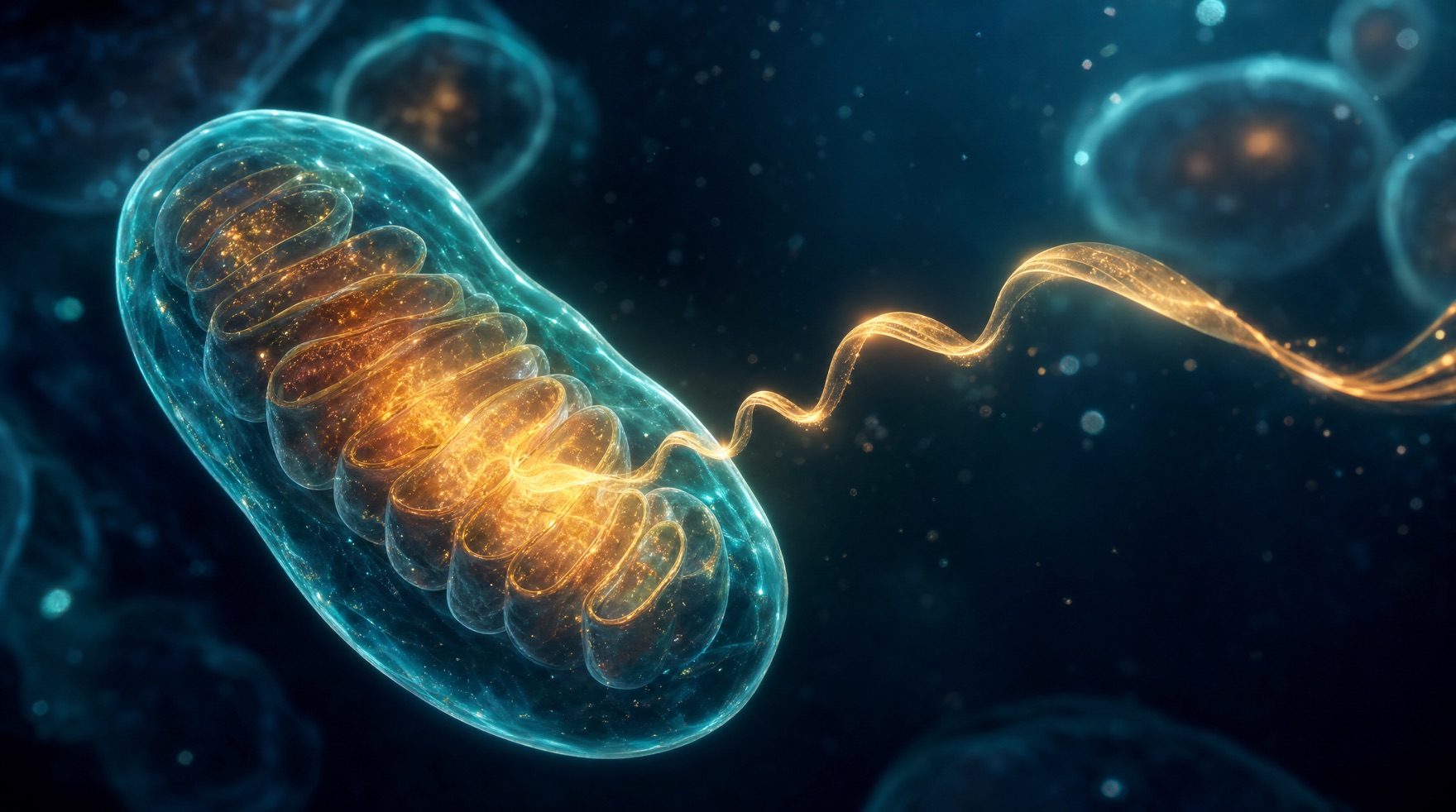
NAD+ stands for nicotinamide adenine dinucleotide. It is a coenzyme — a small helper molecule that certain proteins need in order to work at all. Sirtuins are a family of seven proteins found in mammals, named SIRT1 through SIRT7, and every one of them is one of those proteins that cannot do its job without NAD+.
So picture a coin and a coin-operated machine. The sirtuins are the machines. NAD+ is the coin. Each job a sirtuin does costs one coin — the molecule is split apart in the process and has to be rebuilt afterwards. Nothing about a sirtuin works if the purse is empty. That single fact is the reason the two names are almost never written separately in the scientific literature.
The idea at a glance
NAD+ = the coin
A coenzyme — a small helper molecule. Cells cannot absorb it directly from food, so they build and rebuild their own supply.
Sirtuins = the machines
Seven proteins, SIRT1–SIRT7, that strip small chemical tags off other proteins. Each removal costs one NAD+.
The purse is shared
Sirtuins are not the only spenders. PARPs (DNA repair) and CD38 (immune signalling) draw on the same NAD+ pool.
Lab use only
Studied in cells, yeast, and animal models. Supplied strictly for controlled laboratory research — never for people or animals.
Explore NAD+
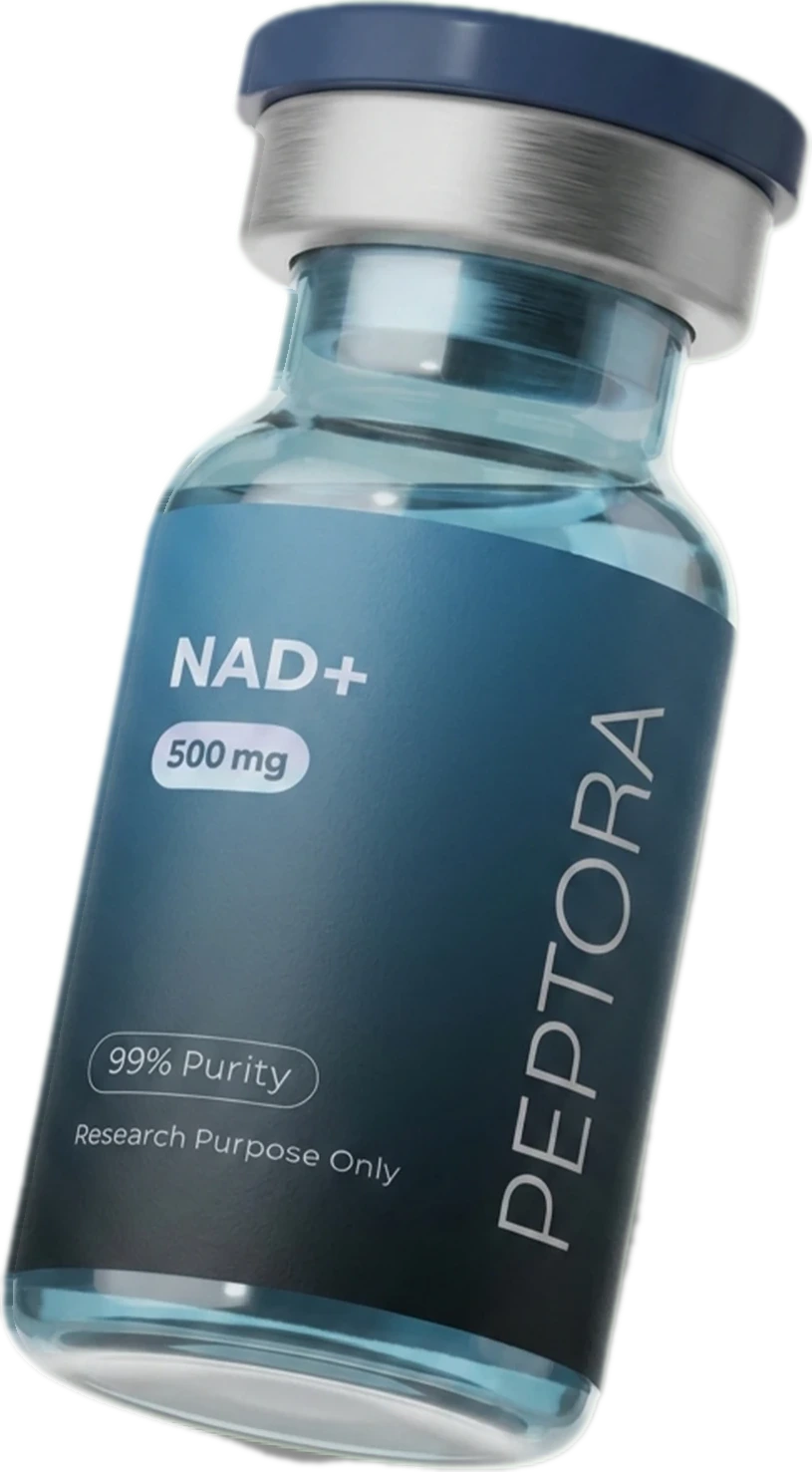
NAD+ — independently lab tested, with each lot's certificate of analysis published online, for laboratory research use only.
View NAD+NAD+ has two completely different jobs
This is the part most short explanations skip, and it is the part that makes everything else make sense. NAD+ does two things that work in opposite ways:
- 1As a shuttle, it is recycled. In the reactions that turn food into usable energy, NAD+ picks up electrons, becomes NADH, drops them off somewhere else, and turns back into NAD+. Round and round. In this role it is never used up — think of a returnable delivery crate, not a consumable.
- 2As a substrate, it is spent. When a sirtuin (or a PARP, or CD38) does its job, it physically splits the NAD+ molecule apart. What comes back is a fragment called nicotinamide, not a working coin. In this role NAD+ genuinely runs down and has to be remade.
The second job is why supply matters. If NAD+ were only a recycled shuttle, the cell would never run short. Because a whole class of enzymes consumes it outright, the cell has to keep minting new coins from the fragments, continuously, for as long as it lives.
That re-minting has a name: the salvage pathway. Its rate-limiting step — the bottleneck that sets the speed of the whole thing — is an enzyme called NAMPT, which takes the spent nicotinamide fragment and starts rebuilding it into NAD+. Most of the NAD+ inside a cell comes from this recycling loop rather than from anything absorbed whole from outside.
What a sirtuin actually does
Proteins in a cell carry small chemical tags that act like sticky notes — a tag can mark a protein as "on," "off," or "handle differently." One common tag is called an acetyl group. Sirtuins are deacetylases: their job is to pull those acetyl tags back off. Removing a tag changes what the tagged protein does, and if the tagged protein happens to sit on DNA, it can change which genes are readable at all.
The seven sirtuins are not interchangeable. They sit in different parts of the cell, and that location largely determines what each one has been studied for:
| Sirtuin | Where it sits in the cell | Most studied in connection with |
|---|---|---|
| SIRT1 | Nucleus | The best-characterised of the family — glucose and fat handling across liver, muscle, fat, pancreas, and brain |
| SIRT2 | Cytoplasm (the cell's main interior) | Cell division and brain-ageing research |
| SIRT3 | Mitochondria | The main mitochondrial deacetylase — mitochondrial upkeep and oxidative stress |
| SIRT4 | Mitochondria | Amino-acid and insulin-related signalling |
| SIRT5 | Mitochondria | Removes tags other than acetyl; urea cycle and metabolic waste handling |
| SIRT6 | Nucleus | DNA repair, fat handling, cellular senescence |
| SIRT7 | Nucleus | Ribosome production and fat metabolism |
Because they run on NAD+, sirtuins do something subtle: they act as sensors of the cell's energy state. When the cell is metabolically busy and NAD+ is plentiful relative to NADH, sirtuins have coins to spend. Published work has connected their activity to states such as caloric restriction and exercise, and also to the circadian rhythm — NAD+ availability itself rises and falls on a daily cycle, so sirtuin activity does too.
What research says happens as supply falls
The finding that turned this from a biochemistry footnote into an active research field is this: NAD+ levels decline with age. That gradual fall has been measured across multiple model organisms, including rodents, and reported in human tissue as well. As the purse empties, every enzyme drawing on it — sirtuins included — has less to work with.
Two further pieces make the picture more complicated than a simple "more is better":
- The spenders compete. PARP enzymes consume NAD+ heavily during DNA repair, and CD38 consumes it in immune signalling. Research describes CD38 activity rising with age, which means sirtuins may be losing a share of a shrinking pool rather than simply facing a smaller pool.
- Restoring NAD+ is not uniformly beneficial in models. A 2019 study in *Nature Cell Biology* reported that NAMPT-driven NAD+ metabolism actively promotes the pro-inflammatory output of senescent cells. Its authors concluded explicitly that NAD+ augmentation should be approached with precision rather than assumed to be helpful.
- Human evidence lags the model systems. A 2021 review in *Nature Reviews Molecular Cell Biology* summarised the field and stated plainly that much remains to be learned — including whether NAD+ repletion is safe and beneficial in ageing humans.
That tension is the honest state of the field: a well-established biochemical link, a well-documented age-related decline, strong effects in model organisms, and open questions about what any of it means in people. Related compounds studied through neighbouring pathways include MOTS-c and SS-31, both of which come up in mitochondrial research.
Why purity matters for this kind of research
NAD+ is a fragile molecule — it is sensitive to moisture, heat, and pH, and it degrades into fragments that are chemically similar enough to be easy to miss. That is a real problem for an experiment whose entire logic depends on how much intact NAD+ is present. A partially degraded batch does not simply give a weaker result; it gives a result about a different mixture. Peptora's NAD+ lots are tested for purity by HPLC at an independent lab, with LC-MS to verify identity and mass. Each lot's results are published online as a certificate of analysis (COA).
For what the numbers on a certificate mean, see the guide to the certificate of analysis. For how NAD+ compares with its precursor molecules, see NAD vs NMN vs NR. For handling freeze-dried powder, see the reconstitution guide.
Scientific references
The papers below are the primary literature, retrieved from PubMed. They describe research on NAD+ biology and the sirtuin enzymes themselves — not the laboratory research products Peptora supplies.
- 1Covarrubias AJ, Perrone R, Grozio A, Verdin E. NAD+ metabolism and its roles in cellular processes during ageing. Nat Rev Mol Cell Biol. 2021;22(2):119-141. doi:10.1038/s41580-020-00313-x (PMID: 33353981).
- 2Abdellatif M. Sirtuins and pyridine nucleotides. Circ Res. 2012;111(5):642-656. doi:10.1161/CIRCRESAHA.111.246546 (PMID: 22904043).
- 3Yu J, Auwerx J. The role of sirtuins in the control of metabolic homeostasis. Ann N Y Acad Sci. 2009;1173(Suppl 1):E10-E19. doi:10.1111/j.1749-6632.2009.04952.x (PMID: 19751409).
- 4Garten A, Schuster S, Penke M, Gorski T, de Giorgis T, Kiess W. Physiological and pathophysiological roles of NAMPT and NAD metabolism. Nat Rev Endocrinol. 2015;11(9):535-546. doi:10.1038/nrendo.2015.117 (PMID: 26215259).
- 5Winnik S, Auwerx J, Sinclair DA, Matter CM. Protective effects of sirtuins in cardiovascular diseases: from bench to bedside. Eur Heart J. 2015;36(48):3404-3412. doi:10.1093/eurheartj/ehv290 (PMID: 26112889).
- 6Nacarelli T, Lau L, Fukumoto T, et al. NAD+ metabolism governs the proinflammatory senescence-associated secretome. Nat Cell Biol. 2019;21(3):397-407. doi:10.1038/s41556-019-0287-4 (PMID: 30778219).
- 7Xie N, Zhang L, Gao W, et al. NAD+ metabolism: pathophysiologic mechanisms and therapeutic potential. Signal Transduct Target Ther. 2020;5(1):227. doi:10.1038/s41392-020-00311-7 (PMID: 33028824).
- 8Jęśko H, Wencel P, Strosznajder RP, Strosznajder JB. Sirtuins and Their Roles in Brain Aging and Neurodegenerative Disorders. Neurochem Res. 2017;42(3):876-890. doi:10.1007/s11064-016-2110-y (PMID: 27882448).
Explore NAD+
NAD+ — independently lab tested, with each lot's certificate of analysis published online, fast U.S. shipping, for laboratory research use only.
View NAD+Key takeaways
- NAD+ is a coenzyme — a small helper molecule — and sirtuins are seven proteins (SIRT1–SIRT7) that cannot function without it. Picture a coin and a coin-operated machine.
- NAD+ has two opposite roles: as an electron shuttle it is recycled and never used up, but as a substrate for sirtuins, PARPs, and CD38 it is physically split apart and must be rebuilt.
- The rebuilding route is called the salvage pathway, and its bottleneck enzyme is NAMPT. Most of a cell's NAD+ comes from this loop rather than from anything absorbed whole.
- Sirtuins are deacetylases — they pull small acetyl tags off other proteins, which changes what those proteins do and which genes are readable.
- Where each sirtuin sits determines what it is studied for: SIRT1, 6, and 7 in the nucleus, SIRT3, 4, and 5 in the mitochondria, SIRT2 in the cytoplasm.
- NAD+ levels decline with age across multiple model organisms, and PARPs and CD38 compete with sirtuins for the same shrinking pool.
- More is not automatically better: published work has reported NAD+ metabolism driving the pro-inflammatory output of senescent cells, and reviewers state that the human picture is still unresolved.
- These are laboratory research compounds only — not medicines, and not for use in people or animals.
Frequently asked questions
This article is intended solely as an educational summary of publicly available scientific literature. Products offered by Peptora are supplied exclusively for laboratory research purposes and are not approved for human or veterinary use. The information presented should not be interpreted as medical advice, treatment recommendations, or clinical guidance.