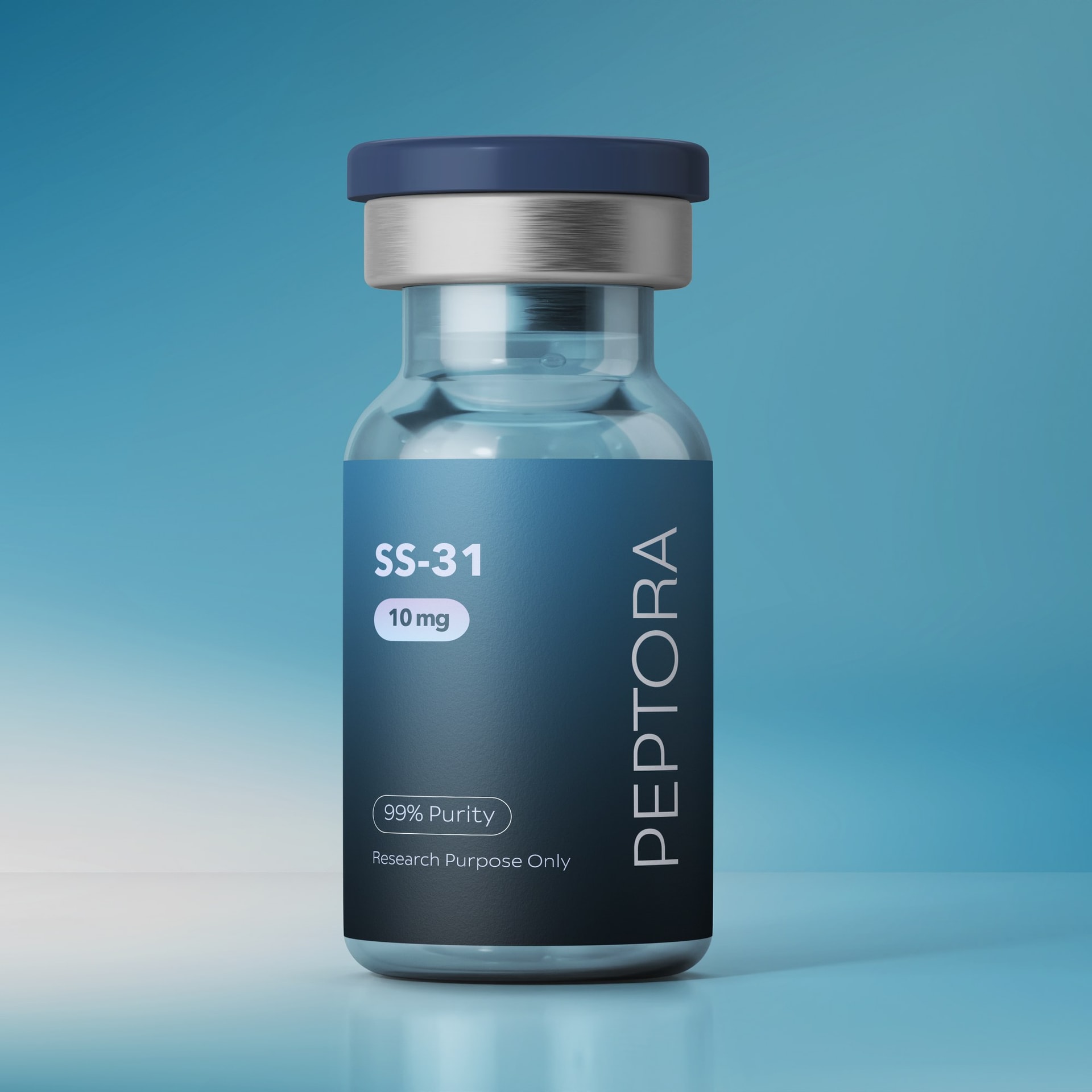



What is SS-31 (Elamipretide)?
SS-31 is a small peptide — a tiny protein, just four building blocks long — that scientists study for the way it reaches the mitochondria. Mitochondria are the cell's tiny power plants: they turn food and oxygen into the energy a cell runs on. The easiest way to picture SS-31: every power plant has delicate wiring inside, and SS-31 seems to grab onto that wiring and help keep it working. You'll also see it called Elamipretide (its clinical name) or MTP-131 — all three are the same molecule.
One important note up front: Elamipretide is being tested by the company Stealth BioTherapeutics in human clinical trials as a possible future medicine for rare mitochondrial diseases. But the version Peptora sells is a research chemical for the laboratory only. It is not that medicine, and it is not for use in people or animals.
The quick version
It targets the power plant
SS-31 collects inside mitochondria, the tiny structures that make a cell's energy.
It clings to the wiring
It binds a fat called cardiolipin — the material that keeps the power plant's inner membrane organized.
Lab use only
Studied in energy, heart, muscle, eye, and aging-cell experiments — never for people or animals.
Published lab results
Each lot's HPLC purity is listed on its certificate of analysis.
Explore SS-31
Independently lab tested, with each lot's certificate of analysis published online, fast U.S. shipping — for laboratory research use only.
View SS-31How it works, in plain terms
To follow the research on SS-31, it helps to know one word: cardiolipin. Cardiolipin is a special fat found in the inner membrane of a mitochondrion — think of it as the insulation that keeps the power plant's wiring neatly in place. When a cell is stressed or aging, that wiring can get disorganized, and the power plant makes less energy and leaks more waste. Here's the plain-English version of what studies describe:
- It concentrates where it's needed — SS-31 gathers inside mitochondria far more than in the rest of the cell.
- It grabs the wiring — it binds to cardiolipin, and lab studies suggest this helps the inner membrane stay organized.
- Cleaner energy, less waste — in those studies, mitochondria treated with SS-31 tended to make energy more efficiently and release fewer damaging byproducts called reactive oxygen species (a kind of cellular "rust").
How it fits among mitochondrial peptides
SS-31 belongs to a small family of compounds scientists study for their effects on mitochondria. The simplest way to place it is by what part of the power plant each one is tied to:
| Compound | Main research angle | Where it acts |
|---|---|---|
| SS-31 (Elamipretide) | Protecting the inner wiring | Binds cardiolipin in the inner membrane |
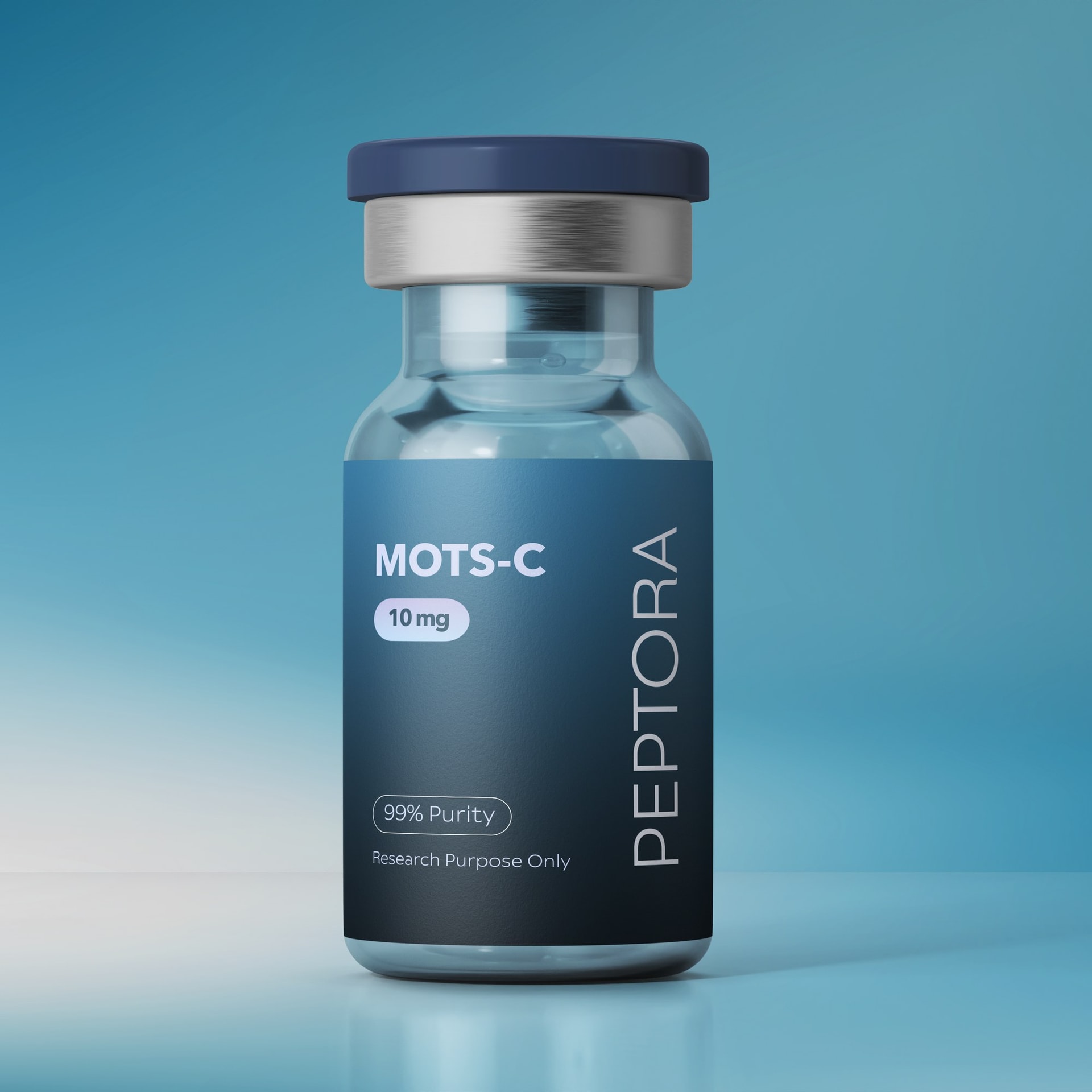
| MOTS-c | A signal made by mitochondria | Acts as a messenger tied to metabolism |
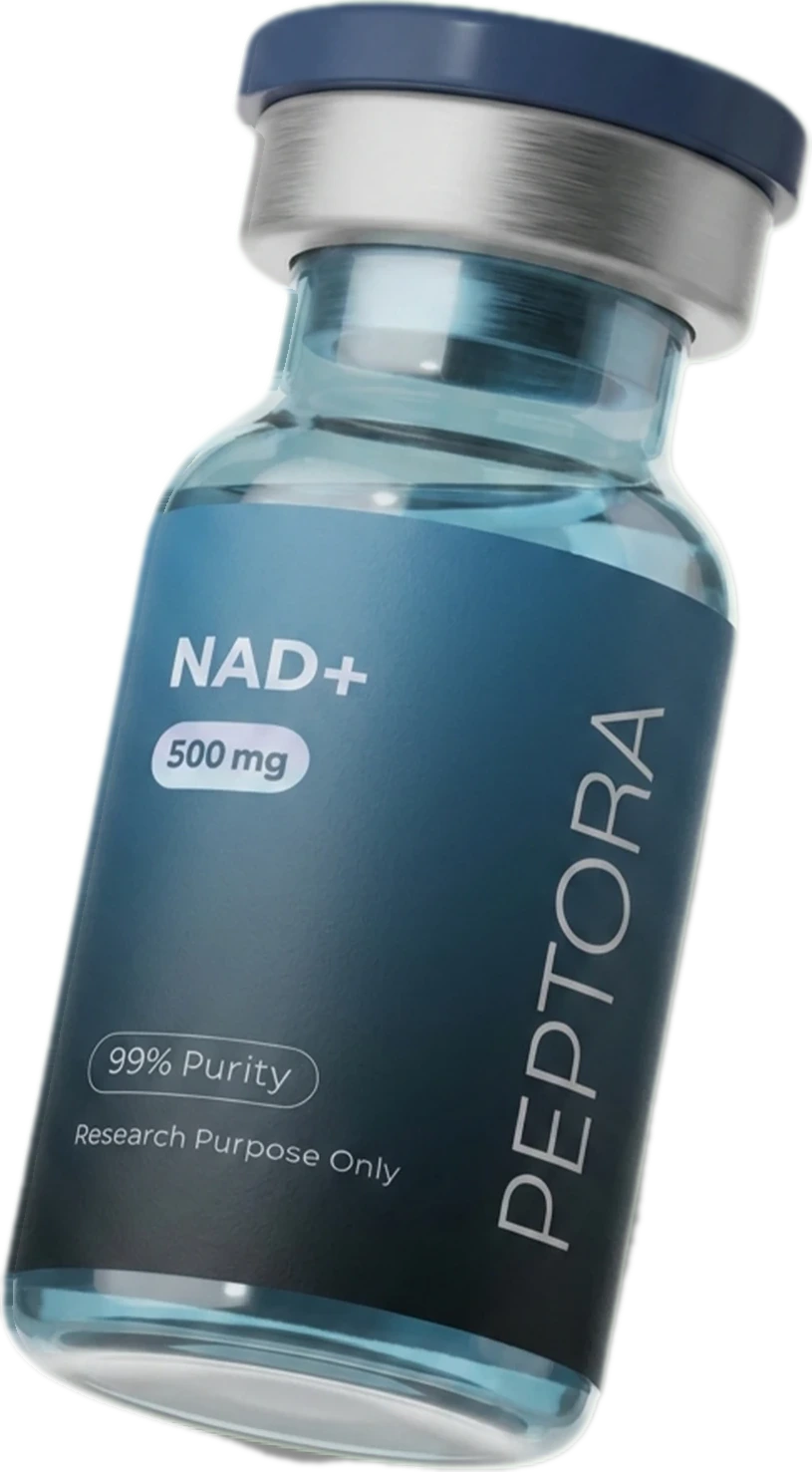
| NAD+ and precursors | A fuel-cycle helper molecule | Takes part in the energy-making reactions |
Peptora carries versions of several compounds studied in this space, including MOTS-c and NAD+ — each with its own certificate of analysis.
What scientists actually study it for
In the lab and in clinical trials, SS-31 usually comes up in a few connected areas, all circling back to mitochondria:
- Cellular energy — how flagging mitochondria make energy, and whether binding cardiolipin changes that (in cells and animals).
- Heart and muscle — tissues that use a lot of energy, studied in models of heart failure and muscle function.
- Rare mitochondrial disease — clinical trials have investigated Elamipretide in primary mitochondrial myopathy and in Barth syndrome, a rare genetic condition.
- Eyes and aging — mitochondria in the retina and in aging cells, studied in models of age-related eye disease.
Purity and testing (why the certificate matters)
In research, your results are only as trustworthy as the material you start with. Peptora's SS-31 lots are tested for purity by HPLC (a technique that separates out any impurities) at an independent lab, with a second test (mass spectrometry) to confirm it's the right molecule. Each lot's results are published online as a certificate of analysis (COA).
That paperwork is standard here, not an add-on. To learn what the numbers on a certificate actually mean, see the guide on what a certificate of analysis is.
How it's handled in the lab
SS-31 ships as a lyophilized (freeze-dried) powder. Before it's used in research, it's reconstituted — mixed with bacteriostatic water, a special sterile water sold separately. A little care keeps the peptide intact so results stay reliable:
- 1Let the sealed vial warm up to room temperature before opening it.
- 2Add the water slowly down the side of the vial, then swirl gently — don't shake.
- 3Wait until the powder is fully dissolved before drawing anything out.
- 4Keep the mixed solution in the fridge, away from light.
Step-by-step details are in the reconstitution guide. Doing these the same way every time is one of the easiest ways to keep research consistent.
Scientific references
SS-31 (Elamipretide, also called MTP-131) has been studied in cells, animals, and human clinical trials run by Stealth BioTherapeutics. The studies below are here for background, from PubMed and ClinicalTrials.gov. They describe research on the compound itself — not the laboratory research product Peptora supplies.
- 1Tung BT, et al. Elamipretide: A Review of Its Structure, Mechanism of Action, and Therapeutic Potential. Int J Mol Sci. 2025;26(3):944. doi:10.3390/ijms26030944.
- 2Zhao H, et al. Elamipretide (SS-31) improves mitochondrial dysfunction, synaptic and memory impairment induced by lipopolysaccharide in mice. J Neuroinflammation. 2019;16(1):230. doi:10.1186/s12974-019-1627-9.
- 3Karaa A, et al. Efficacy and Safety of Elamipretide in Individuals With Primary Mitochondrial Myopathy: The MMPOWER-3 Randomized Clinical Trial. Neurology. 2023;101(3):e238-e252. doi:10.1212/WNL.0000000000207402 (ClinicalTrials.gov: NCT03323749).
- 4Thompson WR, et al. Long-term efficacy and safety of elamipretide in patients with Barth syndrome: 168-week open-label extension results of TAZPOWER. Genet Med. 2024;26(7):101138. doi:10.1016/j.gim.2024.101138.
- 5Nashine S, et al. Potential Therapeutic Candidates for Age-Related Macular Degeneration (AMD). Cells. 2021;10(9):2483. doi:10.3390/cells10092483.
- 6Hao J, et al. ALCAT1-mediated abnormal cardiolipin remodelling promotes mitochondrial injury in podocytes in diabetic kidney disease. Cell Commun Signal. 2024;22(1):26. doi:10.1186/s12964-023-01399-4.
Explore SS-31
Independently lab tested, with each lot's certificate of analysis published online, fast U.S. shipping — for laboratory research use only.
View SS-31Key takeaways
- SS-31 (also called Elamipretide or MTP-131) is a small four-building-block peptide studied for how it reaches mitochondria — the cell's tiny power plants.
- It binds a fat called cardiolipin, the material that keeps the power plant's inner wiring organized; in lab studies this is tied to cleaner energy production and less cellular waste.
- Scientists study it in experiments on cellular energy, heart and muscle, the eye, and aging cells; clinical trials have investigated it in rare mitochondrial diseases.
- It's for laboratory research only — not a medicine, and not for people or animals.
- Lots are tested by an independent lab (HPLC, LC-MS), and each lot's results are published online as a certificate of analysis.
Frequently asked questions
This article is intended solely as an educational summary of publicly available scientific literature. Products offered by Peptora are supplied exclusively for laboratory research purposes and are not approved for human or veterinary use. The information presented should not be interpreted as medical advice, treatment recommendations, or clinical guidance.