

What NAD+, NMN and NR actually are
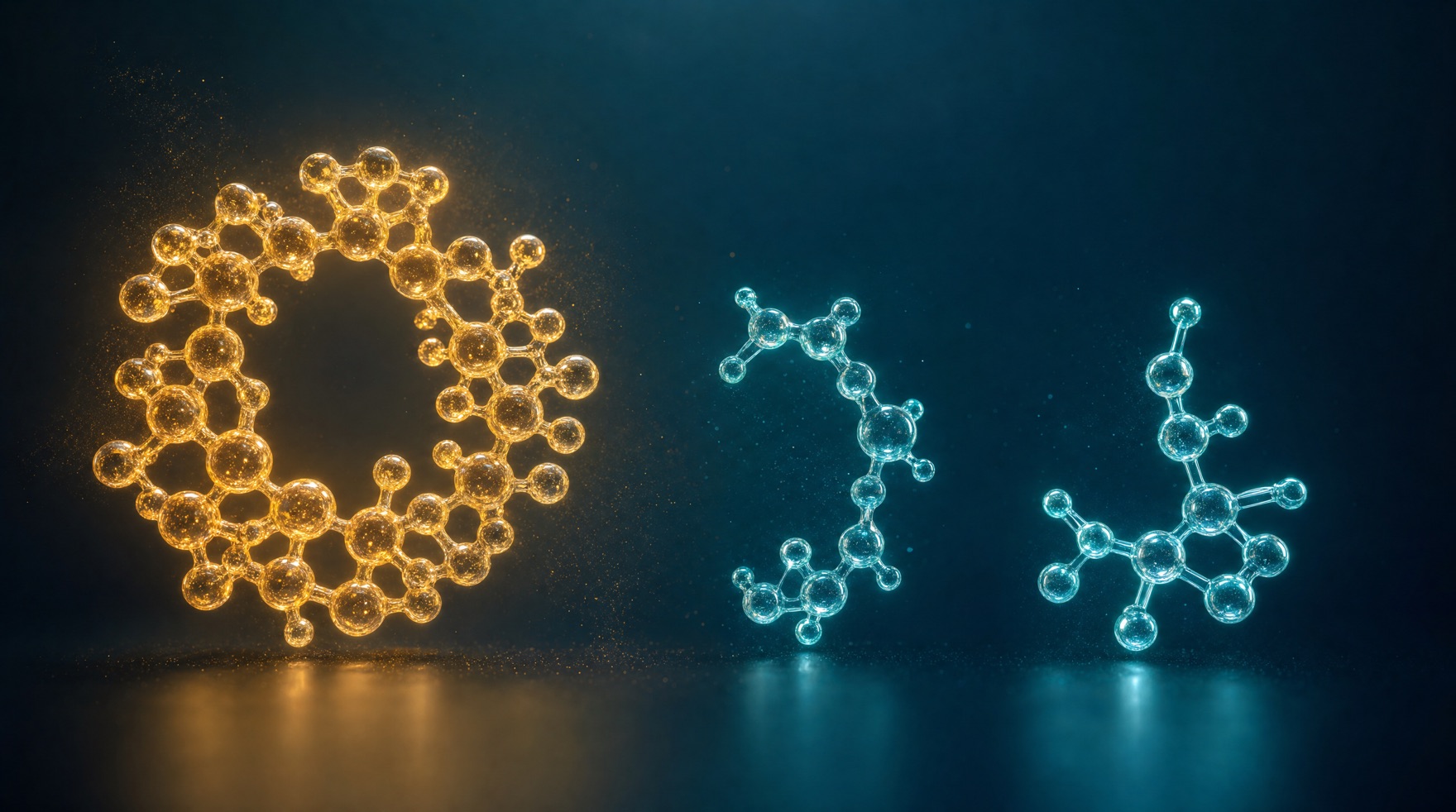
These three names get thrown around together, and it's easy to assume they're competing versions of the same thing. They aren't. One of them is the destination; the other two are routes to get there.
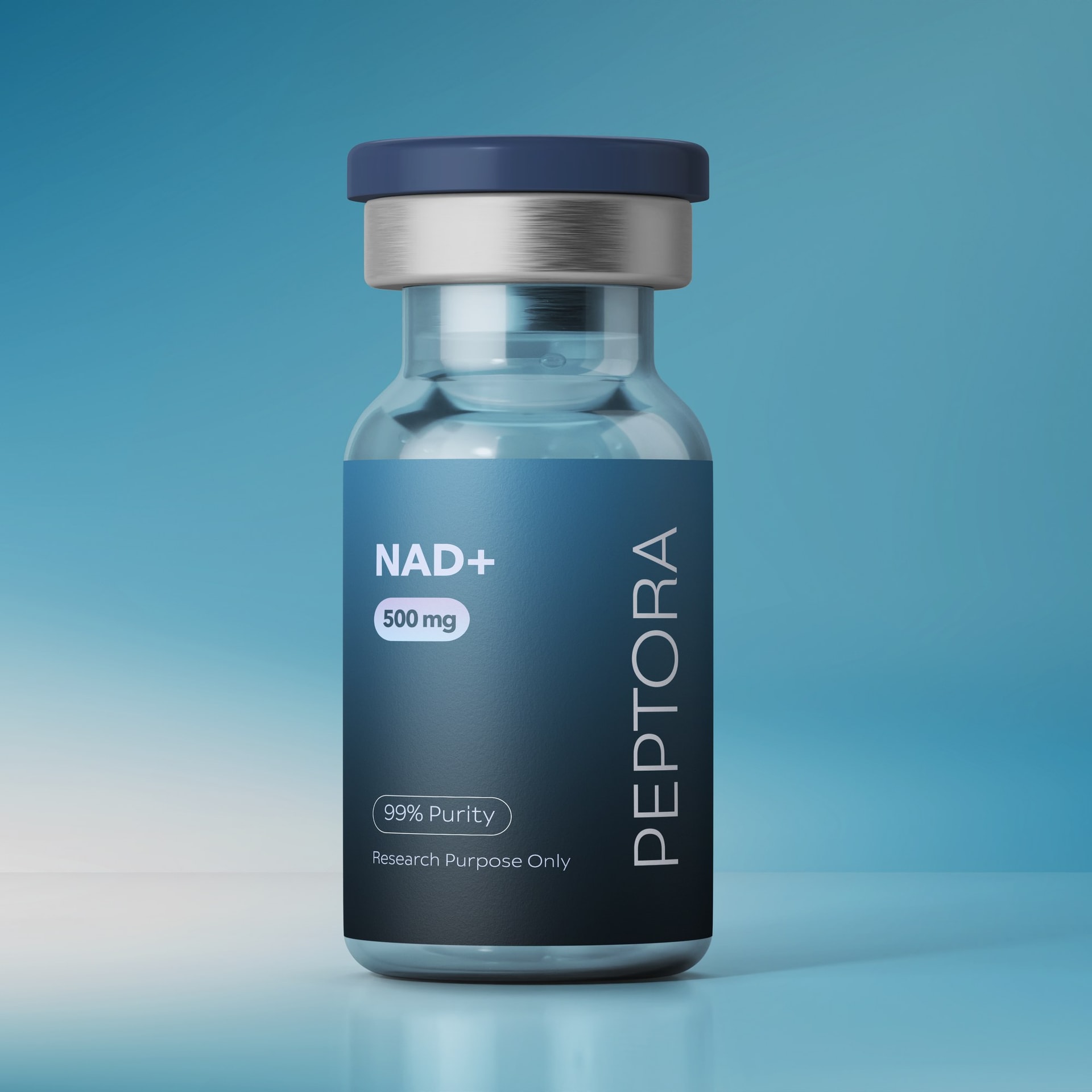
- NAD+ (nicotinamide adenine dinucleotide) is the destination. It's a molecule found in every living cell, and it's central to how cells turn food into usable energy. Picture it as a rechargeable battery the cell drains and recharges over and over, thousands of times a day.
- NMN (nicotinamide mononucleotide) is a precursor — a building block the body can convert into NAD+. Think of it as one type of charger plug.
- NR (nicotinamide riboside) is the other well-studied precursor. Same battery, a different plug.
So the short version: NAD+ is what cells use. NMN and NR are two different ways of supplying the raw material to make more of it. That's the entire reason researchers keep putting the three side by side.
Explore NAD+
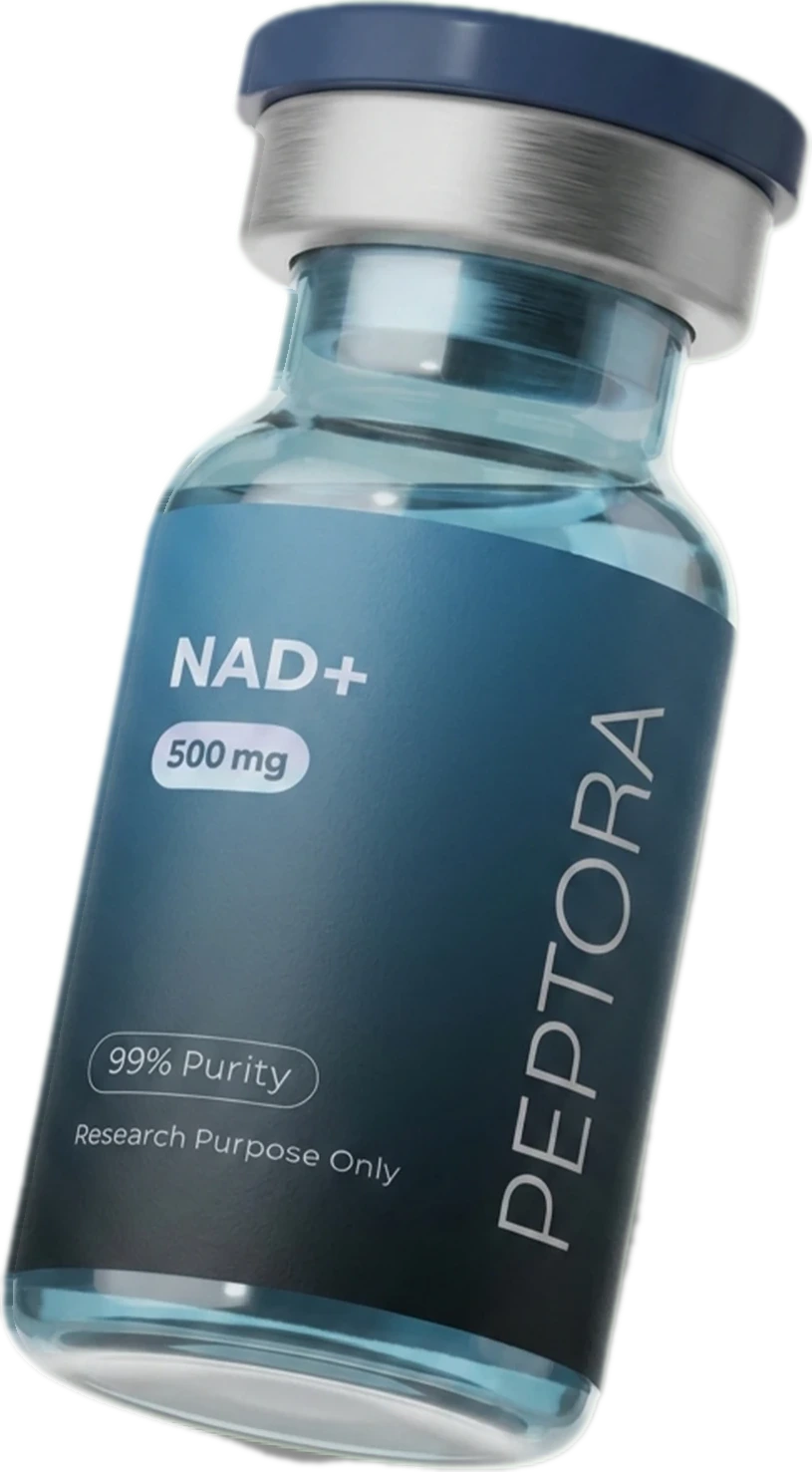
Independently lab tested, with each lot's certificate of analysis published online, fast U.S. shipping — for laboratory research use only.
View NAD+The quick version
NAD+ — the battery
The molecule cells actually use to move energy around. Everything else on this page exists to make more of it.
NMN & NR — the chargers
Two different precursors (building blocks). The body converts both into NAD+, but by slightly different routes.
Why researchers care
Published work reports that NAD+ levels decline with age in several tissues — so the question is what happens if you top it back up.
Same testing bar
Peptora's NAD+ is tested by an independent lab (HPLC + LC-MS), with each lot's certificate of analysis published online.
So why do scientists study this at all?
Here's the observation that started it. Researchers noticed that NAD+ levels appear to drop as animals get older — in tissues like muscle, liver and brain. Since NAD+ sits at the center of how cells make energy, the obvious question was: *is that decline just a side effect of aging, or part of what drives it?*
That question is what NMN and NR are used for in the lab. They're the tools researchers reach for when they want to raise NAD+ in a cell culture or an animal model and then measure what changes. A 2016 study at the Mayo Clinic pointed to an enzyme called CD38 as one reason NAD+ falls with age — and also found CD38 is a major consumer of NMN in living tissue, which turns out to matter a lot when comparing the two building blocks.
NMN vs NR: the actual difference
This is the part people usually want. The two building blocks are chemically very close — NMN is essentially NR with one extra piece attached (a phosphate group, a small chemical tag). But that one difference changes how each one travels through the body, and that's what the debate is about.
- NR is the smaller of the two. Research has evaluated how cells take it up directly and convert it using enzymes called NR kinases — a fairly short path to NAD+.
- NMN is slightly larger. How it gets into cells has been debated for years: some published work suggests it is first trimmed back down to NR before entering, while other work has proposed a dedicated transporter.
- Neither is settled as "better." A 2024 review in *Nature Reviews Molecular Cell Biology* was explicit that several assumptions in this field remain open questions, including which cellular compartments actually see the boost.
| NAD+ | NMN | NR | |
|---|---|---|---|
| What it is | The molecule cells use | A building block | A building block |
| Role | Destination | Precursor (one step away) | Precursor (two steps away) |
| Size | Largest | Middle | Smallest |
| Research stage | Studied for decades | Human trials underway | Human trials published |
Peptora carries NAD+ with its own certificate of analysis. For single-compound background, see the NAD+ guide, and for related mitochondrial research compounds see the MOTS-c and SS-31 guides.
What the published research actually shows
It's worth separating two very different piles of evidence, because they often get blended together in casual conversation.
In animals and cells
This is where most of the striking findings come from. Preclinical studies have evaluated NR in mice and reported effects on oxidative metabolism, on muscle stem cells, and — in one widely cited 2016 *Science* paper from EPFL in Switzerland — on lifespan in mice. Other work has investigated NAD+ precursors in mouse models of Alzheimer's disease. These are real, published results, and they're also exactly what "preclinical" means: cells and animals, not people.
In humans
Human trials have been more modest. Randomized, placebo-controlled trials of NR — including one run at the University of Colorado Boulder and one in overweight adults — have reported that it raised blood NAD+ levels and was well tolerated. What those trials did not deliver is the dramatic anti-aging picture the animal work hints at. A 2023 review in the *Journals of Gerontology* summed it up plainly: the compounds reliably raise NAD+, but small sample sizes and varied study designs make it hard to say much yet about what that actually does for physical function.
Purity, testing and lab handling
In research, your results are only as trustworthy as the material you start with. Peptora's NAD+ lots are tested for purity by HPLC at an independent lab, with LC-MS as a second test to confirm it's the right molecule. Each lot's results are published online as a certificate of analysis (COA). To learn what the numbers on a certificate mean, see the guide on what a certificate of analysis is.
NAD+ ships as a freeze-dried powder (the technical word is lyophilized). Before use in research it is reconstituted — mixed with water, specifically bacteriostatic water, sold separately. The same simple care applies as with any peptide:
- 1Let the sealed vial warm up to room temperature before opening it.
- 2Add the water slowly down the side of the vial, then swirl gently — don't shake.
- 3Wait until the powder is fully dissolved before drawing anything out.
- 4Keep the mixed solution in the fridge, away from light.
Step-by-step details are in the reconstitution guide.
Scientific references
These references, from PubMed, describe published research on NAD+ and its precursors. They are provided for background about the molecules themselves — not the laboratory research product Peptora supplies, and not as any guide to use.
- 1Yoshino J, Baur JA, Imai SI. NAD+ Intermediates: The Biology and Therapeutic Potential of NMN and NR. Cell Metab. 2017;27(3):513-528. doi:10.1016/j.cmet.2017.11.002 (PMID: 29249689).
- 2Rajman L, Chwalek K, Sinclair DA. Therapeutic Potential of NAD-Boosting Molecules: The In Vivo Evidence. Cell Metab. 2018;27(3):529-547. doi:10.1016/j.cmet.2018.02.011 (PMID: 29514064).
- 3Camacho-Pereira J, et al. CD38 Dictates Age-Related NAD Decline and Mitochondrial Dysfunction through an SIRT3-Dependent Mechanism. Cell Metab. 2016;23(6):1127-1139. doi:10.1016/j.cmet.2016.05.006 (PMID: 27304511).
- 4Zhang H, et al. NAD+ repletion improves mitochondrial and stem cell function and enhances life span in mice. Science. 2016;352(6292):1436-1443. doi:10.1126/science.aaf2693 (PMID: 27127236).
- 5Cantó C, et al. The NAD(+) precursor nicotinamide riboside enhances oxidative metabolism and protects against high-fat diet-induced obesity. Cell Metab. 2012;15(6):838-847. doi:10.1016/j.cmet.2012.04.022 (PMID: 22682224).
- 6Martens CR, et al. Chronic nicotinamide riboside supplementation is well-tolerated and elevates NAD+ in healthy middle-aged and older adults. Nat Commun. 2018;9(1):1286. doi:10.1038/s41467-018-03421-7 (PMID: 29599478).
- 7Conze D, Brenner C, Kruger CL. Safety and Metabolism of Long-term Administration of NIAGEN (Nicotinamide Riboside Chloride) in a Randomized, Double-Blind, Placebo-controlled Clinical Trial of Healthy Overweight Adults. Sci Rep. 2019;9(1):9772. doi:10.1038/s41598-019-46120-z (PMID: 31278280).
- 8Song Q, et al. The Safety and Antiaging Effects of Nicotinamide Mononucleotide in Human Clinical Trials: an Update. Adv Nutr. 2023;14(6):1416-1435. doi:10.1016/j.advnut.2023.08.008 (PMID: 37619764).
- 9Freeberg KA, et al. Dietary Supplementation With NAD+-Boosting Compounds in Humans: Current Knowledge and Future Directions. J Gerontol A Biol Sci Med Sci. 2023;78(12):2435-2448. doi:10.1093/gerona/glad106 (PMID: 37068054).
- 10Migaud ME, Ziegler M, Baur JA. Regulation of and challenges in targeting NAD+ metabolism. Nat Rev Mol Cell Biol. 2024;25(10):822-840. doi:10.1038/s41580-024-00752-w (PMID: 39026037).
Explore NAD+
Independently lab tested, with each lot's certificate of analysis published online, fast U.S. shipping — for laboratory research use only.
View NAD+Key takeaways
- NAD+ is the molecule cells actually use to move energy around — think of it as a rechargeable battery every cell keeps recharging.
- NMN and NR are not rival versions of NAD+. They are two different building blocks (precursors) the body can convert into it — two chargers for the same battery.
- Published research reports that NAD+ levels decline with age in several tissues, which is the observation that started this whole field.
- The most striking results — including a 2016 Science paper reporting extended lifespan in mice — come from preclinical work in cells and animals, not from people.
- Human trials of NR have reported that it raises blood NAD+ levels and is well tolerated, but researchers have been careful to say what that means for physical function is still an open question.
- Neither NMN nor NR is established as "better" — a 2024 Nature Reviews paper described several core assumptions in this field as still unresolved.
- Peptora's NAD+ is tested by an independent lab (HPLC and LC-MS), with each lot's certificate of analysis published online, supplied as a freeze-dried powder for laboratory research only.
Frequently asked questions
This article is intended solely as an educational summary of publicly available scientific literature. Products offered by Peptora are supplied exclusively for laboratory research purposes and are not approved for human or veterinary use. The information presented should not be interpreted as medical advice, treatment recommendations, or clinical guidance.