The short answer
Both of these are peptides — tiny proteins built in a lab. Both were designed by the drug company Eli Lilly. And both work on the same idea: your body has a small set of "switches" that help control blood sugar, hunger, and how much energy it burns. Flip those switches and the body's handling of food and fuel changes.
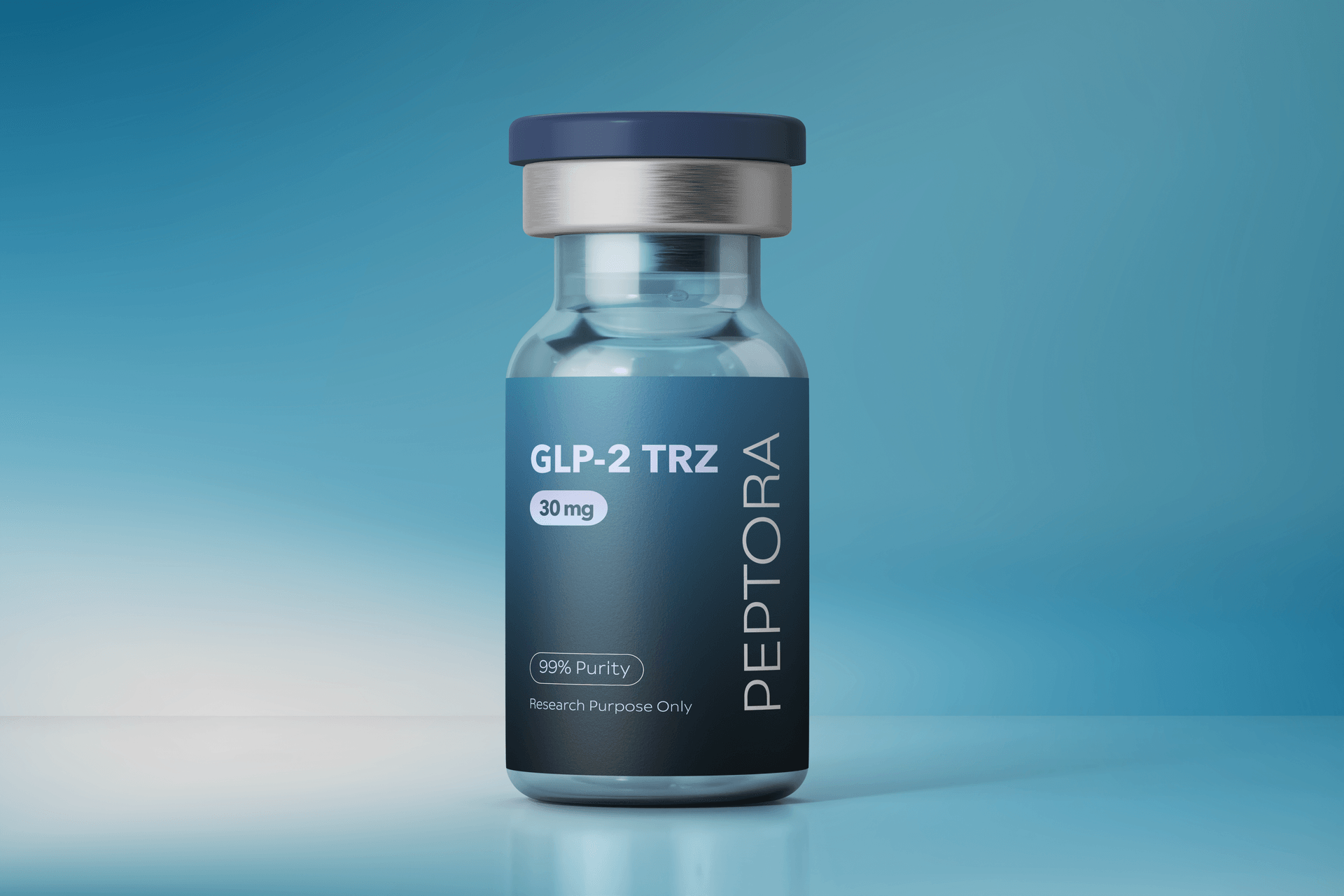
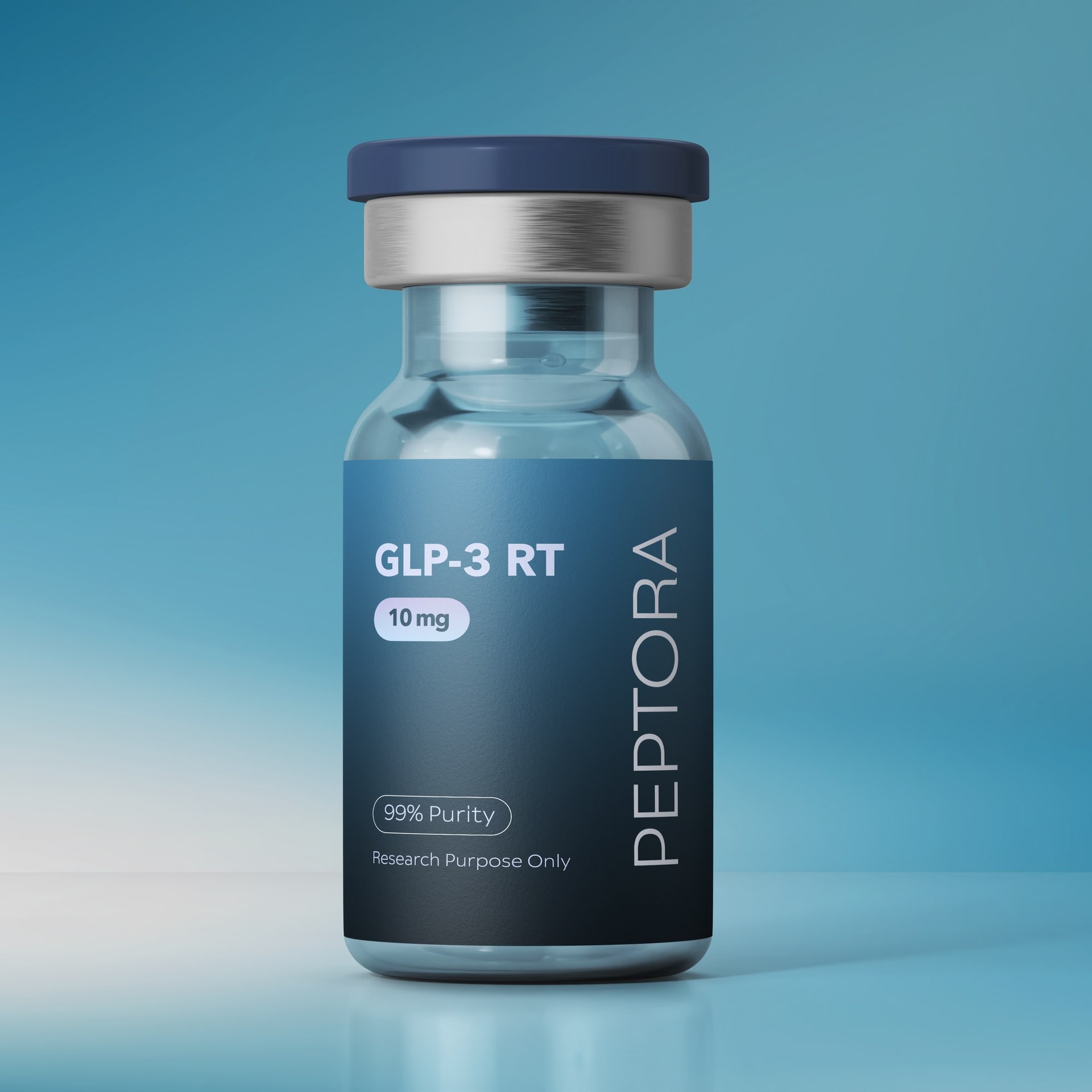
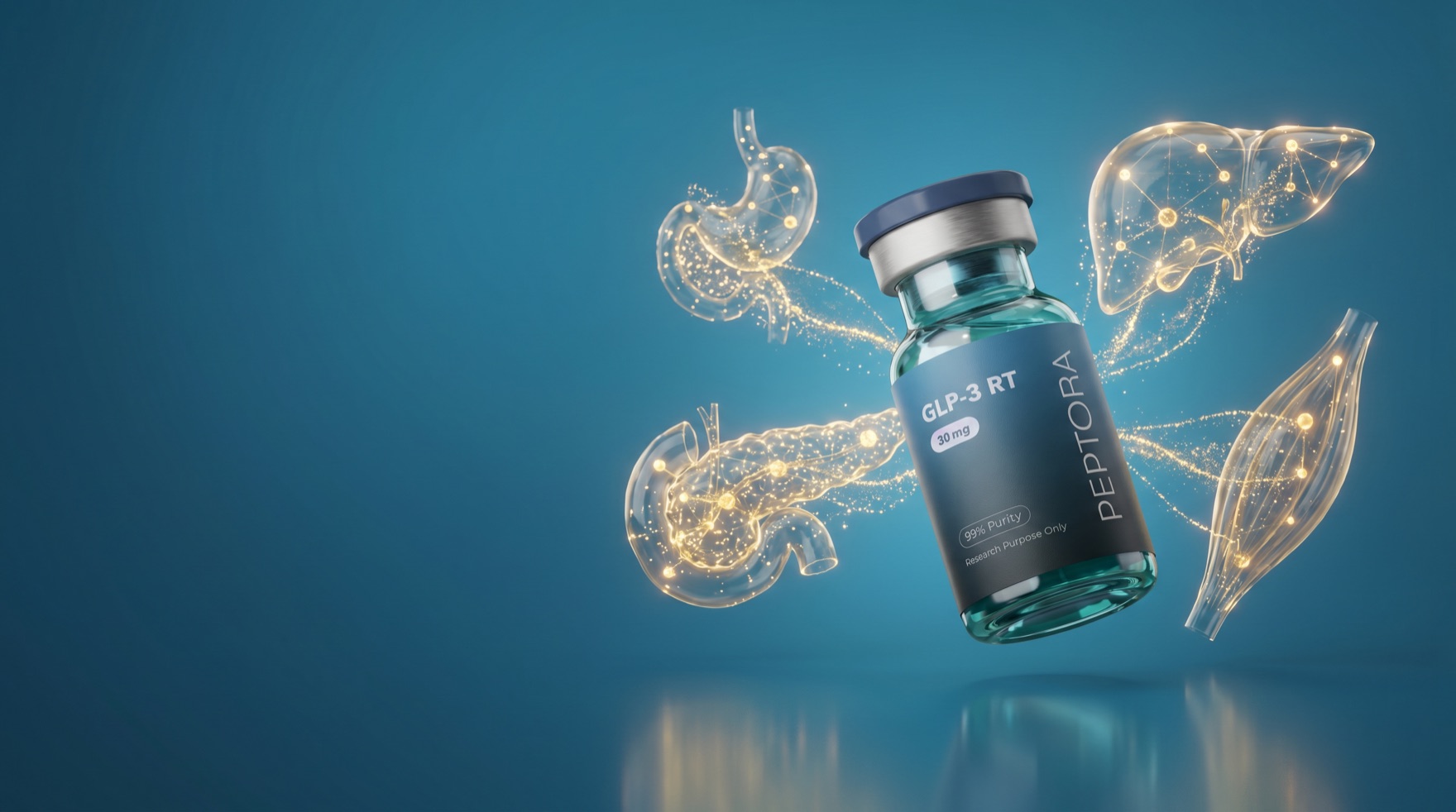
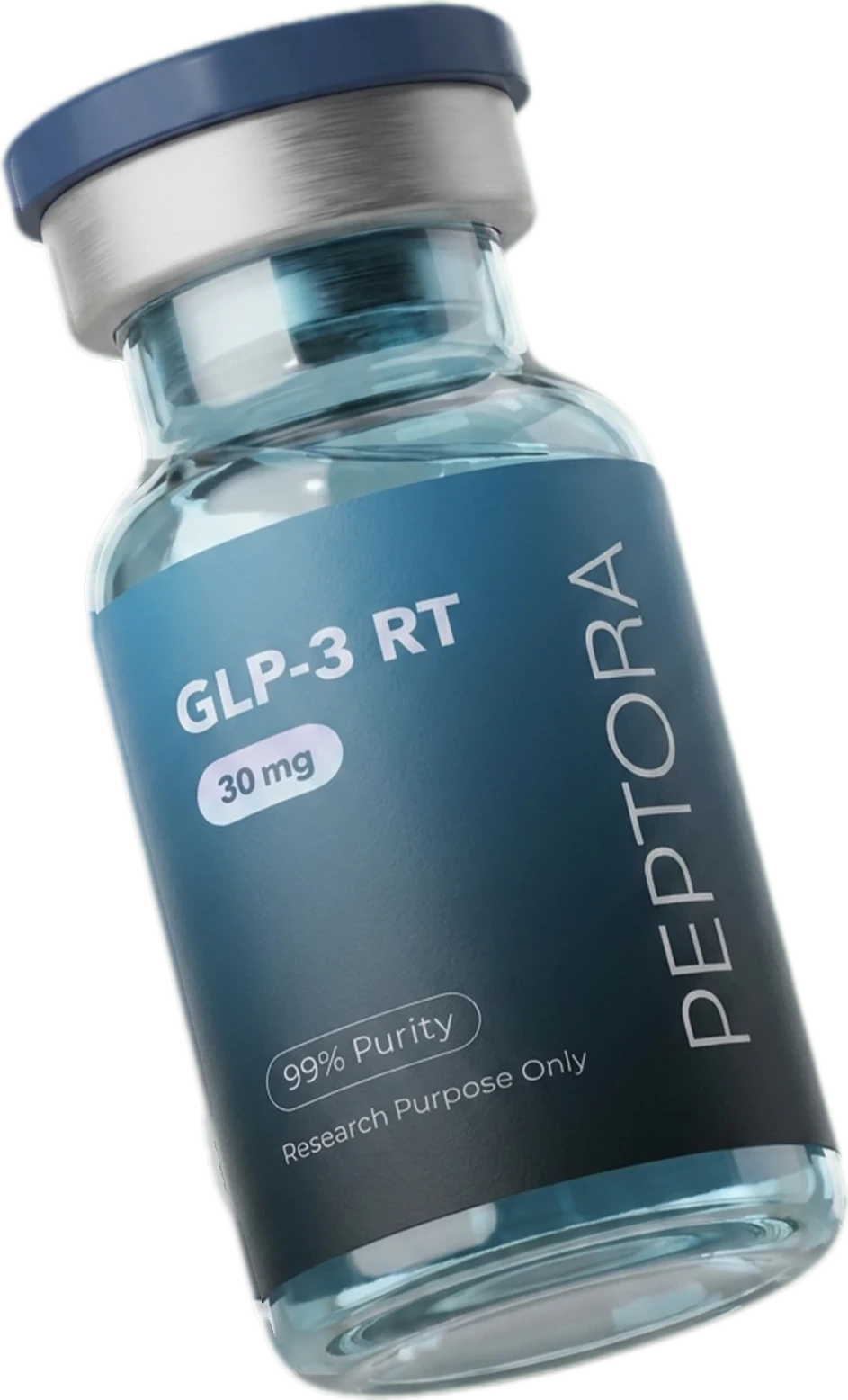
The difference is simply how many switches each one flips. Tirzepatide flips two. Retatrutide flips those same two, plus a third. Peptora's names for them are GLP-2 TRZ (Tirzepatide) and GLP-3 RT (Retatrutide) — the 2 and the 3 are literally the switch count.
Explore GLP-2 TRZ (Tirzepatide)
99%+ pure, a certificate of analysis with every batch — for laboratory research use only.
View GLP-2 TRZThe quick version
Two switches vs three
Tirzepatide turns on GLP-1 and GIP. Retatrutide turns on those two plus glucagon.
The third switch
Glucagon is the one tied to how much energy the body burns — the piece the two-switch compound doesn't have.
Different stages
Tirzepatide has finished large human trials. Retatrutide's big trials are still running.
Lab use only
Peptora's versions are research chemicals — never for people or animals.
How each one works, in plain terms
A quick word first. A receptor is a docking spot on a cell — a keyhole. An agonist is a key that fits the keyhole and switches it on. So when you read that something is a "dual receptor agonist," it just means one key that fits two keyholes. Here are the three keyholes in question:
- GLP-1 — helps the body release insulin after eating, slows how fast the stomach empties, and is tied to feeling full.
- GIP — a second "a meal is coming" signal, linked to insulin and to how the body handles fat.
- Glucagon — connected to how many calories the body burns and how the liver deals with sugar and fat.
| Compound | GLP-1 | GIP | Glucagon | Nickname |
|---|---|---|---|---|
| Tirzepatide (GLP-2 TRZ) | ✓ | ✓ | — | Dual (two switches) |
| Retatrutide (GLP-3 RT) | ✓ | ✓ | ✓ | Triple (three switches) |
Worth knowing: the switches are not weighted equally inside each molecule. In the published lab work describing Retatrutide, researchers reported that it pulls on the GIP keyhole harder than the other two — so "three switches" does not mean "three equal switches." That balance is one of the things scientists actually measure when they compare these compounds.
What the third switch actually adds
The first two switches mostly work on the input side: signals tied to insulin, to how fast food moves through, and to feeling full. The third switch, glucagon, works on the output side — it is the one connected to how much energy the body spends.
So the research question that separates these two compounds is roughly: *if you already have the two "eat less" signals, what changes when you add a "burn more" signal on top?* In the published lab work on Retatrutide, that added glucagon activity was described as contributing through energy expenditure rather than through appetite alone. That is the hypothesis the two compounds are studied to test — not a settled conclusion.
Where the research stands on each
This is the other real difference between them, and it is easy to miss: the two compounds are at very different points on the research timeline.
| Tirzepatide (GLP-2 TRZ) | Retatrutide (GLP-3 RT) | |
|---|---|---|
| Switches | Two | Three |
| First described in the literature | Earlier — the dual compound came first | Later — built on the dual design |
| Human trial stage | Large phase 3 trials completed and published | Phase 2 published; phase 3 program ongoing |
| Developed by | Eli Lilly | Eli Lilly |
| How researchers use the pair | The established two-switch reference point | The newer three-switch comparison |
In practice that means Tirzepatide is usually the benchmark in these comparisons — the known quantity a newer compound gets measured against — while Retatrutide is the question mark still being characterized. A 2024 systematic review in *Metabolism* pooled published trials across seven compounds in this family, which is a useful place to see how researchers line them up against each other.
One important note on both: the human trials described above are Eli Lilly's clinical development of these molecules as possible medicines. The versions Peptora supplies are laboratory research chemicals — not those medicines, and not for use in people or animals. If you want the deeper single-compound guides, see GLP-2 TRZ (Tirzepatide) and GLP-3 RT (Retatrutide), or the wider three-way comparison with Semaglutide.
Purity and handling (identical for both)
Whichever one a lab is working with, the material standard is the same. Every batch is checked to 99%+ purity by HPLC — a machine that separates a sample into its parts so you can see exactly how much of it is the peptide you ordered — and confirmed by LC-MS, a second test that proves the molecule is the right one. Every order ships with a certificate of analysis (COA) for that exact batch.
Both arrive as a lyophilized (freeze-dried) powder and are reconstituted — mixed with bacteriostatic water — before research use. The handling steps are the same for both, and they matter for the same reason: a peptide that has been shaken hard or left warm gives you results you cannot trust. See the reconstitution guide and what a certificate of analysis means.
Scientific references
Both compounds have been investigated in human clinical trials run by Eli Lilly, and both have a published preclinical record. The sources below are listed for background, from PubMed and ClinicalTrials.gov. They describe research on the molecules themselves — not the laboratory research products Peptora supplies.
- 1Coskun T, Urva S, Roell WC, et al. LY3437943, a novel triple glucagon, GIP, and GLP-1 receptor agonist for glycemic control and weight loss: From discovery to clinical proof of concept. Cell Metab. 2022;34(9):1234-1247.e9. doi:10.1016/j.cmet.2022.07.013 (PMID: 35985340).
- 2Jastreboff AM, Kaplan LM, Frías JP, et al. Triple-Hormone-Receptor Agonist Retatrutide for Obesity — A Phase 2 Trial. N Engl J Med. 2023;389(6):514-526. doi:10.1056/NEJMoa2301972 (PMID: 37366315; ClinicalTrials.gov: NCT04881760).
- 3Rosenstock J, Frias J, Jastreboff AM, et al. Retatrutide, a GIP, GLP-1 and glucagon receptor agonist, for people with type 2 diabetes: a randomised, double-blind, placebo and active-controlled, parallel-group, phase 2 trial. Lancet. 2023;402(10401):529-544. doi:10.1016/S0140-6736(23)01053-X (NCT04867785).
- 4Jastreboff AM, Aronne LJ, Ahmad NN, et al. Tirzepatide Once Weekly for the Treatment of Obesity. N Engl J Med. 2022;387(3):205-216. doi:10.1056/NEJMoa2206038 (SURMOUNT-1; PMID: 35658024; NCT04184622).
- 5Frías JP, Davies MJ, Rosenstock J, et al. Tirzepatide versus Semaglutide Once Weekly in Patients with Type 2 Diabetes. N Engl J Med. 2021;385(6):503-515. doi:10.1056/NEJMoa2107519 (SURPASS-2; PMID: 34170647; NCT03987919).
- 6Nauck MA, D'Alessio DA. Tirzepatide, a dual GIP/GLP-1 receptor co-agonist for the treatment of type 2 diabetes with unmatched effectiveness regarding glycaemic control and body weight reduction. Cardiovasc Diabetol. 2022;21(1):169. doi:10.1186/s12933-022-01604-7.
- 7Xie Z, Zheng G, Liang Z, et al. Seven glucagon-like peptide-1 receptor agonists and polyagonists for weight loss in patients with obesity or overweight: an updated systematic review and network meta-analysis of randomized controlled trials. Metabolism. 2024;161:156038. doi:10.1016/j.metabol.2024.156038 (PMID: 39305981).
- 8Eli Lilly and Company. Phase 3 TRIUMPH clinical programme for retatrutide — e.g. NCT05882045, NCT06354660.
Compare them in the lab
GLP-2 TRZ and GLP-3 RT — both 99%+ pure, both with a batch certificate of analysis, for laboratory research use only.
View GLP-3 RTKey takeaways
- Tirzepatide and Retatrutide come from the same drug company and the same design idea — the difference is how many of the body's metabolism switches each one flips.
- Tirzepatide flips two (GLP-1 and GIP). Retatrutide flips those two plus glucagon, which is the switch tied to how much energy the body burns.
- "Three switches" does not mean three equal switches — published lab work describes Retatrutide as pulling harder on GIP than on the other two.
- They also sit at different research stages: Tirzepatide has completed large published human trials, while Retatrutide's phase 3 program is still running.
- Peptora's GLP-2 TRZ and GLP-3 RT are laboratory research chemicals — not the medicines those trials studied, and not for people or animals.
- Both ship as a freeze-dried powder at 99%+ purity with a batch-specific certificate of analysis.
Frequently asked questions
This article is intended solely as an educational summary of publicly available scientific literature. Products offered by Peptora are supplied exclusively for laboratory research purposes and are not approved for human or veterinary use. The information presented should not be interpreted as medical advice, treatment recommendations, or clinical guidance.