The simple difference: one, two, or three switches
These three compounds get compared constantly, but the core difference is easy to picture. Your body has a few "switches" that help control blood sugar, hunger, and how much energy it burns. Each of these compounds flips a different number of them:
- Semaglutide flips one switch (called GLP-1).
- Tirzepatide flips two switches (GLP-1 and GIP).
- Retatrutide flips three switches (GLP-1, GIP, and glucagon).
That's the headline. A word you'll see for these is agonist, which just means a key that switches something on. So a "single agonist" flips one switch, a "dual agonist" flips two, and a "triple agonist" flips three. Everything else is detail.
Explore the research-grade compounds
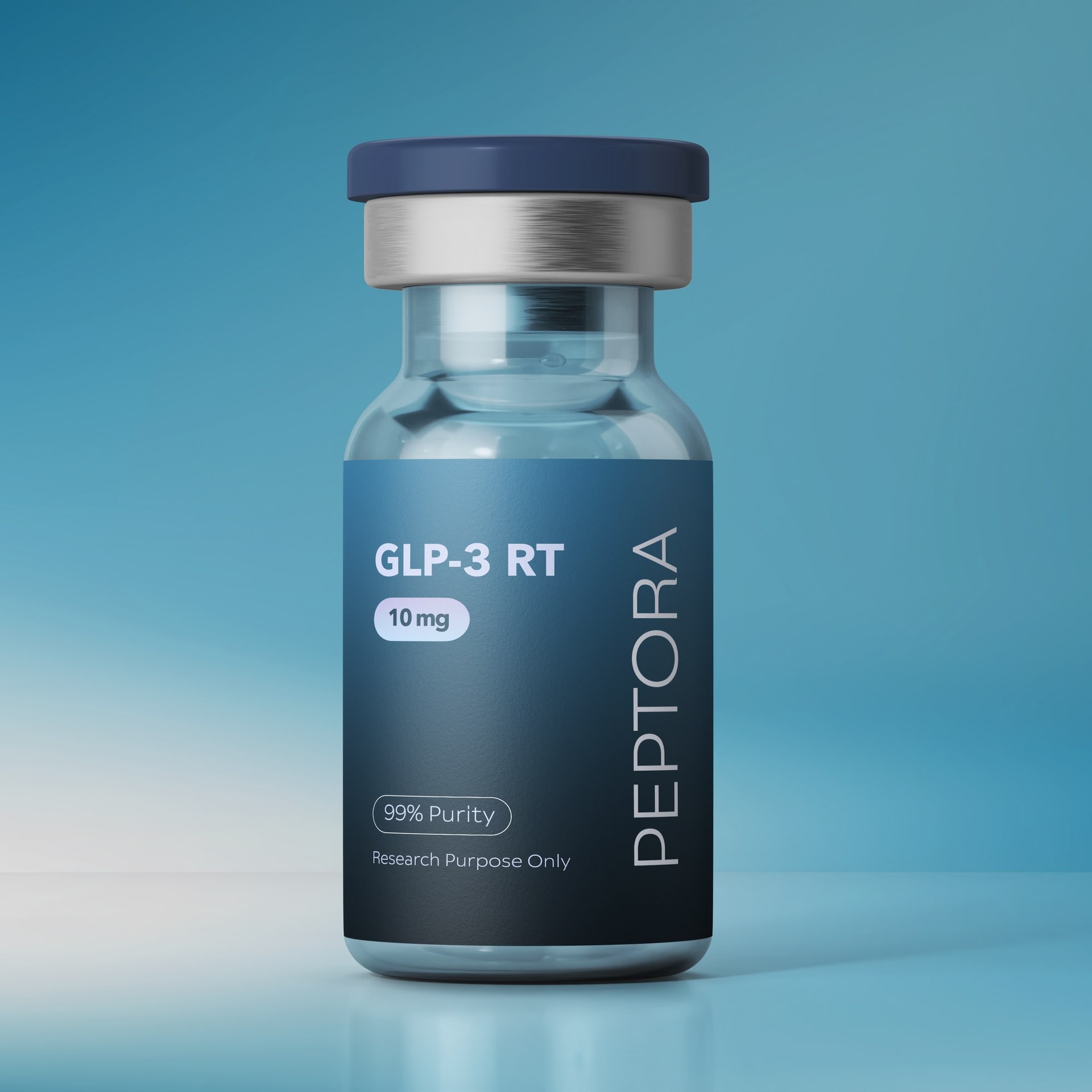
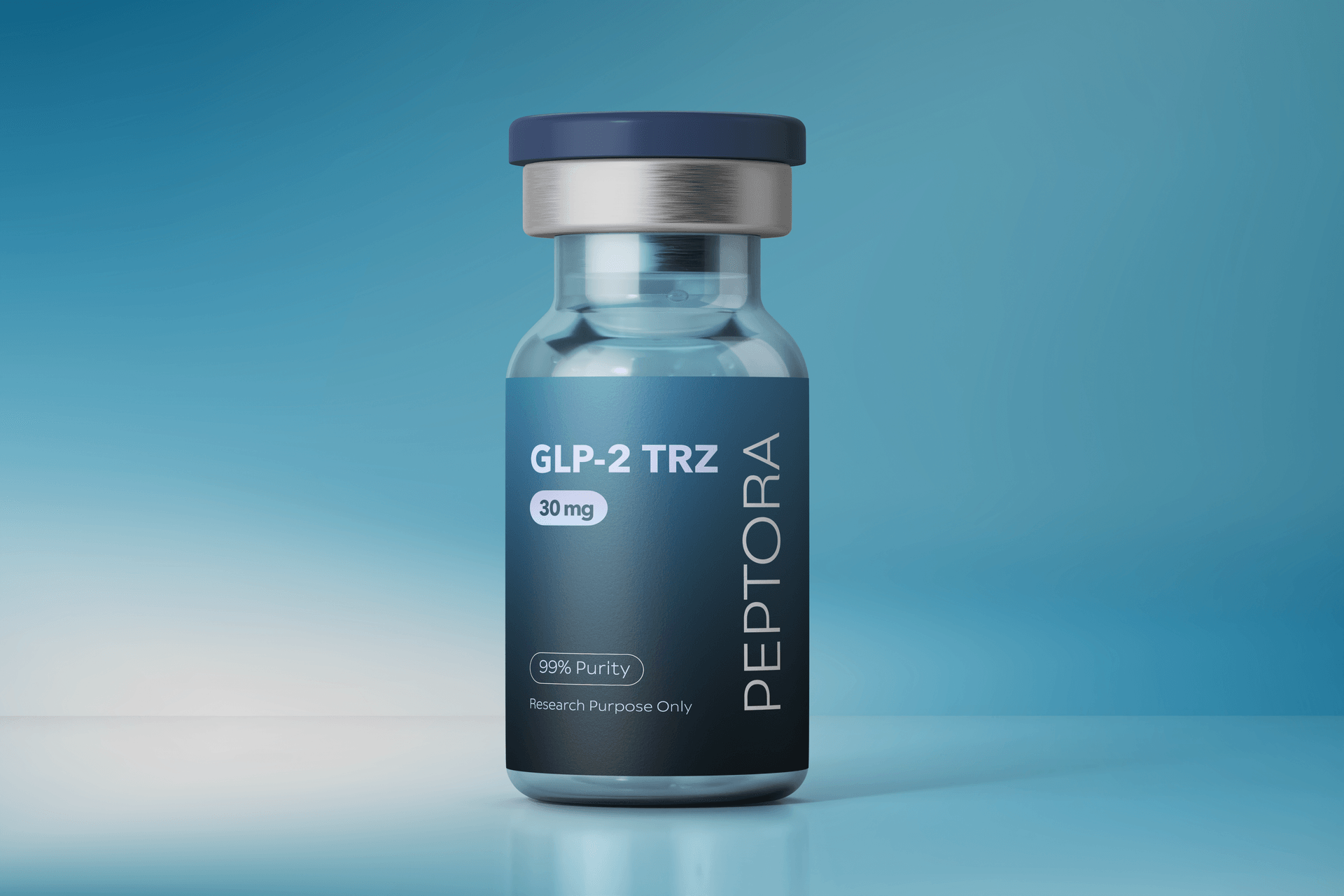
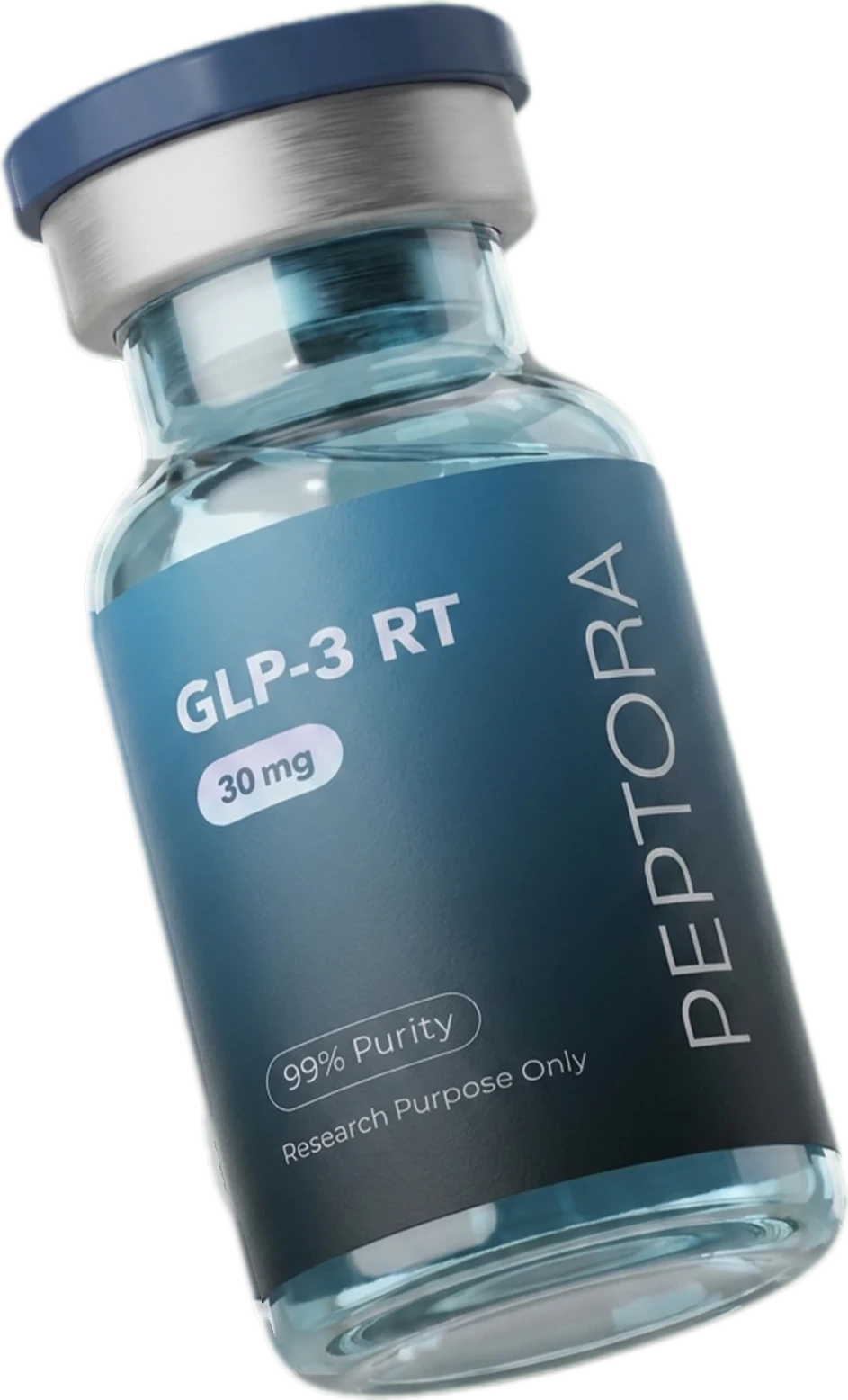
GLP-3 RT and GLP-2 TRZ — 99%+ pure, a certificate of analysis with every batch, for laboratory research use only.
View GLP-3 RTThe quick version
Semaglutide — one switch
Flips GLP-1, the switch tied to insulin and feeling full. The single-switch original.
Tirzepatide — two switches
Adds GIP, a second "a meal is coming" signal. Peptora's name for it is GLP-2 TRZ.
Retatrutide — three switches
Adds glucagon, the switch tied to burning energy. Peptora's name for it is GLP-3 RT.
Same testing bar
The research-grade versions are 99%+ pure (HPLC + LC-MS) with a certificate for every batch.
What each switch actually does
The three switches are all part of how the body deals with food and energy. Here's each one in everyday language:
- GLP-1 — helps the body release insulin, slows how fast the stomach empties, and is tied to feeling full. All three compounds flip this one.
- GIP — another "a meal is coming" signal, linked to insulin and to how the body handles fat. Tirzepatide and retatrutide add this one.
- Glucagon — connected to how many calories the body burns and how the liver handles sugar and fat. Only retatrutide adds this third one.
So as you go from one switch to two to three, you're not swapping switches — you're stacking them. That's why researchers describe these as single-, dual-, and triple-receptor agonists.
Side-by-side comparison
Here is the whole comparison in one table — the switches each one flips, and the name Peptora uses for the research-grade version:
| Compound | GLP-1 | GIP | Glucagon | Switches | Peptora name |
|---|---|---|---|---|---|
| Semaglutide | ✓ | — | — | One (single) | Not carried |
| Tirzepatide | ✓ | ✓ | — | Two (dual) | GLP-2 TRZ |
| Retatrutide | ✓ | ✓ | ✓ | Three (triple) | GLP-3 RT |
Peptora carries research-grade Tirzepatide (GLP-2 TRZ) and Retatrutide (GLP-3 RT) — each with its own certificate of analysis. For deeper single-compound background, see the GLP-3 RT guide and the GLP-2 TRZ guide.
What the research shows so far
All three have been studied in large human clinical trials, and the results have been published. In plain terms:
- Semaglutide (one switch) has been investigated in a big weight-and-metabolism trial program, and its results set the early benchmark for this family.
- Tirzepatide (two switches) has been studied head-to-head against semaglutide in type 2 diabetes research, and in its own large body-weight trials.
- Retatrutide (three switches) is newer; early (phase 2) trial results are published, and a larger phase 3 program is underway.
The exact studies are listed in the references below. The takeaway to remember is the simple one: the compounds differ mainly by how many switches they flip, and the research explores what adding each switch does.
Purity and testing (why the certificate matters)
In research, your results are only as trustworthy as the material you start with. Every batch of the research-grade compounds from Peptora is checked to 99%+ purity by HPLC, confirmed by a second test (LC-MS) that proves it's the right molecule, and run through a full quality-control panel before it ships. Every order comes with a certificate of analysis (COA) for that exact batch.
To learn what the numbers on a certificate actually mean, see the guide on what a certificate of analysis is.
Scientific references
These references, from PubMed and ClinicalTrials.gov, describe clinical research on the three compounds themselves — not the laboratory research products Peptora supplies, and not as any guide to use.
- 1Wilding JPH, et al. Once-weekly semaglutide in adults with overweight or obesity (STEP 1). N Engl J Med. 2021;384(11):989-1002. doi:10.1056/NEJMoa2032183 (PMID: 33567185).
- 2Frías JP, et al. Tirzepatide versus semaglutide once weekly in patients with type 2 diabetes (SURPASS-2). N Engl J Med. 2021;385(6):503-515. doi:10.1056/NEJMoa2107519 (PMID: 34170647).
- 3Jastreboff AM, et al. Tirzepatide once weekly for the treatment of obesity (SURMOUNT-1). N Engl J Med. 2022;387(3):205-216. doi:10.1056/NEJMoa2206038 (PMID: 35658024).
- 4Jastreboff AM, et al. Triple-hormone-receptor agonist retatrutide for obesity — a phase 2 trial. N Engl J Med. 2023;389(6):514-526. doi:10.1056/NEJMoa2301972 (PMID: 37366315; NCT04881760).
- 5Rosenstock J, et al. Retatrutide, a GIP, GLP-1 and glucagon receptor agonist, for people with type 2 diabetes: a phase 2 trial. Lancet. 2023;402(10401):529-544. doi:10.1016/S0140-6736(23)01053-X (NCT04867785).
Explore research-grade GLP-3 RT and GLP-2 TRZ
99%+ pure, a certificate of analysis with every batch, fast U.S. shipping — for laboratory research use only.
View GLP-3 RTKey takeaways
- The simplest way to tell these three apart is by counting the body's metabolism "switches" each one flips: semaglutide flips one, tirzepatide two, retatrutide three.
- The switches are GLP-1 (all three), GIP (tirzepatide and retatrutide), and glucagon (retatrutide only). Going up the list stacks switches rather than swapping them.
- The word "agonist" just means a key that switches something on — so single-, dual-, and triple-agonist means one, two, or three switches.
- All three have been studied in large, published human clinical trials; retatrutide is the newest, with phase 2 results out and phase 3 underway.
- Peptora carries research-grade Tirzepatide (GLP-2 TRZ) and Retatrutide (GLP-3 RT); it does not carry semaglutide. These are for laboratory research only — not medicines, and not for people or animals.
- The research-grade versions are 99%+ pure (HPLC and LC-MS) with a certificate of analysis for every batch.
Frequently asked questions
This article is intended solely as an educational summary of publicly available scientific literature. Products offered by Peptora are supplied exclusively for laboratory research purposes and are not approved for human or veterinary use. The information presented should not be interpreted as medical advice, treatment recommendations, or clinical guidance.