What reconstitution is — and why research peptides ship lyophilized
Reconstitution is the laboratory step of dissolving a lyophilized (freeze-dried) peptide back into liquid form so it can be measured, diluted, and used in benchtop research. Research peptides are supplied as a dry powder for a simple reason: in the solid state they are far more stable than in water. Once dissolved, a peptide is exposed to the hydrolytic and oxidative reactions that slowly cleave peptide bonds and modify amino-acid side chains, so the dry format is what preserves integrity during shipping and long-term storage.
Freeze-drying removes water under vacuum and leaves a stable, glassy cake that can be held at low temperature for extended periods. Reconstitution simply reverses that final step at the bench, immediately before the material is needed for research. Because the powder is a defined, HPLC-verified compound, careful reconstitution is what carries that purity forward into a usable stock solution.
The essentials at a glance
Lyophilized powder
Peptides ship freeze-dried because the solid state is markedly more stable than a solution.
Bacteriostatic water
The usual diluent for reconstitution — water with 0.9% benzyl alcohol to inhibit microbial growth.
Cold, dark storage
Once in solution, the peptide is refrigerated and protected from light to slow degradation.
Traceable purity
Every batch is HPLC-verified to 99%+ purity with a lot-specific certificate of analysis — research use only.
Reconstituting a research peptide?
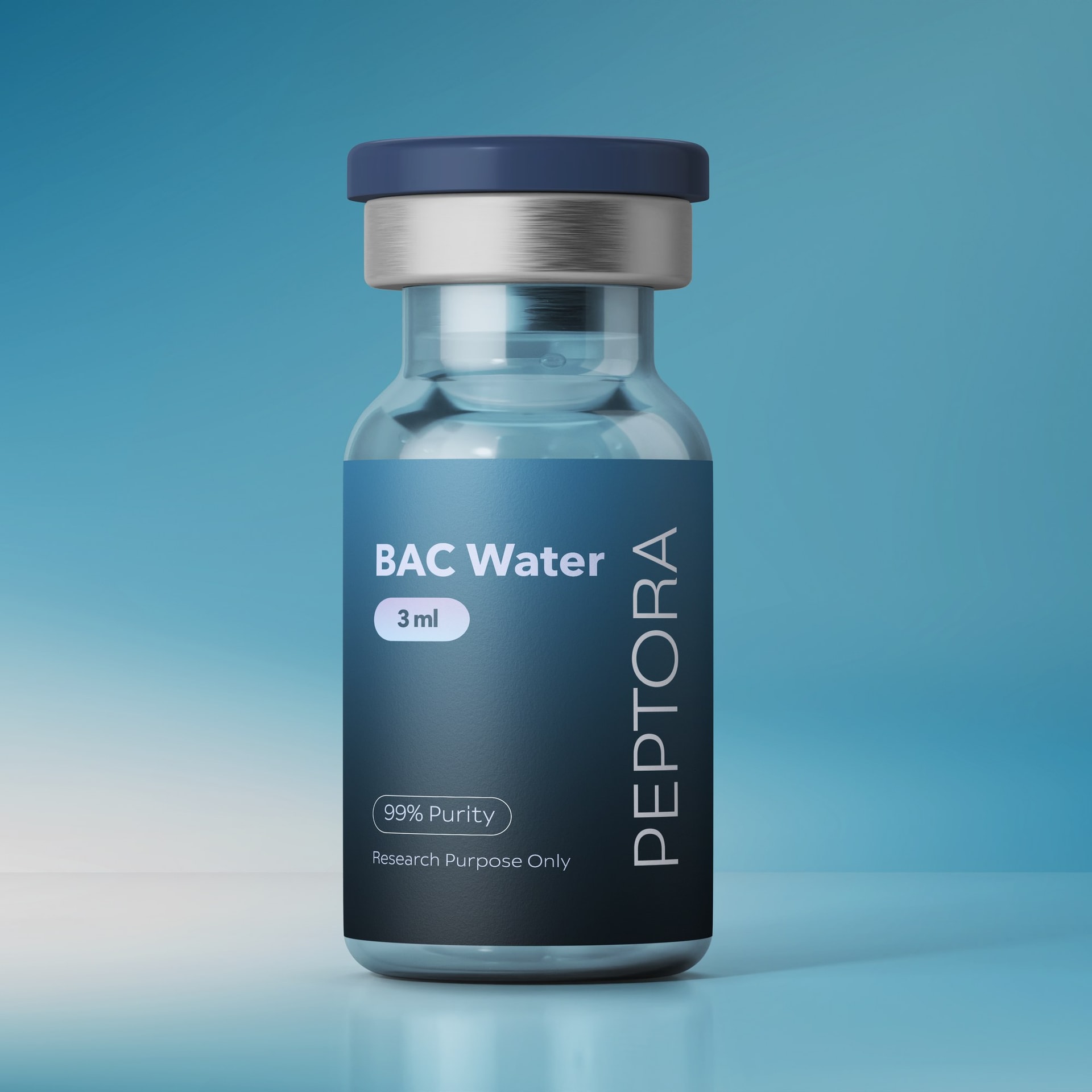
Bacteriostatic water is the standard laboratory diluent — 0.9% benzyl alcohol, filtered and sealed for repeat-access research use.
View Bacteriostatic WaterBacteriostatic water vs. sterile water
The diluent used for reconstitution matters. Two options appear most often in the literature and on the bench, and the difference comes down to whether the water contains a preservative.
- Bacteriostatic water — water containing roughly 0.9% benzyl alcohol, an antimicrobial preservative that inhibits bacterial growth. Because it resists contamination, it is the common choice when a reconstituted stock will be accessed more than once over a period of days or weeks.
- Sterile water — purified, preservative-free water. It is free of microorganisms at the moment it is opened but offers no ongoing protection, so any solution made with it is best treated as single-use for research and discarded promptly.
- Choosing between them — bacteriostatic water is preferred for multi-access research stocks; a preservative-free diluent may be selected only when a preservative could interfere with a specific assay.
| Property | Bacteriostatic water | Sterile water |
|---|---|---|
| Preservative | ~0.9% benzyl alcohol | None |
| Resists microbial growth | Yes — across repeat access | Only until first opened |
| Typical research use | Multi-access stock solutions | Single-use preparations |
| Useful window once opened | Days to weeks, refrigerated | Use promptly, then discard |

The general reconstitution procedure, step by step
The following describes the standard laboratory procedure for reconstituting a lyophilized research peptide. It is written as a materials-handling protocol for the bench — every step concerns the vial and the solution, not any downstream use.
- 1Bring both vials to room temperature. Allow the sealed peptide vial and the bacteriostatic water to equilibrate to room temperature before opening, which prevents condensation and thermal shock to the powder.
- 2Clean the stoppers. Swab the rubber stopper of each vial with 70% isopropyl alcohol and let it dry, keeping the working surface and equipment clean.
- 3Determine the diluent volume. Choose the target concentration (mg/mL) your protocol calls for; the volume of bacteriostatic water added sets the final concentration of the stock solution. More diluent yields a more dilute stock, less diluent a more concentrated one.
- 4Add the water slowly. Introduce the measured bacteriostatic water down the inner glass wall of the peptide vial so it runs gently onto the powder, rather than jetting directly onto it.
- 5Let it dissolve — do not shake. Allow the powder to go into solution on its own, with a slow, gentle swirl if needed. Shaking or vigorous agitation can denature or foam the peptide; the solution should turn clear.
- 6Inspect the solution. Confirm the liquid is clear and free of visible particulates. A cloudy solution or undissolved material is a signal to pause and re-check technique.
- 7Label and store. Mark the vial with the concentration and reconstitution date, then store it refrigerated and protected from light. Withdraw aliquots only as a given research assay requires, returning the vial to cold storage promptly.
Storage and shelf life
How a peptide is stored — both before and after reconstitution — is one of the largest factors in how long it stays intact. The dry powder and the reconstituted solution have very different storage profiles.
- Lyophilized powder (unopened) — the most stable form. Kept cold and sealed, a freeze-dried peptide can remain stable for long periods; the solid state resists the hydrolysis and oxidation seen in solution.
- Reconstituted solution — less stable, and best kept refrigerated (about 2–8 °C) and shielded from light. In solution the peptide is subject to slow chemical degradation, so the useful window is generally measured in weeks rather than months.
- Long-term aliquots — where a protocol calls for extended storage, dividing a stock into single-use aliquots and freezing them limits repeated warming and cooling, a known driver of degradation.
- Avoid repeated freeze–thaw — each freeze–thaw cycle stresses the peptide; frozen aliquots are best thawed once and used.
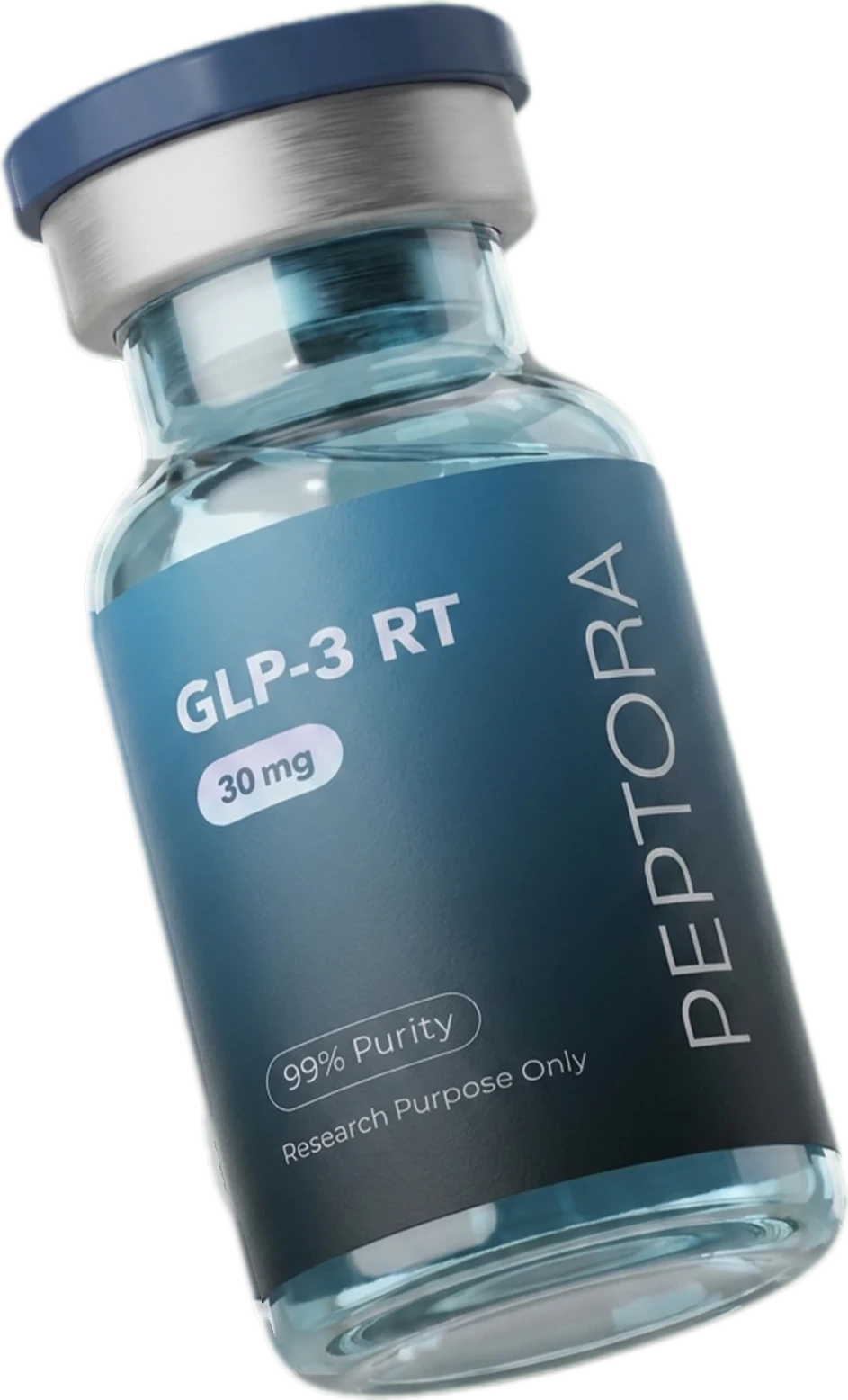
The same storage principles apply regardless of the peptide inside the vial — the handling here holds equally for GLP-3 RT, BPC-157, and other lyophilized research compounds. Consistent storage is one of the simplest ways to keep the purity behind a result intact from powder to solution.
Common reconstitution mistakes to avoid
Most reconstitution problems trace back to a handful of avoidable errors. Each one either degrades the peptide or compromises the accuracy of downstream research:
- Shaking the vial. Vigorous agitation shears and foams peptides; always swirl gently and let the powder dissolve on its own.
- Blasting water onto the powder. Directing the diluent straight at the cake can denature it — run the water down the vial wall instead.
- Using the wrong diluent. Reaching for tap, distilled, or plain drinking water invites contamination and degradation; bacteriostatic water is the standard laboratory choice.
- Storing the solution warm or in light. Leaving a reconstituted vial at room temperature or in daylight accelerates chemical degradation; refrigerate it and keep it dark.
- Repeated freeze–thaw cycles. Freezing and thawing the same stock again and again stresses the peptide — aliquot first, then thaw once.
- Skipping the label. An unlabeled vial with no concentration or date undermines reproducibility; mark every vial at the moment of reconstitution.
Scientific references
The literature below is provided for educational context, per PubMed, and describes the stability, formulation, and storage science that underlies standard laboratory reconstitution and handling practices.
- 1Nugrahadi PP, Hinrichs WLJ, Frijlink HW, Schöneich C, Avanti C. Designing Formulation Strategies for Enhanced Stability of Therapeutic Peptides in Aqueous Solutions: A Review. Pharmaceutics. 2023;15(3):935. doi:10.3390/pharmaceutics15030935 (PMID: 36986796).
- 2Lai MC, Topp EM. Solid-state chemical stability of proteins and peptides. J Pharm Sci. 1999;88(5):489-500. doi:10.1021/js980374e (PMID: 10229638).
- 3Roy S, Jung R, Kerwin BA, Randolph TW, Carpenter JF. Effects of benzyl alcohol on aggregation of recombinant human interleukin-1-receptor antagonist in reconstituted lyophilized formulations. J Pharm Sci. 2005;94(2):382-396. doi:10.1002/jps.20258 (PMID: 15614819).
- 4Ó'Fágáin C, Colliton K. Storage and Lyophilization of Pure Proteins. Methods Mol Biol. 2023;2699:421-475. doi:10.1007/978-1-0716-3362-5_19 (PMID: 37647008).
- 5Angkawinitwong U, Sharma G, Khaw PT, Brocchini S, Williams GR. Solid-state protein formulations. Ther Deliv. 2015;6(1):59-82. doi:10.4155/tde.14.98 (PMID: 25565441).
Bacteriostatic water, research-grade
The standard diluent for reconstituting lyophilized research peptides — 0.9% benzyl alcohol, filtered and sealed. For laboratory research use only.
View Bacteriostatic WaterKey takeaways
- Reconstitution is the laboratory step of dissolving a lyophilized (freeze-dried) peptide back into liquid so it can be measured and used in research.
- Peptides ship as a dry powder because the solid state is far more stable than a solution, where hydrolysis and oxidation slowly degrade the molecule.
- Bacteriostatic water (about 0.9% benzyl alcohol) is the standard diluent for multi-access research stocks; preservative-free sterile water is better treated as single-use.
- Add the diluent slowly down the vial wall and let the powder dissolve without shaking — vigorous agitation can denature or foam the peptide.
- Store the reconstituted solution refrigerated (about 2–8 °C) and protected from light, aliquot for long-term storage, and avoid repeated freeze–thaw cycles.
- These are general laboratory handling practices for research materials only — not medical or human-use instructions. Peptora's peptides are HPLC-verified to 99%+ purity with a lot-specific certificate of analysis.
Frequently asked questions
This article is intended solely as an educational summary of publicly available scientific literature. Products offered by Peptora are supplied exclusively for laboratory research purposes and are not approved for human or veterinary use. The information presented should not be interpreted as medical advice, treatment recommendations, or clinical guidance.