


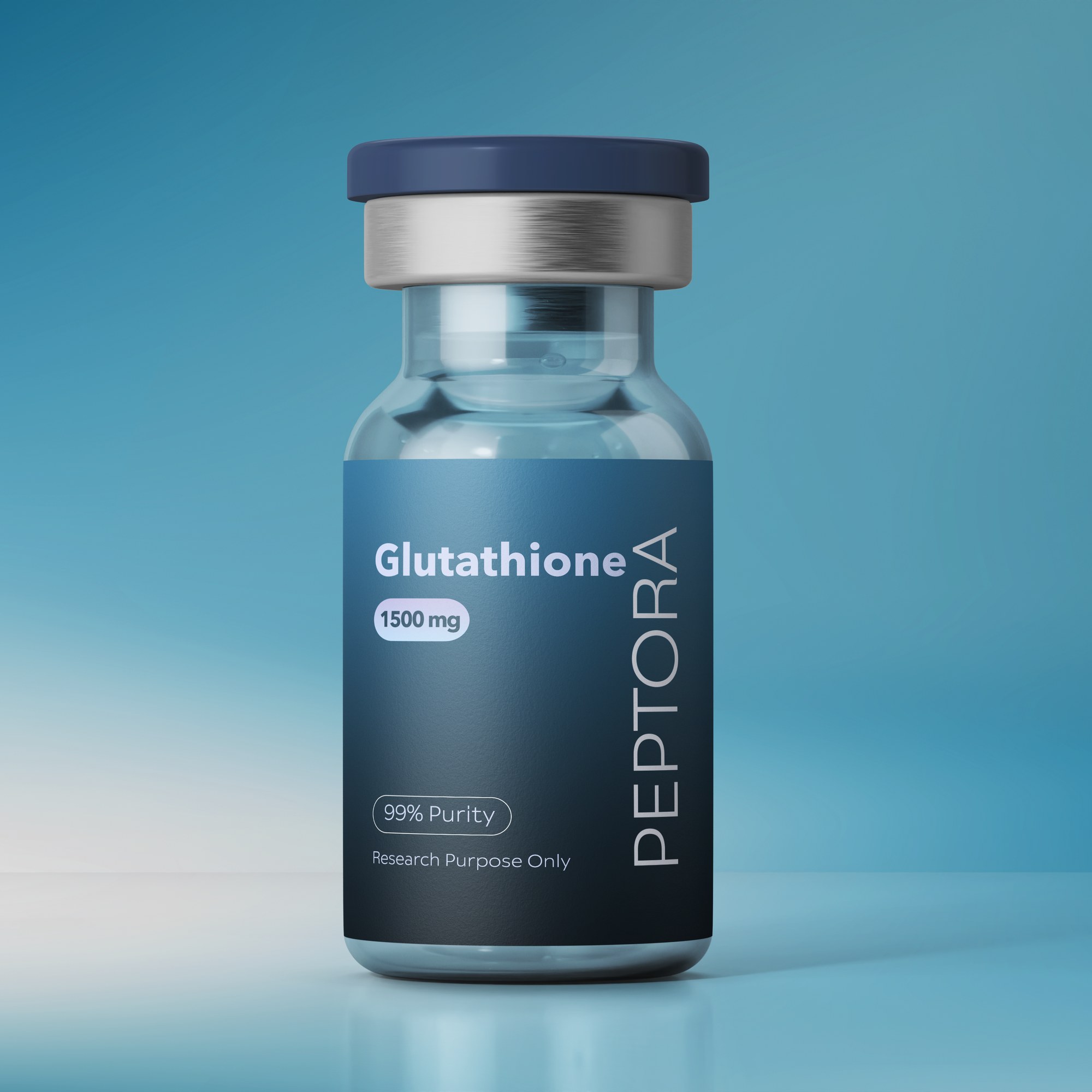
What is Glutathione?
Glutathione is a tiny natural peptide — a peptide is just a small protein, and glutathione is one of the smallest, built from only three building blocks (the amino acids cysteine, glutamate, and glycine). Because it has exactly three parts, scientists call it a tripeptide. Unlike most compounds in this library, the body already makes glutathione on its own, in nearly every cell, all the time.
It's famous enough to have a nickname: the "master antioxidant." Here's the plain-English picture. Every time your cells make energy, they throw off a few damaging "sparks" — unstable molecules scientists call reactive oxygen species (or free radicals). Left alone, those sparks can nick and damage the cell. An antioxidant is simply a spark extinguisher, and glutathione is the body's most abundant, built-in one. That central role is exactly why researchers study it so much.
The quick version
The master antioxidant
The body's most abundant built-in "spark extinguisher" against cell-damaging molecules.
A three-part peptide
A tripeptide made of just three building blocks: cysteine, glutamate, and glycine.
Keeps "redox" balance
The ratio of its charged to used-up forms is a common readout of oxidative stress in studies.
Published lab results
Each lot's HPLC purity is listed on its certificate of analysis.
How it works, in plain terms
Glutathione's trick is a tiny chemical "handle" on its cysteine part (a sulfur atom) that loves to grab onto reactive molecules. When it grabs a damaging spark, it neutralizes it — and in doing so, glutathione itself gets "used up." The body then recharges it back to the active form. Because of this cycle, glutathione exists in two forms, and the balance between them tells scientists a lot:
| Form | Nickname | What it means |
|---|---|---|
| GSH (reduced) | "Charged" | The active form, ready to neutralize a damaging molecule |
| GSSG (oxidized) | "Used up" | The spent form, after it has done its job |
Researchers often measure the GSH-to-GSSG ratio as a quick readout of how much oxidative stress a cell or tissue is under — more "used up" glutathione usually means more stress. Beyond mopping up sparks, published studies describe a few other jobs, in everyday language:
- It powers cleanup enzymes. A family of enzymes called glutathione peroxidases use glutathione as fuel to safely break down peroxides (a common type of damaging molecule).
- It helps with detox. Glutathione can latch onto unwanted chemicals and toxins, tagging them so the body can package and remove them — a big part of what the liver does.
- It protects other players. It helps keep other proteins and antioxidants (like vitamins C and E) in working shape.
- Levels shift with stress and age. Studies note glutathione tends to run lower under illness, stress, and with aging — which is why it's such a common research marker.
What scientists actually study it for
Because it sits at the center of the cell's defense system, glutathione appears across a huge range of research. The main areas in the published literature are:
- Oxidative stress and aging — glutathione is the go-to marker for how much "spark" damage a cell or tissue is under, and how that changes with age.
- Detoxification research — its role in tagging and clearing unwanted chemicals, especially in liver studies.
- Cell-death pathways — it's central to a form of cell death called ferroptosis, where losing glutathione defense lets damage run away; a very active research area.
- Skin and pigment research — studies have looked at glutathione's relationship to the pigment-making enzyme tyrosinase, though the evidence here is debated.
Purity and testing (why the certificate matters)
In research, your results are only as trustworthy as the material you start with. Peptora's Glutathione lots are tested for purity by HPLC at an independent lab, with LC-MS as a second test to confirm it's the right molecule. Each lot's results are published online as a certificate of analysis (COA).
To learn what the numbers on a certificate actually mean, see the guide on what a certificate of analysis is and the research-peptide overview.
How it's handled in the lab
Glutathione ships as a freeze-dried powder (that's what lyophilized means — the water has been removed to keep it stable). Before it's used in research, it's mixed with bacteriostatic water — a special sterile water, sold separately — a step called reconstitution ("mixing the powder back into a liquid"). Because glutathione's active form is easily "used up" by air and light, careful handling matters even more than usual:
- 1Let the sealed vial warm up to room temperature before opening it.
- 2Add the water slowly down the side of the vial, then swirl gently — don't shake.
- 3Wait until the powder is fully dissolved before drawing anything out.
- 4Keep the mixed solution in the fridge, away from light and air, and use it within a short window.
Step-by-step details are in the reconstitution guide. Doing these the same way every time is one of the easiest ways to keep research consistent.
Scientific references
Glutathione (GSH) is the body's most abundant intracellular antioxidant and has been studied for decades across biochemistry, physiology, and medicine. The reviews and studies below are provided for background, from PubMed and ClinicalTrials.gov. They describe research on the molecule itself — not the laboratory research product Peptora supplies.
- 1Gasmi A, et al. An Update on Glutathione's Biosynthesis, Metabolism, Functions, and Medicinal Purposes. Curr Med Chem. 2024;31(29):4579-4601. doi:10.2174/0109298673251025230919105818 (PMID: 37921175).
- 2Brigelius-Flohé R, Maiorino M. Glutathione peroxidases. Biochim Biophys Acta. 2013;1830(5):3289-3303. doi:10.1016/j.bbagen.2012.11.020 (PMID: 23201771).
- 3Wu G. Amino acids: metabolism, functions, and nutrition. Amino Acids. 2009;37(1):1-17. doi:10.1007/s00726-009-0269-0 (PMID: 19301095).
- 4Xie Y, et al. Ferroptosis: process and function. Cell Death Differ. 2016;23(3):369-379. doi:10.1038/cdd.2015.158 (PMID: 26794443).
- 5Sonthalia S, Daulatabad D, Sarkar R. Glutathione as a skin whitening agent: Facts, myths, evidence and controversies. Indian J Dermatol Venereol Leprol. 2016;82(3):262-272. doi:10.4103/0378-6323.179088 (PMID: 27088927).
- 6ClinicalTrials.gov registered studies of oral glutathione — e.g. NCT04090138 (oral glutathione and endurance) and NCT01265563 (correcting glutathione deficiency).
Explore Glutathione
Independently lab tested, with each lot's certificate of analysis published online, fast U.S. shipping — for laboratory research use only.
View GlutathioneKey takeaways
- Glutathione is a tiny natural peptide (a tripeptide of cysteine, glutamate, and glycine) that the body makes on its own in nearly every cell.
- It's called the "master antioxidant" because its main job is neutralizing the cell-damaging "sparks" (reactive oxygen species) that build up during normal metabolism.
- It exists in a "charged" (GSH) and a "used up" (GSSG) form, and scientists use the ratio between them as a common readout of oxidative stress.
- Research spans oxidative stress, aging, detoxification, and cell-death pathways like ferroptosis — but questions about supplementing it are still debated. It's for laboratory research only, not for people or animals.
- It ships as a freeze-dried powder. Lots are tested by an independent lab (HPLC, LC-MS), and each lot's results are published online as a certificate of analysis.
Frequently asked questions
This article is intended solely as an educational summary of publicly available scientific literature. Products offered by Peptora are supplied exclusively for laboratory research purposes and are not approved for human or veterinary use. The information presented should not be interpreted as medical advice, treatment recommendations, or clinical guidance.