
What is a peptide?
Here's the simple version: a peptide is a short chain of amino acids — the tiny building blocks that also make up proteins. The only real difference between a peptide and a protein is length. Peptides are the short chains; proteins are much longer and fold up into complex shapes. The line between them is fuzzy, but "peptide" usually means the shorter, signal-sized molecules.
Peptides are everywhere in the body. It makes many of its own — insulin is a famous one — and uses them as messengers that carry instructions from cell to cell. Because they sit at the center of so much of how the body works, a well-made, clearly-defined peptide is a handy tool for studying those processes. A research peptide is exactly that: a peptide built to a known recipe and sold for lab study.
The quick version
A chain of amino acids
A peptide is a short chain of amino acids — the same building blocks as proteins, just a shorter chain.
Research use only
Sold as a lab reference material for test-tube, cell, and early animal studies — never for use in people or animals.
Studied, not prescribed
Studied in published science through lab tests and early animal models — these are research findings, not proven medical results.
Verified and documented
What it is and how pure it is are confirmed by lab tests (HPLC and mass spectrometry), with a report card for every batch.
New to research peptides?
Every Peptora compound is checked to 99%+ purity and ships with a batch-specific certificate of analysis — for laboratory research use only.
Browse research compoundsWhat makes a peptide a "research peptide"?
"Research peptide" isn't a special type of chemical — it describes how the material may be used and handled, not a different kind of molecule. A peptide becomes a research peptide when it's made to an exact recipe, tested for what it is and how pure it is, and sold for laboratory research use only. The label tells you how it may be used — it's not a claim about what it does.
"Research use only" has a specific meaning. It means the compound is meant for lab science — test-tube studies, cell studies, and early animal studies, the careful lab work where compounds get studied. It has not been approved for use in people or animals, and it's neither a medicine nor a supplement. That's why this guide — and every guide in the Research Hub — describes what the science reports, and never gives doses, injection steps, or personal-use instructions.
| Feature | Research peptide | Approved medicine | Dietary supplement |
|---|---|---|---|
| What it's for | Lab research only | Diagnosing or treating patients | Eating as part of a diet |
| Legal status | Not approved for use in people or animals | Reviewed and approved by regulators | Regulated as a food, not a drug |
| Where it's used | In the lab (test tubes, cells, early animal studies) | In doctors' offices and hospitals | By everyday shoppers |
| How it's tested | Studied in published science | Proven through human clinical trials | Sold under food-safety rules |
How research peptides are studied
In the lab, a peptide is studied in stages, starting small and building up. Each stage answers a different question, and the findings they produce get published in science journals — which is not the same as the proven medical results that only finished human trials can give. Common ways they're studied include:
- Test-tube experiments — lab tests that show how a peptide latches onto its target, the molecule it's meant to act on.
- Cell studies — living cells grown in the lab, used to watch the signals a peptide is linked to.
- Early animal studies — the careful lab studies where many peptides have been tested, as reported in published science.
- Structure-vs-behavior studies — comparing slightly different recipes to see which building blocks matter to how a peptide acts.
- Stability studies — how a peptide holds up in liquid, which is what guides how it's mixed and stored.
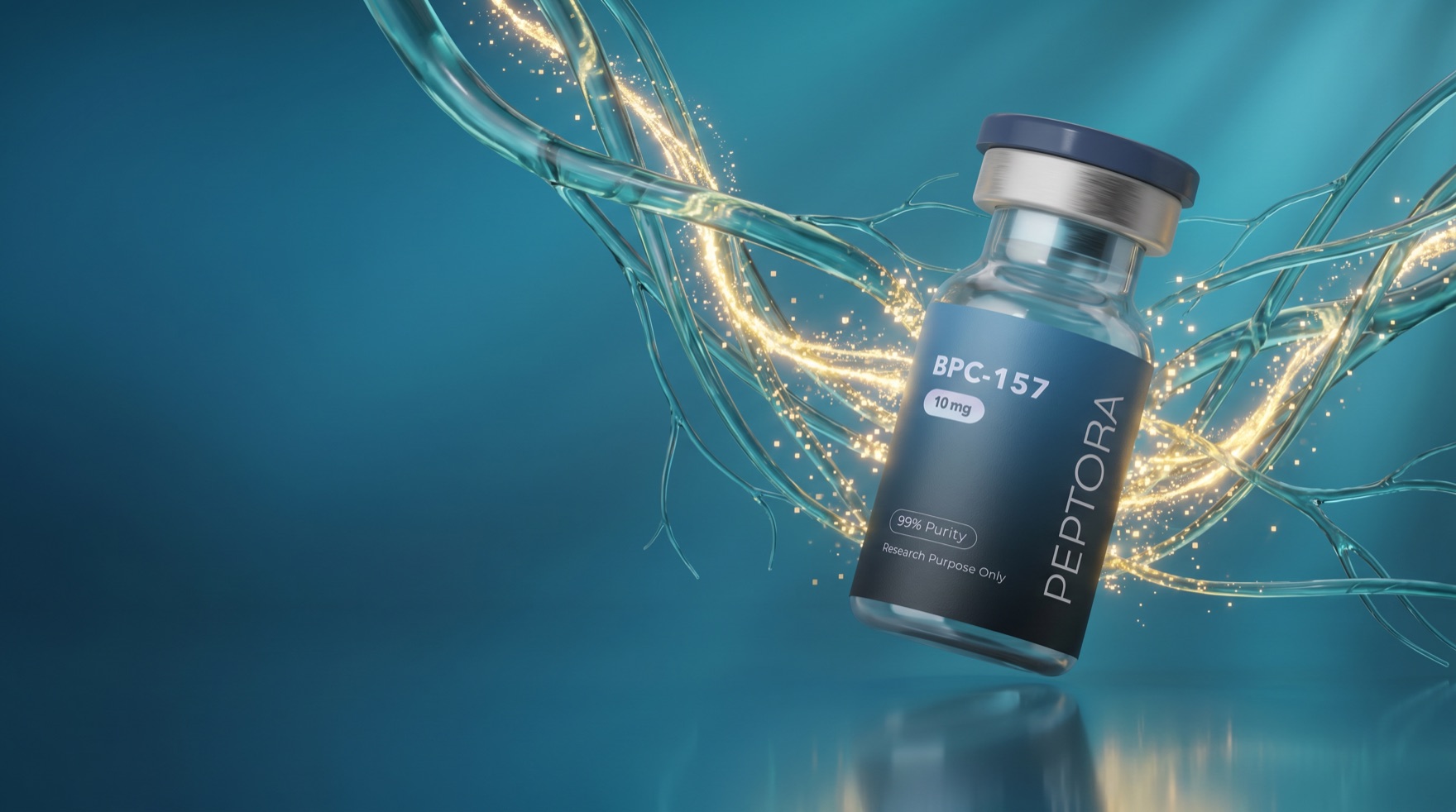
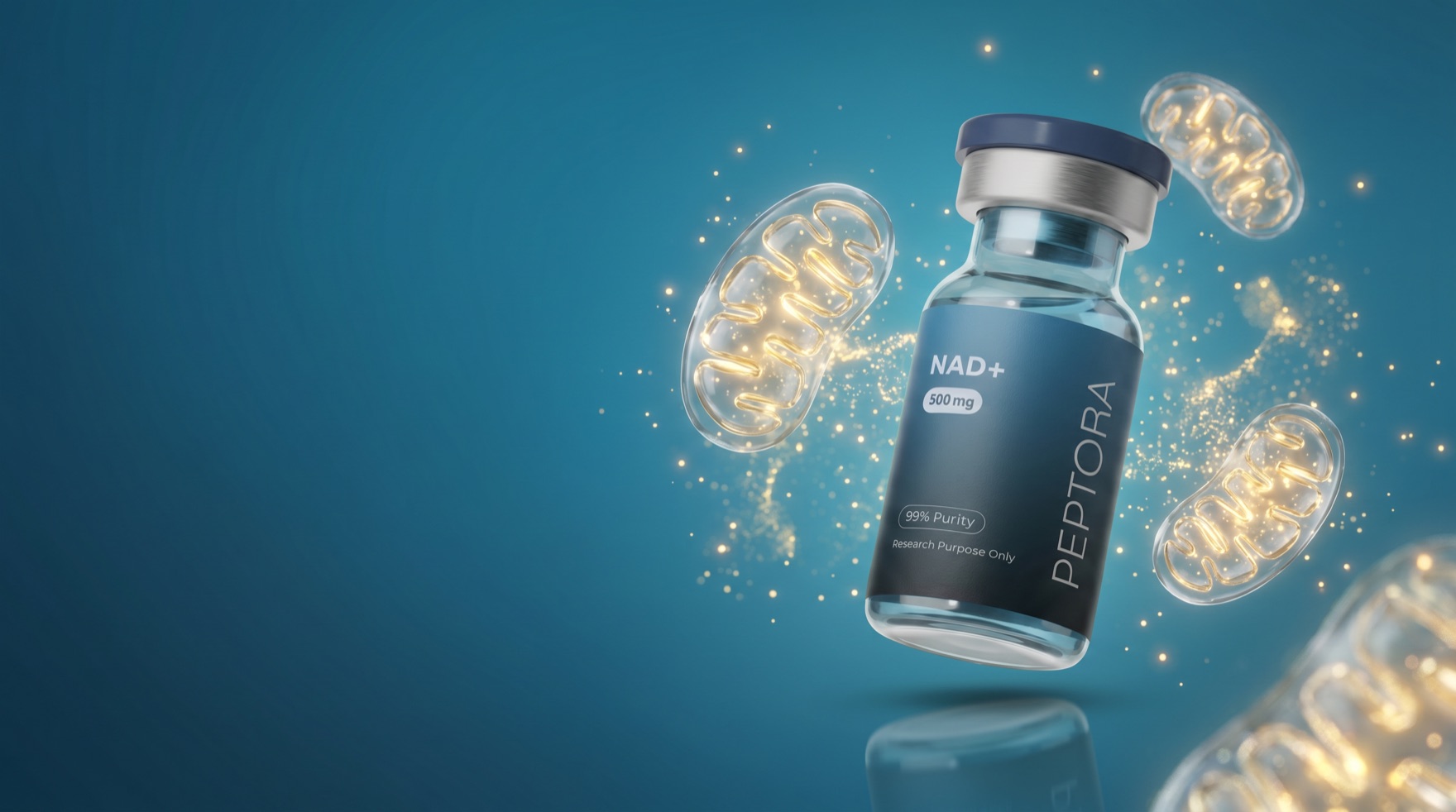
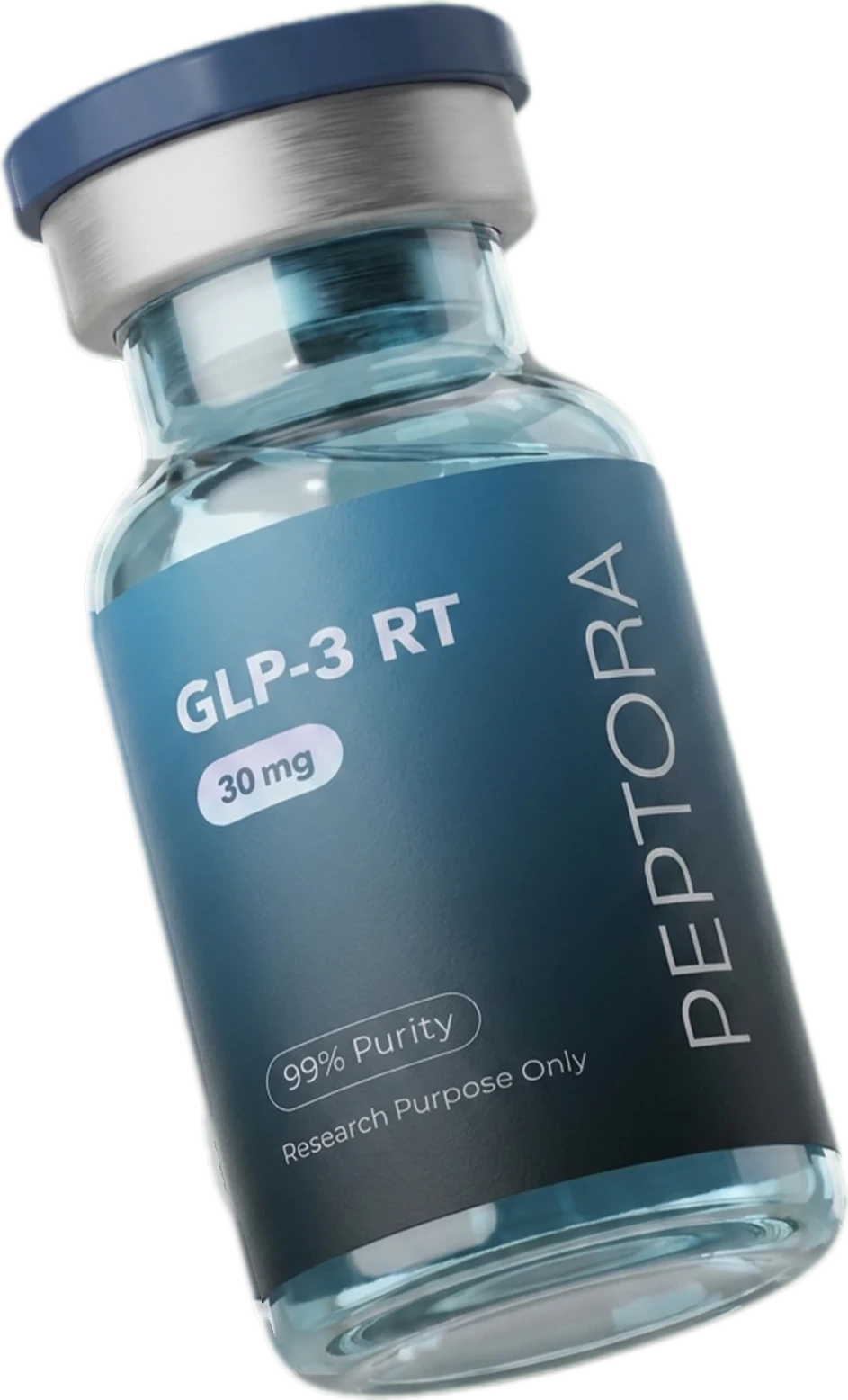
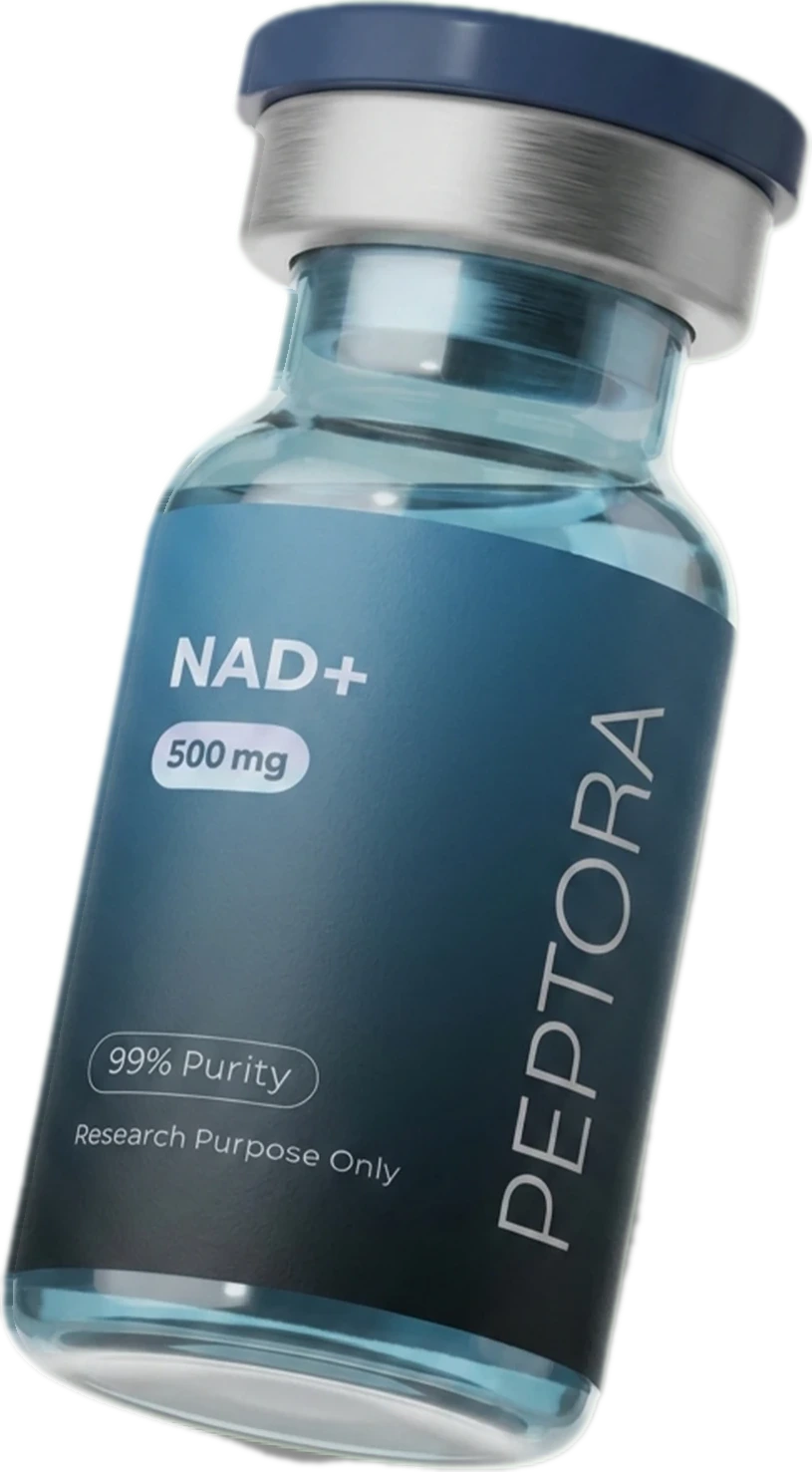
Different peptides are studied in different areas. For real examples, the compound library covers peptides like GLP-3 RT in metabolism research, BPC-157 in tissue-repair studies, and NAD+ in cell-energy and aging research — each backed by its own published studies.
Purity, testing, and the certificate of analysis
In research, a result is only as trustworthy as the material behind it. If you're not sure what a peptide is or how pure it is, you can't trust anything you measure with it. That's why the quality paperwork matters as much as the molecule. Two lab tests do most of the work: HPLC, which measures how pure a sample is, and a test that weighs the molecule (mass spectrometry, or LC-MS), which confirms the peptide is really the one it claims to be.
The results are written up on a certificate of analysis (COA) — a report card for one exact batch that lists purity, identity, and other quality checks. A COA lets a researcher match the vial in hand to its paperwork and keep the work repeatable. Every batch of Peptora material is checked to 99%+ purity, confirmed by the weighing test, and ships with its own batch-specific COA.
How to go deeper
This guide is the starting point. Once the basics click, the rest of the Research Hub splits the subject into focused areas — from single compounds to the hands-on details of handling them in the lab:
Where to go next
Laboratory standards
How purity and identity are checked — the purity test (HPLC), the weighing test, and the batch-specific certificate of analysis.
Handling & storage
Mixing, storage, and simple habits for keeping research materials stable and results repeatable.
Reference
A plain-English glossary of the terms you'll meet most, from *freeze-drying* to *how much reaches its target*.
The one thing to remember above all: research peptides are lab materials, not medicines or supplements. Everything else — how they work, how they compare, how they're handled — builds on that.
Scientific references
Peptides have been part of science and medicine since insulin arrived in the 1920s, and the field is well documented. The big-picture reviews below are here for readers who want to understand how peptides are studied and developed:
- 1Muttenthaler M, King GF, Adams DJ, Alewood PF. Trends in peptide drug discovery. Nat Rev Drug Discov. 2021;20(4):309-325. doi:10.1038/s41573-020-00135-8 (PMID: 33536635).
- 2Wang L, Wang N, Zhang W, et al. Therapeutic peptides: current applications and future directions. Signal Transduct Target Ther. 2022;7(1):48. doi:10.1038/s41392-022-00904-4 (PMID: 35165272).
- 3Lau JL, Dunn MK. Therapeutic peptides: historical perspectives, current development trends, and future directions. Bioorg Med Chem. 2018;26(10):2700-2707. doi:10.1016/j.bmc.2017.06.052 (PMID: 28720325).
- 4Erak M, Bellmann-Sickert K, Els-Heindl S, Beck-Sickinger AG. Peptide chemistry toolbox — transforming natural peptides into peptide therapeutics. Bioorg Med Chem. 2018;26(10):2759-2765. doi:10.1016/j.bmc.2018.01.012 (PMID: 29395804).
- 5Sharma K, Sharma KK, Sharma A, Jain R. Peptide-based drug discovery: current status and recent advances. Drug Discov Today. 2023;28(2):103464. doi:10.1016/j.drudis.2022.103464 (PMID: 36481586).
Explore the research catalog
Browse Peptora's research compounds — each one checked to 99%+ purity with a batch-specific certificate of analysis, for laboratory research use only.
Browse research compoundsKey takeaways
- A research peptide is a short chain of amino acids — the same kind of messenger molecule the body makes on its own — sold as a lab reference material.
- "Research use only" describes how it may be used: for lab study (test tubes, cells, early animal work), not for people or animals, and it's neither a medicine nor a supplement.
- In the lab, peptides are studied in test-tube experiments, cell studies, and early animal studies. These findings are not the same as proven medical results.
- A research result is only as trustworthy as the material behind it — which is why the purity test, the identity test, and a batch-specific certificate of analysis matter.
- Peptora supplies research peptides checked to 99%+ purity, each with a batch-specific certificate of analysis, for laboratory research use only.
- From here, the compound library, lab-standards, and handling guides go deeper on individual peptides and best practices.
Frequently asked questions
This article is intended solely as an educational summary of publicly available scientific literature. Products offered by Peptora are supplied exclusively for laboratory research purposes and are not approved for human or veterinary use. The information presented should not be interpreted as medical advice, treatment recommendations, or clinical guidance.