


One key family, five locks
Two words first. A receptor is a docking spot on the surface of a cell — a lock. An agonist is a molecule that fits that lock and switches it on — a key. The melanocortin system is a family of small peptide keys plus the five locks they fit, called MC1R through MC5R (the R is simply for receptor).
What makes this system unusual is not the number of locks. It is where they are. Picture a building where five doors all take keys cut from the same blank, but one door is in the skin, one is in the adrenal glands, two are in the brain, and one is in glands and immune cells. Turning any one of them does something completely different from turning the others — and because the keys are so similar, a key cut for one door will often rattle the others open too.
The idea at a glance
Five receptors, one family
MC1R–MC5R are all G-protein coupled receptors — a common receptor design that passes a signal into the cell when something docks.
One parent protein
All the natural keys are cut from a single larger protein called POMC — one blank, several finished keys.
Selectivity is the hard part
Four of the five locks recognise the same short shared shape, so a key for one tends to fit several.
Lab use only
Peptora's melanocortin peptides are supplied strictly for controlled laboratory research — never for people or animals.
Explore a melanocortin peptide
PT-141 — independently lab tested, with each lot's certificate of analysis published online, for laboratory research use only.
View PT-141Where the keys come from
The body does not make the melanocortin peptides one by one. It makes one long parent protein called POMC — pro-opiomelanocortin — and then cuts it up. Different tissues cut it in different places, so the same starting protein yields different finished peptides depending on where the cutting happens. It is genuinely a blank being cut into several distinct keys.
- α-MSH (alpha-melanocyte stimulating hormone) — the best-known of the family, and the main natural key for four of the five locks.
- β-MSH and γ-MSH — related cuts from the same parent, with their own patterns of receptor preference.
- ACTH (adrenocorticotropic hormone) — a longer piece, and the only natural key that opens the second lock, MC2R.
There is one more feature worth knowing, because it is unusual in biology: this system has built-in blockers. A protein called agouti and its relative agouti-related peptide work as antagonists — keys that fit the lock but jam it instead of turning it. Agouti is the reason some mice have yellow coats: it blocks MC1R in skin pigment cells. When mutations cause it to be produced everywhere in the body rather than just in the skin, those mice also become obese, which was one of the earliest clues that the same key family was doing something in the brain as well as in the fur.
The five locks, one at a time
Each receptor sits somewhere specific, and that location is essentially its job description:
| Receptor | Where it mostly sits | What research associates with it |
|---|---|---|
| MC1R | Pigment cells in skin and hair | Pigmentation. Variants in this gene are studied in connection with melanoma risk |
| MC2R | Adrenal cortex | The odd one out — it responds only to ACTH, not to the MSH peptides, and needs a helper protein to reach the cell surface at all. Studied via familial glucocorticoid deficiency |
| MC3R | Brain | Energy balance. Mice lacking it show increased body fat despite a normal or even heightened response to energy shortage |
| MC4R | Brain | Appetite and energy expenditure. Loss-of-function mutations here are among the most studied single-gene causes of obesity |
| MC5R | Exocrine glands and immune cells | Gland secretion and immune signalling |
Reading down that table explains something that otherwise looks like a coincidence: why a single peptide family appears in dermatology research, endocrinology research, obesity research, inflammation research, and sexual-function research all at once. It is not one mechanism producing many effects. It is five different locks that happen to take similar keys.
Why selectivity is the central problem
Four of the five receptors — MC1R, MC3R, MC4R, and MC5R — recognise a short shared stretch of shape in their natural keys, a four-amino-acid motif written as His-Phe-Arg-Trp. It has been conserved essentially unchanged across evolution. That shared motif is the reason the natural peptides are promiscuous: α-MSH does not politely visit one receptor and ignore the rest.
For researchers, that creates the defining challenge of the field. If you want to study what MC4R alone does, you need a key that fits MC4R and not MC1R, MC3R, or MC5R — and you are trying to build it around a shape all four of them accept. Decades of medicinal chemistry have gone into exactly this problem, using three broad approaches:
- 1Peptide analogs — take the natural peptide and change, remove, or lock individual amino acids into place, so the key still fits one lock but no longer suits the others.
- 2Cyclic peptides — join the chain into a ring so it cannot flex into the shapes the other receptors want.
- 3Non-peptide and peptidomimetic molecules — build something that is not a peptide at all but presents the same critical contact points.
One practical note that recurs in this literature: MC2R, the adrenal receptor, is generally something designers want to avoid, because activating it drives steroid production. Melanocortin compounds that target the other four receptors but leave MC2R alone have been described as producing far less of that response.
The compounds this research produced
The selectivity work is not abstract — it produced a set of specific molecules that appear throughout the literature. Understanding which lock each one was aimed at makes the whole field easier to navigate:
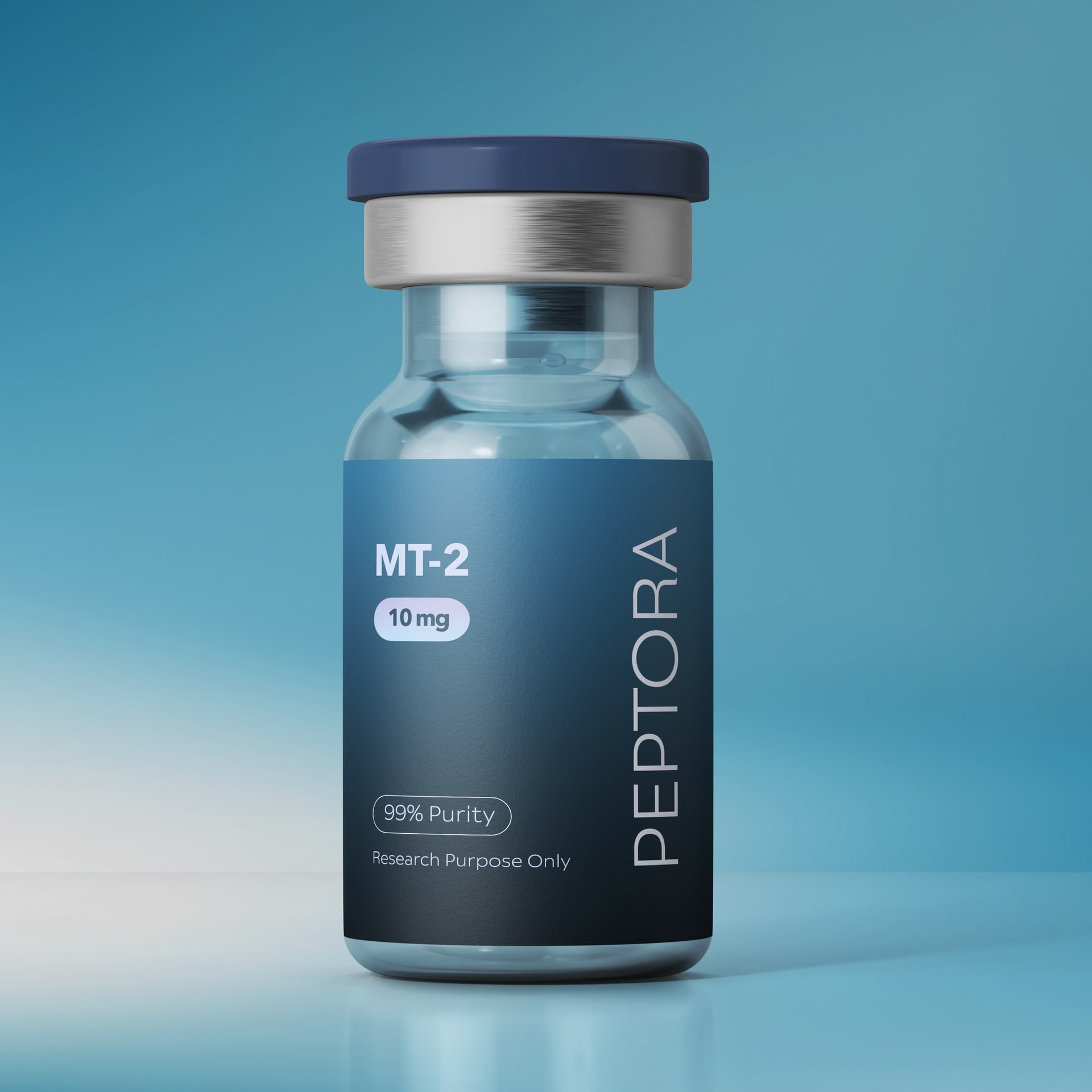
- MT-II (Melanotan II) — a synthetic α-MSH analog. Published work reported that systemic administration produced erections across several species, an observation that directly launched the research programme below. Peptora supplies a version as MT-2.
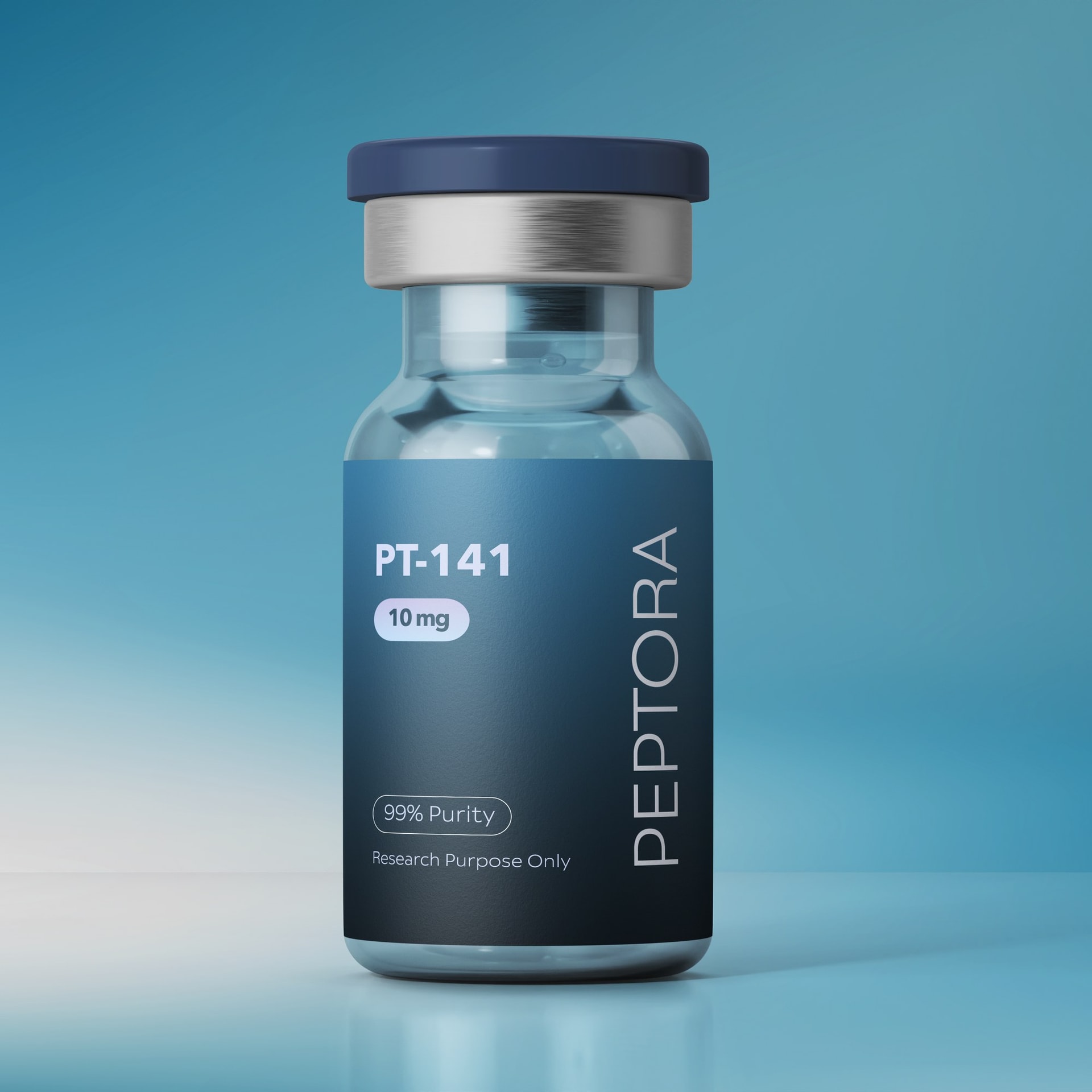
- Bremelanotide (PT-141) — an MC3R/MC4R-preferring agonist developed from the MT-II findings by Palatin Technologies, and the melanocortin compound most extensively studied in clinical trials for sexual function, including the phase 3 RECONNECT programme. Peptora supplies a version as PT-141.
- Afamelanotide — an MC1R-directed compound, studied and approved in the pigment-related condition erythropoietic protoporphyria.
- Setmelanotide — an MC4R-directed compound, studied and approved for obesity arising specifically from POMC or leptin-receptor deficiency — a direct application of the brain-receptor biology in the table above.
A separate and growing strand of this literature concerns inflammation. α-MSH circulating in the fluid of the eye has been described as part of how the eye limits immune reactions against itself, and reviews have surveyed melanocortin-receptor involvement across a long list of inflammatory conditions. To be explicit: the approvals named above belong to pharmaceutical products developed by their sponsors. Peptora supplies peptides for laboratory use only, and they are not those medicines.
Why purity matters for this kind of research
In a receptor family this cross-reactive, the exact molecule is the experiment. A peptide with one amino acid wrong, or a cyclic peptide whose ring has opened, may keep enough of the shared His-Phe-Arg-Trp shape to still dock somewhere — just not at the receptor the researcher intended. That failure mode is quiet: it does not produce no result, it produces a *misleading* one. Peptora's melanocortin peptide lots are tested for purity by HPLC at an independent lab, with LC-MS to verify identity and mass. Each lot's results are published online as a certificate of analysis (COA).
For what the numbers on a certificate mean, see the guide to the certificate of analysis. For the two melanocortin peptides side by side, see MT-2 vs PT-141. For handling freeze-dried powder, see the reconstitution guide.
Scientific references
The papers below are the primary literature, retrieved from PubMed. They describe research on melanocortin receptor biology and on the pharmaceutical compounds developed from it — not the laboratory research products Peptora supplies.
- 1Cai M, Hruby VJ. The Melanocortin Receptor System: A Target for Multiple Degenerative Diseases. Curr Protein Pept Sci. 2016;17(5):488-496. doi:10.2174/1389203717666160226145330 (PMID: 26916163).
- 2Butler AA. The melanocortin system and energy balance. Peptides. 2006;27(2):281-290. doi:10.1016/j.peptides.2005.02.029 (PMID: 16434123).
- 3Tatro JB. Receptor biology of the melanocortins, a family of neuroimmunomodulatory peptides. Neuroimmunomodulation. 1996;3(5):259-284. doi:10.1159/000097281 (PMID: 9218248).
- 4Wu CS, Cioanca AV, Gelmi MC, et al. The multifunctional human ocular melanocortin system. Prog Retin Eye Res. 2023;95:101187. doi:10.1016/j.preteyeres.2023.101187 (PMID: 37217094).
- 5Shadiack AM, Sharma SD, Earle DC, Spana C, Hallam TJ. Melanocortins in the treatment of male and female sexual dysfunction. Curr Top Med Chem. 2007;7(11):1137-1144. doi:10.2174/156802607780906681 (PMID: 17584134).
- 6Simon JA, Kingsberg SA, Portman D, et al. Prespecified and Integrated Subgroup Analyses from the RECONNECT Phase 3 Studies of Bremelanotide. J Womens Health (Larchmt). 2022;31(3):391-400. doi:10.1089/jwh.2021.0225 (PMID: 35230162).
- 7Bardhan M, Anand A, Javed A, et al. Polymorphism of Melanocortin Receptor Genes—Association with Inflammatory Traits and Diseases. Diseases. 2025;13(9):305. doi:10.3390/diseases13090305 (PMID: 41002740).
Explore melanocortin peptides
PT-141 — independently lab tested, with each lot's certificate of analysis published online, fast U.S. shipping, for laboratory research use only.
View PT-141Key takeaways
- The melanocortin system is one family of peptide keys and five receptor locks — MC1R through MC5R — sitting in very different tissues: skin, adrenal glands, brain (two of them), and glands plus immune cells.
- All the natural keys are cut from a single parent protein called POMC, which different tissues cut in different places to yield α-MSH, β-MSH, γ-MSH, and ACTH.
- MC2R is the outlier: it responds only to ACTH, needs a helper protein to reach the cell surface, and is generally the receptor compound designers try to avoid because activating it drives steroid production.
- Four of the five receptors recognise the same conserved His-Phe-Arg-Trp shape, which is exactly why the natural peptides hit several receptors and why building a selective one is the field's central problem.
- The system has natural blockers too — agouti and agouti-related peptide are antagonists, keys that jam the lock rather than turning it.
- Selectivity work produced specific compounds aimed at specific receptors: MT-II and bremelanotide (PT-141) toward MC3R/MC4R, afamelanotide toward MC1R, setmelanotide toward MC4R.
- Peptora supplies melanocortin peptides for laboratory use only. They are not the approved pharmaceutical products named in the literature, and are not for use in people or animals.
Frequently asked questions
This article is intended solely as an educational summary of publicly available scientific literature. Products offered by Peptora are supplied exclusively for laboratory research purposes and are not approved for human or veterinary use. The information presented should not be interpreted as medical advice, treatment recommendations, or clinical guidance.