


What BPC-157 actually is
A peptide is a tiny protein — a short chain of amino acids, the building blocks that proteins are made from. BPC-157 is a chain of 15 of those blocks, which is why the scientific literature calls it a pentadecapeptide ("penta-deca" = five plus ten). It is made in a lab, but its sequence is not invented: it was taken from a larger protein that occurs naturally in human stomach fluid. The initials stand for Body Protection Compound, the name the original Croatian research group gave it.
One practical detail explains why the peptide got attention in the first place. Most peptides fall apart quickly in the harsh acid of the stomach. Published work from the group that discovered it reports that this particular sequence stays intact in human gastric juice — unusual enough that it became the starting point for two decades of experiments.
The idea at a glance
15 blocks long
A pentadecapeptide — short enough to make cleanly in a lab and to verify precisely by mass spectrometry.
Blood supply is the measurement
Angiogenesis means new blood vessels forming. It is the outcome most consistently reported across the animal studies.
Almost entirely animal work
The evidence base is overwhelmingly rats and cell cultures. Human data is limited to a handful of small pilot studies.
Lab use only
Not an approved medicine anywhere. Supplied strictly for controlled laboratory research — never for people or animals.
Explore BPC-157
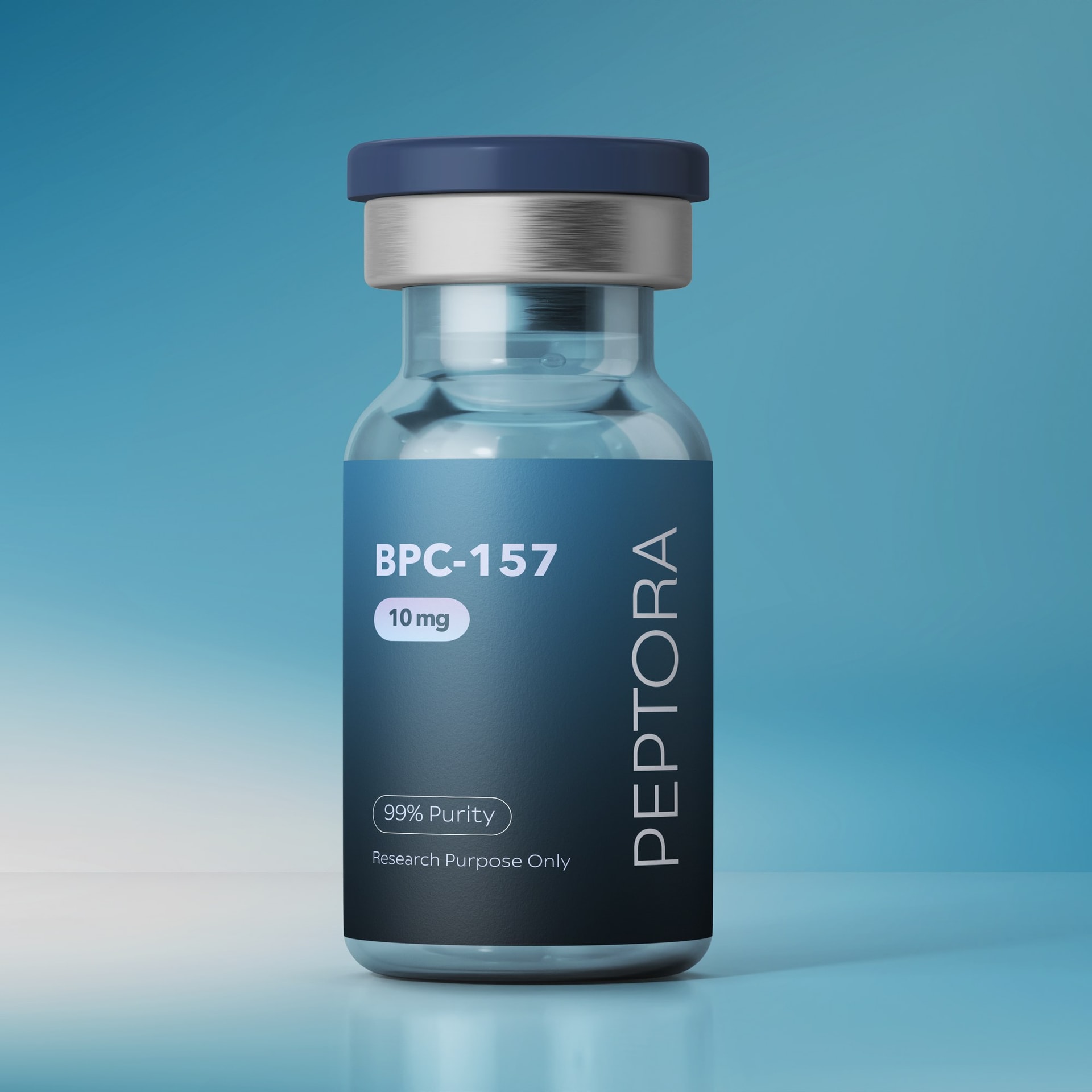
BPC-157 — independently lab tested, with each lot's certificate of analysis published online, for laboratory research use only.
View BPC-157Roads before buildings: the idea being tested
Here is the metaphor that makes the whole research programme easier to follow. Think of injured tissue as a district of a city that has been cut off. You can send in all the repair crews you like, but if there is no road into the district, nothing arrives — no materials, no workers, no way to clear the rubble. Build the supply road first, and everything else becomes possible.
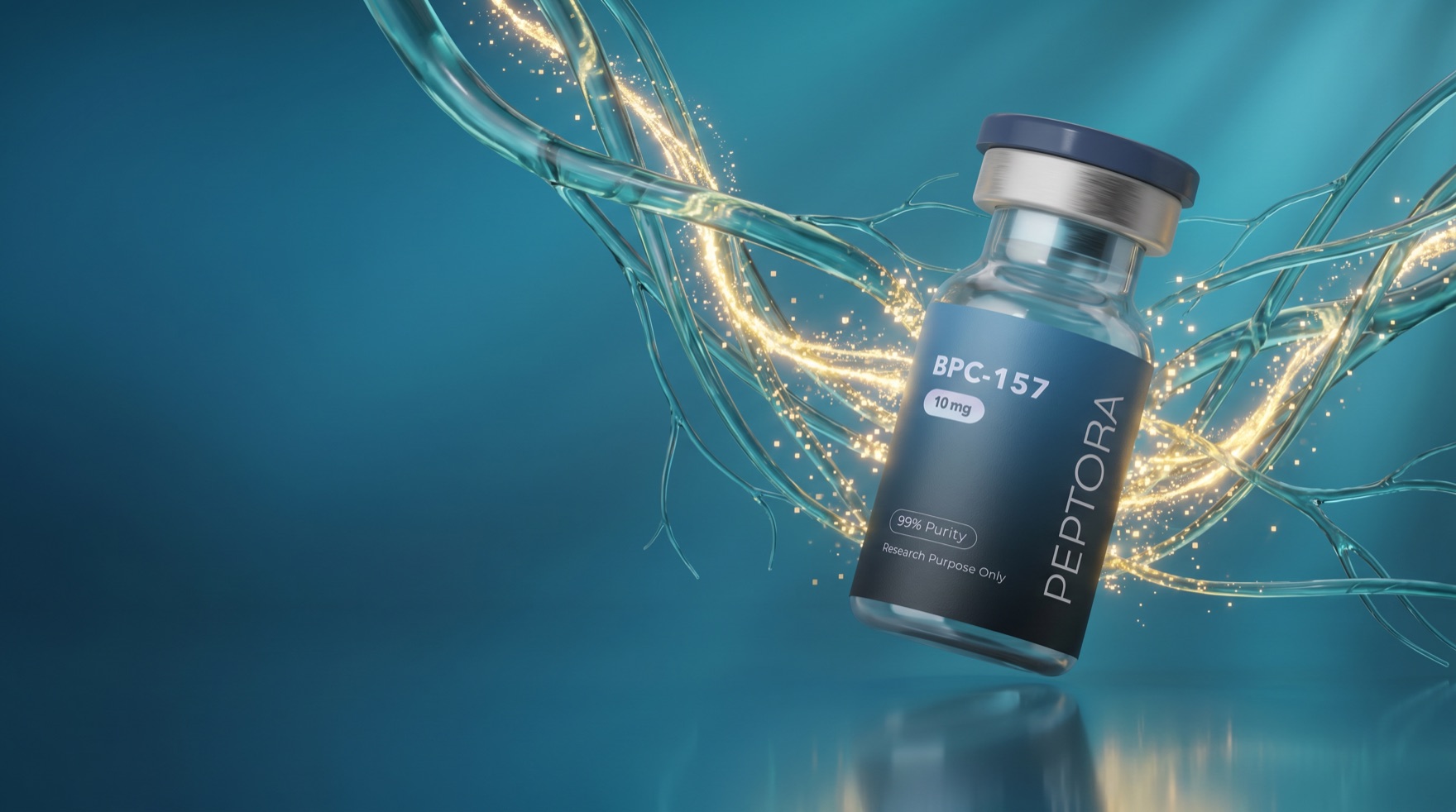
In the body, the supply road is a blood vessel. Growing new ones is called angiogenesis. Across the published animal studies, the measurement that keeps reappearing is exactly this: after injury, the treated animals' damaged tissue shows more new vessel growth than the untreated animals'. Researchers have described the same peptide restoring blood flow around blocked vessels by recruiting alternative routes — the biological equivalent of opening a bypass around a closed motorway.
This is also why so much of the work focuses on tendon and ligament. Those tissues are what scientists call hypovascular — they have very little blood supply to begin with. If a compound's main described action is about supply routes, the tissues with the worst supply are the obvious place to look for a measurable difference.
What the lab models actually look like
"Studied in tissue repair" is vague until you know what a study physically consists of. In this literature, a typical experiment follows the same shape:
- 1A defined injury is created in an animal model — a cut tendon, a crushed muscle, a severed nerve, a burn, an ulcer in the gut lining, a compressed spinal cord.
- 2Groups are compared. One group receives the compound, a control group does not. Some studies compare it against standard growth factors such as VEGF, EGF, or FGF.
- 3Something measurable is recorded at fixed time points — how much of the gap has closed, how much force the repaired tissue can take before it fails, how many new vessels appear in a stained tissue slice, which genes have switched on.
- 4The tissue is examined under a microscope so the visible structure can be scored, not just the outward result.
Two things about this body of work are worth knowing up front. First, the results reported across these models have been strikingly consistent — which is part of why the compound attracted attention. Second, the great majority of the in-depth studies come from a small number of research groups, principally at the University of Zagreb School of Medicine in Croatia. Independent replication by unconnected labs is much thinner than the raw number of papers suggests, and reviewers have said so plainly.
The signals researchers track
When a paper says a compound "activates a pathway," it means something fairly concrete: the researchers measured a change in a specific protein or gene that cells use to pass messages along. A few names come up repeatedly in the BPC-157 literature, and each one has a plain-English job:
| What the papers call it | What it does, in plain words | Why it comes up here |
|---|---|---|
| VEGFR2 | A docking spot on cells that responds to the body's main "grow a new vessel" signal | The most direct link to the blood-supply measurement |
| Akt–eNOS axis | A chain that ends in cells producing nitric oxide, a gas that relaxes and widens vessels | Described as part of how vessel behaviour changes |
| ERK1/2 | A general-purpose messenger route cells use to decide whether to grow and divide | Linked in the papers to fibroblast and muscle-cell activity |
| Egr-1 and NAB2 | A fast-acting gene switch and its off-switch partner | Among the earliest gene changes reported after injury |
| FAK–paxillin | Proteins cells use to grip their surroundings and pull themselves along | Relevant to cells migrating into a wound gap |
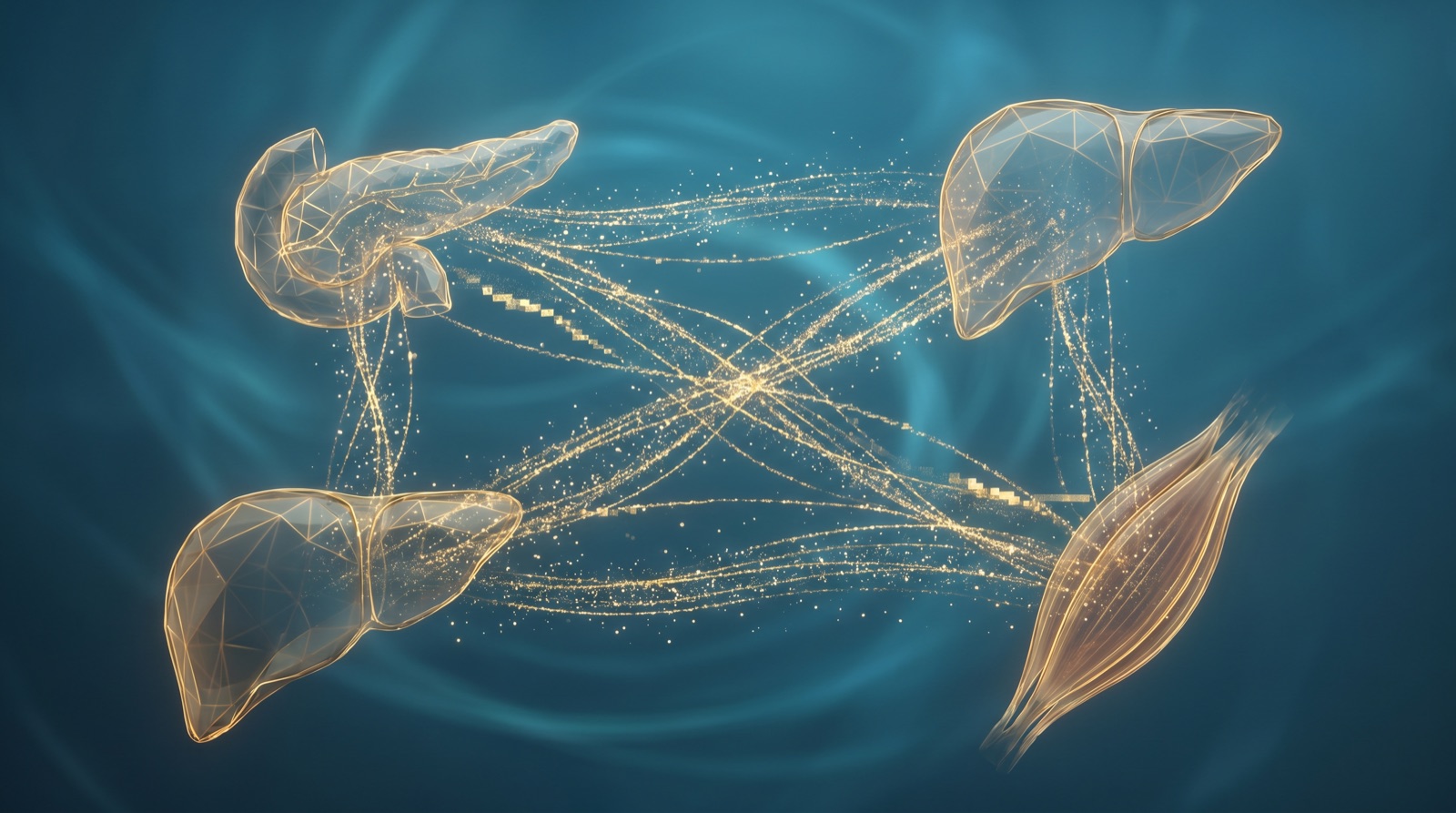
Reviews of this work also place it inside an older idea called cytoprotection — a concept from the 1970s describing agents that keep cells alive under stress rather than treating any one disease. That framing is why you will see the same peptide tested in such different-looking models, from gut lining to tendon to nerve: the researchers are deliberately testing one idea across many tissues.
What is still not known
A guide that only listed the positive findings would be misleading, so here is the other half, taken from the same peer-reviewed reviews:
- Human evidence is very thin. A 2025 review in *Current Reviews in Musculoskeletal Medicine* identified only three published pilot studies in humans, and concluded the compound should be considered investigational.
- No large trials have been run. There are no large, well-powered randomised human trials establishing an effect for any use.
- The precise mechanism is not settled. Several signalling routes have been described, but reviewers note that a definitive account of how the peptide produces the reported effects does not yet exist.
- The evidence is concentrated. Most in-depth studies come from a small set of connected research groups, which is a known limitation of the literature.
- It is not an approved medicine. No regulator has approved it for any use, in any country.
None of this makes the published findings uninteresting — it makes them preliminary, which is a different thing. That gap between "consistently reported in rodents" and "established in humans" is exactly the gap laboratory research exists to close.
Why purity matters for this kind of research
A 15-block peptide is short, which makes it straightforward to synthesise — and straightforward to get wrong. A truncated chain missing one block, or a partially degraded batch, is a different molecule from the one the literature describes, and an experiment run on it measures something other than what it intended. Peptora's BPC-157 lots are tested for purity by HPLC at an independent lab, with LC-MS to verify it is the right molecule at the right mass. Each lot's results are published online as a certificate of analysis (COA).
For what the numbers on a certificate mean, see the guide to the certificate of analysis. For handling freeze-dried powder, see the reconstitution guide. For how this compound compares with the other peptide most studied in tissue-repair research, see BPC-157 vs TB-500.
Scientific references
The papers below are the primary literature, retrieved from PubMed. They describe research on the peptide and the underlying tissue-repair biology — not the laboratory research products Peptora supplies. Several are reviews that also set out the limitations of the evidence base, which are summarized in the section above.
- 1Sikiric P, Hahm KB, Blagaic AB, et al. Stable Gastric Pentadecapeptide BPC 157, Robert's Stomach Cytoprotection/Adaptive Cytoprotection/Organoprotection, and Selye's Stress Coping Response: Progress, Achievements, and the Future. Gut Liver. 2020;14(2):153-167. doi:10.5009/gnl18490 (PMID: 31158953).
- 2Seiwerth S, Milavic M, Vukojevic J, et al. Stable Gastric Pentadecapeptide BPC 157 and Wound Healing. Front Pharmacol. 2021;12:627533. doi:10.3389/fphar.2021.627533 (PMID: 34267654).
- 3Gwyer D, Wragg NM, Wilson SL. Gastric pentadecapeptide body protection compound BPC 157 and its role in accelerating musculoskeletal soft tissue healing. Cell Tissue Res. 2019;377(2):153-159. doi:10.1007/s00441-019-03016-8 (PMID: 30915550).
- 4Seiwerth S, Rucman R, Turkovic B, et al. BPC 157 and Standard Angiogenic Growth Factors. Gastrointestinal Tract Healing, Lessons from Tendon, Ligament, Muscle and Bone Healing. Curr Pharm Des. 2018;24(18):1972-1989. doi:10.2174/1381612824666180712110447 (PMID: 29998800).
- 5Staresinic M, Japjec M, Vranes H, et al. Stable Gastric Pentadecapeptide BPC 157 and Striated, Smooth, and Heart Muscle. Biomedicines. 2022;10(12):3221. doi:10.3390/biomedicines10123221 (PMID: 36551977).
- 6McGuire FP, Martinez R, Lenz A, Skinner L, Cushman DM. Regeneration or Risk? A Narrative Review of BPC-157 for Musculoskeletal Healing. Curr Rev Musculoskelet Med. 2025;18(12):611-619. doi:10.1007/s12178-025-09990-7 (PMID: 40789979).
Explore BPC-157
BPC-157 — independently lab tested, with each lot's certificate of analysis published online, fast U.S. shipping, for laboratory research use only.
View BPC-157Key takeaways
- BPC-157 is a lab-made peptide 15 amino acids long — a pentadecapeptide — copied from a protein found in human stomach fluid, and unusually stable in gastric juice.
- The measurement at the centre of the research is angiogenesis: whether new blood vessels grow into damaged tissue. The idea being tested is roads before buildings — restore the supply route first.
- Tendon and ligament come up constantly because they are hypovascular, meaning they have very little blood supply to begin with, so any difference in supply is easier to detect.
- Papers describe several signalling routes — VEGFR2, the Akt–eNOS nitric oxide axis, ERK1/2, Egr-1 and NAB2, FAK–paxillin — but reviewers agree no definitive mechanism has been established.
- Human evidence is very limited: a 2025 review found only three published pilot studies in humans and concluded the compound should be considered investigational.
- Most in-depth studies come from a small number of connected research groups, so independent replication is thinner than the paper count suggests.
- This is a laboratory research compound only — not an approved medicine, and not for use in people or animals.
Frequently asked questions
This article is intended solely as an educational summary of publicly available scientific literature. Products offered by Peptora are supplied exclusively for laboratory research purposes and are not approved for human or veterinary use. The information presented should not be interpreted as medical advice, treatment recommendations, or clinical guidance.