What is TB-500 (Thymosin β4)?
TB-500 is a name used in research for a lab-made compound based on thymosin β4 — a natural protein, 43 building blocks long, that almost every cell makes. Its main job, as described in the science, is to grab and hold units of actin (the material that builds a cell's internal "scaffolding" and helps it move). Thymosin β4 turns up in nearly every kind of cell and in body fluids like blood and wound fluid, which is why scientists study it in cell-shape and tissue-repair research.
So why do scientists study it? Researchers zeroed in on one short, busy stretch of thymosin β4 — a seven-letter piece called LKKTETQ — that seems to do much of the protein's work. Studies tie this little piece to actin, to cells moving around, to growing new blood vessels, and to wound healing — all key steps when tissue repairs itself. The name TB-500 is used in research for thymosin β4 and especially for this active piece. Even a current early-stage clinical trial lists it as "TB-500 (Thymosin Beta 4 17-23 Fragment)." Throughout this guide, the compound is treated strictly as a laboratory research material — it is not a medicine and is for research use only.
The quick version
Based on thymosin β4
TB-500 is tied to thymosin β4, a natural 43-building-block protein that cells use to store and manage actin.
Movement & blood vessels
Studied in early lab work on cells moving, growing new blood vessels, and the actin control behind tissue repair.
Tissue-repair research
Looked at in skin, eye, and heart repair experiments — as described in the published science.
99%+ pure
Double-checked by lab testing (HPLC and LC-MS), with a certificate for every batch — research use only.
Explore research-grade TB-500
99%+ pure, a certificate of analysis with every batch, fast U.S. shipping — for laboratory research use only.
View TB-500How TB-500 is studied, in plain terms
Thymosin β4 gets attention mostly because of its link to actin — the protein that builds a cell's internal scaffolding (the framework that holds its shape and lets it move). The points below are how the compound is described in published science — they're what scientists study, not proven results:
- Holding actin in reserve — thymosin β4 grabs single, loose units of actin and holds them, one-to-one, like a storage buffer. That reserve helps control when the cell builds actin into longer fibers.
- The busy little piece (LKKTETQ) — much of the protein's activity has been traced to one short stretch, LKKTETQ, which studies link to growing new blood vessels, wound healing, and cell movement.
- Cells moving and spreading — by managing that pool of actin, thymosin β4 has been studied in lab-dish cells for whether it's tied to cells spreading, moving, and heading in a set direction.
- New blood vessels — the compound has been studied for links to the body building fresh blood vessels, including in early experiments on tissue that isn't getting enough blood.
The common thread here is managing actin and helping cells move — two things that matter a lot in how repair and blood-vessel research is done. That's why thymosin β4, and the TB-500 name tied to its active piece, shows up so often in early repair-and-recovery research instead of just one narrow topic.
What scientists actually study it for
In early lab research, thymosin β4 and its active piece usually come up in a few connected areas:
- Skin wounds — how skin closes back up, how it lays down collagen, and how skin cells move, in early repair research.
- Eye surface — cornea and eye-surface research, the area where thymosin β4 has gotten closest to real clinical testing.
- Heart repair — early studies looking at vessel growth, cell survival, and waking up the heart's own repair cells after an injury.
- New blood vessels — how the body grows fresh vessels, including in early studies of tissue starved of blood.
- Actin and cell scaffolding — the basic cell-movement and actin research that the other topics grow out of.
Where the research stands: still early
It's worth being clear about where thymosin β4 actually stands. Most of what's known comes from early research — cells in dishes and animal studies — and the compound is not an approved medicine for anything. The human studies that do exist are early-stage, and several have given mixed or unfinished results.
- Eye-drop program (RGN-259) — an experimental thymosin β4 eye drop from RegeneRx Biopharmaceuticals and its partner ReGenTree has been tested in mid- and late-stage trials for dry-eye disease (the ARISE program) and a cornea condition called neurotrophic keratopathy (the SEER program). The results have been mixed — some goals were met and others weren't.
- Heart program — a lab-made version of human thymosin β4 (such as NL005) has been studied in early trials after a heart attack, while some earlier whole-body programs didn't move forward.
- Active-piece program — an early trial of a TB-500 (thymosin β4 17–23) piece for heart-and-blood-vessel research began enrolling in 2026.
TB-500 vs. BPC-157
TB-500 and BPC-157 are the two most-searched compounds in tissue-repair research, and scientists often put them side by side. The easiest way to tell them apart is by where each comes from and what it's mostly studied for — they're different molecules studied for overlapping but not identical reasons:
| Compound | Where it comes from | Mostly studied for |
|---|---|---|
| TB-500 (Thymosin β4) | A lab-made compound based on thymosin β4, a 43-building-block protein that manages actin | Cells moving, cell scaffolding, new blood vessels, tissue repair |
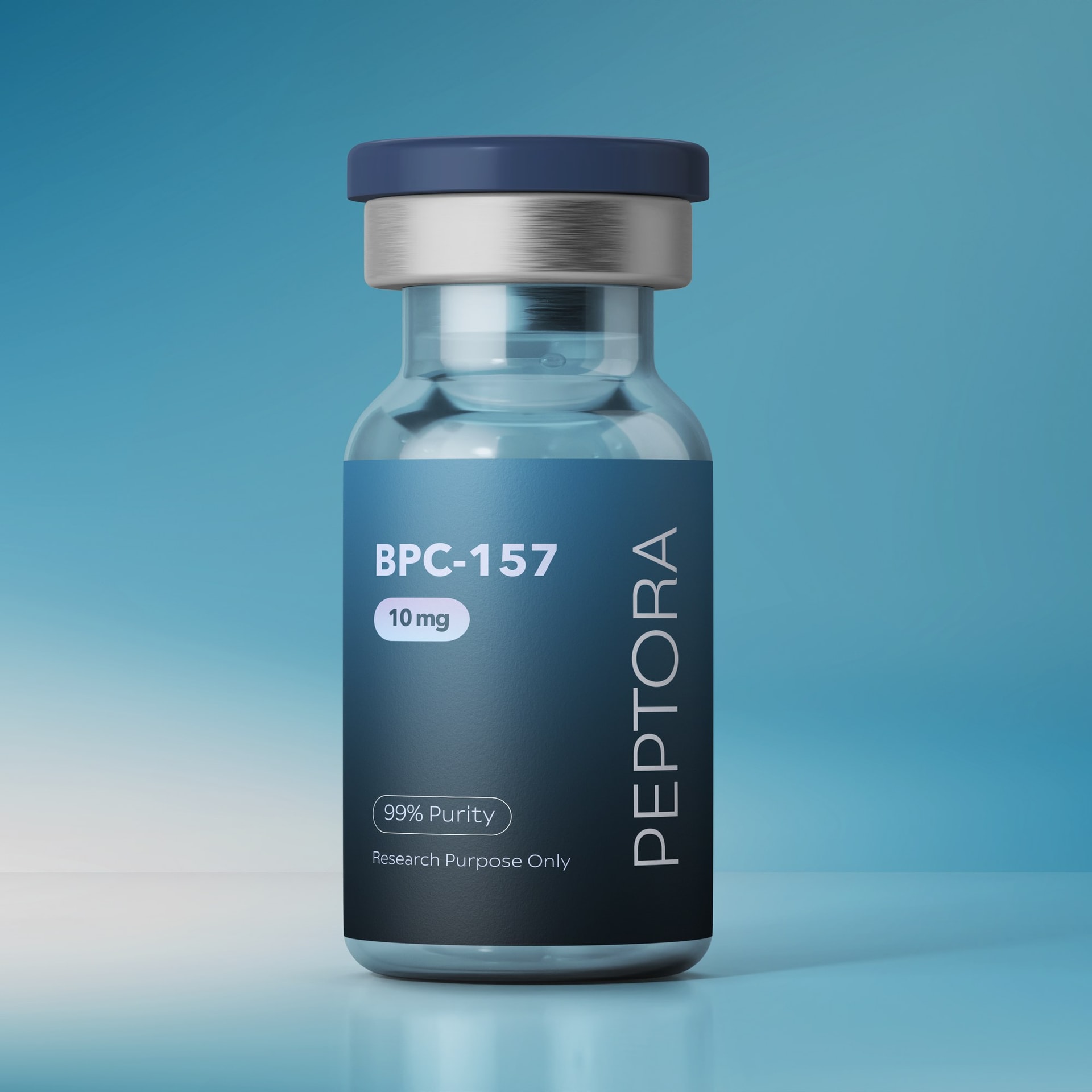
| BPC-157 | A lab-made copy of a piece of a stomach-fluid protein | Tissue repair, new blood vessels, and the gut |
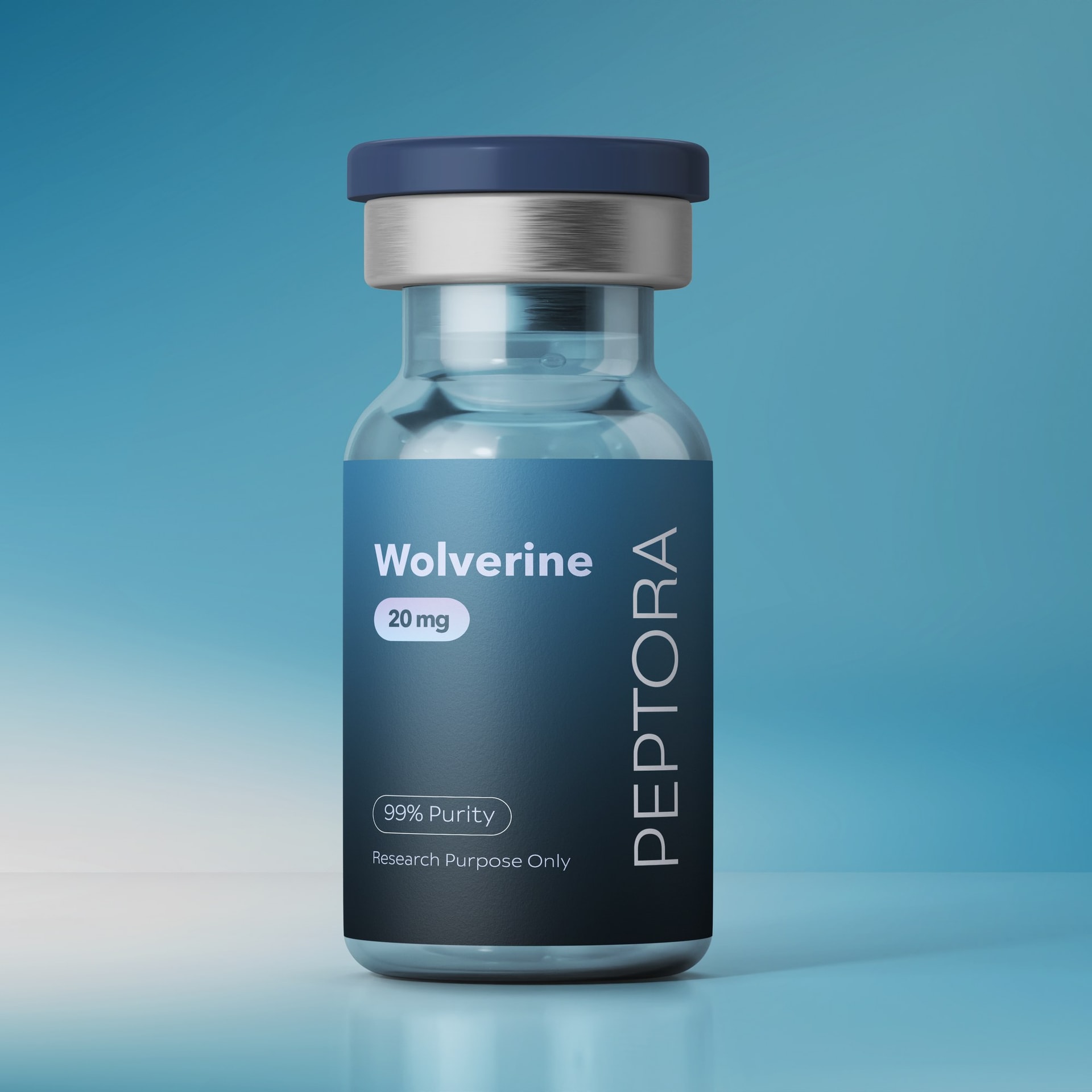
| Wolverine (BPC-157 · TB-500) | A blend of two research compounds | Tissue-repair research, studied together |
Both show up in tissue-repair research, but they come from different parent proteins and are studied for different main reasons — thymosin β4 for its actin and cell-movement activity, and BPC-157 for its stomach-fluid origin and blood-vessel links. Peptora carries research-grade TB-500 alongside BPC-157, and the Wolverine blend that combines the two. Each ships with its own batch-specific certificate of analysis.
Purity, handling, and why the certificate matters
In research, your results are only as trustworthy as the material you start with. Every batch of TB-500 from Peptora is checked to 99%+ purity by HPLC, confirmed by a second test (LC-MS) that proves it's the right molecule, and run through a full set of quality checks before it ships. Every order comes with a certificate of analysis (COA) for that exact batch, so the vial in your hand matches its paperwork.
TB-500 ships as a freeze-dried powder. Before it's used in research, it's mixed with bacteriostatic water — a special sterile water, sold separately. A little care keeps the compound intact so the results stay reliable:
- 1Let the sealed vial warm up to room temperature before opening it.
- 2Add the water slowly down the side of the vial, then swirl gently — don't shake.
- 3Wait until the powder is fully dissolved before drawing anything out.
- 4Keep the mixed solution in the fridge, away from light.
Step-by-step details are in the reconstitution guide and the storage guide. To learn what the numbers on a certificate actually mean, see the guide on purity and certificates of analysis and the testing standards overview.
Scientific references
The studies listed below are here for background, from PubMed and ClinicalTrials.gov. They cover early lab and clinical research on thymosin β4 — which is still experimental and hasn't been proven as a therapy in large, finished human trials — and they describe research on the compound itself, not the laboratory research product Peptora supplies.
- 1Goldstein AL, Hannappel E, Kleinman HK. Thymosin β4: actin-sequestering protein moonlights to repair injured tissues. Trends Mol Med. 2005;11(9):421-429. doi:10.1016/j.molmed.2005.07.004 (PMID: 16099219).
- 2Huff T, Müller CS, Otto AM, Netzker R, Hannappel E. β-Thymosins, small acidic peptides with multiple functions. Int J Biochem Cell Biol. 2001;33(3):205-220. doi:10.1016/s1357-2725(00)00087-x (PMID: 11311852).
- 3Sosne G, Qiu P, Goldstein AL, Wheater M. Biological activities of thymosin β4 defined by active sites in short peptide sequences. FASEB J. 2010;24(7):2144-2151. doi:10.1096/fj.09-142307 (PMID: 20179146).
- 4Malinda KM, Sidhu GS, Mani H, et al. Thymosin β4 accelerates wound healing. J Invest Dermatol. 1999;113(3):364-368. doi:10.1046/j.1523-1747.1999.00708.x (PMID: 10469335).
- 5Lv S, Cai H, Xu Y, et al. Thymosin-β4 induces angiogenesis in critical limb ischemia mice via regulating Notch/NF-κB pathway. Int J Mol Med. 2020;46(4):1347-1358. doi:10.3892/ijmm.2020.4701 (PMID: 32945357).
- 6Shrivastava S, Srivastava D, Olson EN, DiMaio JM, Bock-Marquette I. Thymosin β4 and cardiac repair. Ann N Y Acad Sci. 2010;1194:87-96. doi:10.1111/j.1749-6632.2010.05468.x (PMID: 20536454).
- 7Sosne G, Dunn SP, Kim C. Thymosin β4 significantly improves signs and symptoms of severe dry eye in a phase 2 randomized trial. Cornea. 2015;34(5):491-496. doi:10.1097/ICO.0000000000000379 (PMID: 25826322; ClinicalTrials.gov: NCT01393132).
- 8Clinical development (ClinicalTrials.gov): topical thymosin β4 / RGN-259 for dry eye — NCT02597803 (ARISE-1), NCT03937882 (ARISE-3); for neurotrophic keratopathy — NCT05555589 (SEER-2); recombinant human thymosin β4 in cardiac research — NCT05485818.
Explore research-grade TB-500
99%+ pure, a certificate of analysis with every batch, fast U.S. shipping — for laboratory research use only.
View TB-500Key takeaways
- TB-500 is a research name for a lab-made compound based on thymosin β4 — a natural protein, 43 building blocks long, that cells use to store and manage actin (the material behind a cell's shape and movement).
- The name is closely tied to one busy piece of thymosin β4 — a seven-letter stretch called LKKTETQ — that studies point to as its main active spot for actin, cell movement, and new blood vessels.
- In research it's studied in experiments about cells moving, new blood vessels, and tissue repair (skin, eye, and heart) — as described in the science, not as proven results.
- Most of the evidence is early-stage; thymosin β4 is experimental and not an approved medicine, and it's supplied for laboratory research only.
- Peptora's TB-500 is checked to 99%+ purity with a certificate of analysis in every order, and ships as a freeze-dried powder that's mixed with bacteriostatic water before use.
Frequently asked questions
This article is intended solely as an educational summary of publicly available scientific literature. Products offered by Peptora are supplied exclusively for laboratory research purposes and are not approved for human or veterinary use. The information presented should not be interpreted as medical advice, treatment recommendations, or clinical guidance.