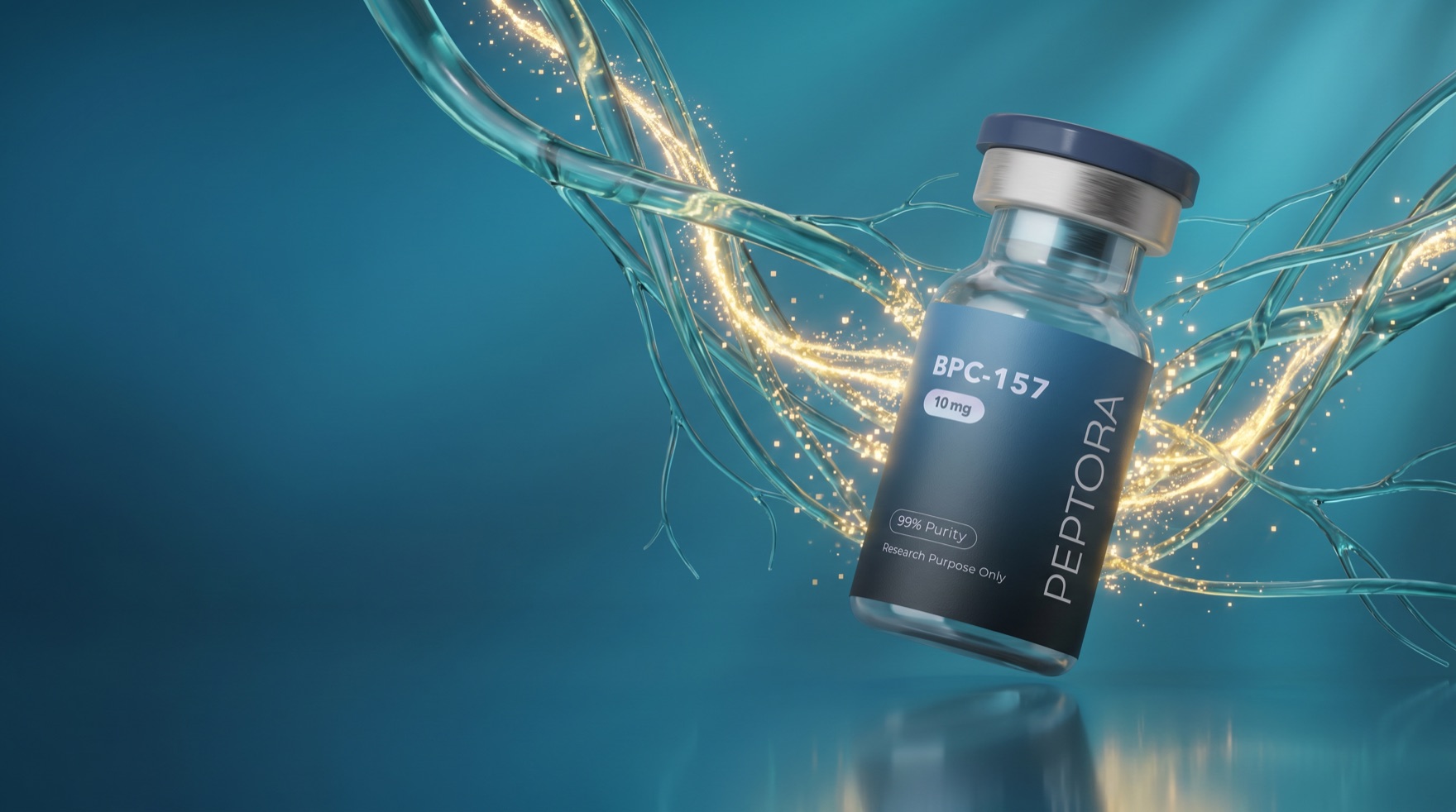
What is BPC-157?
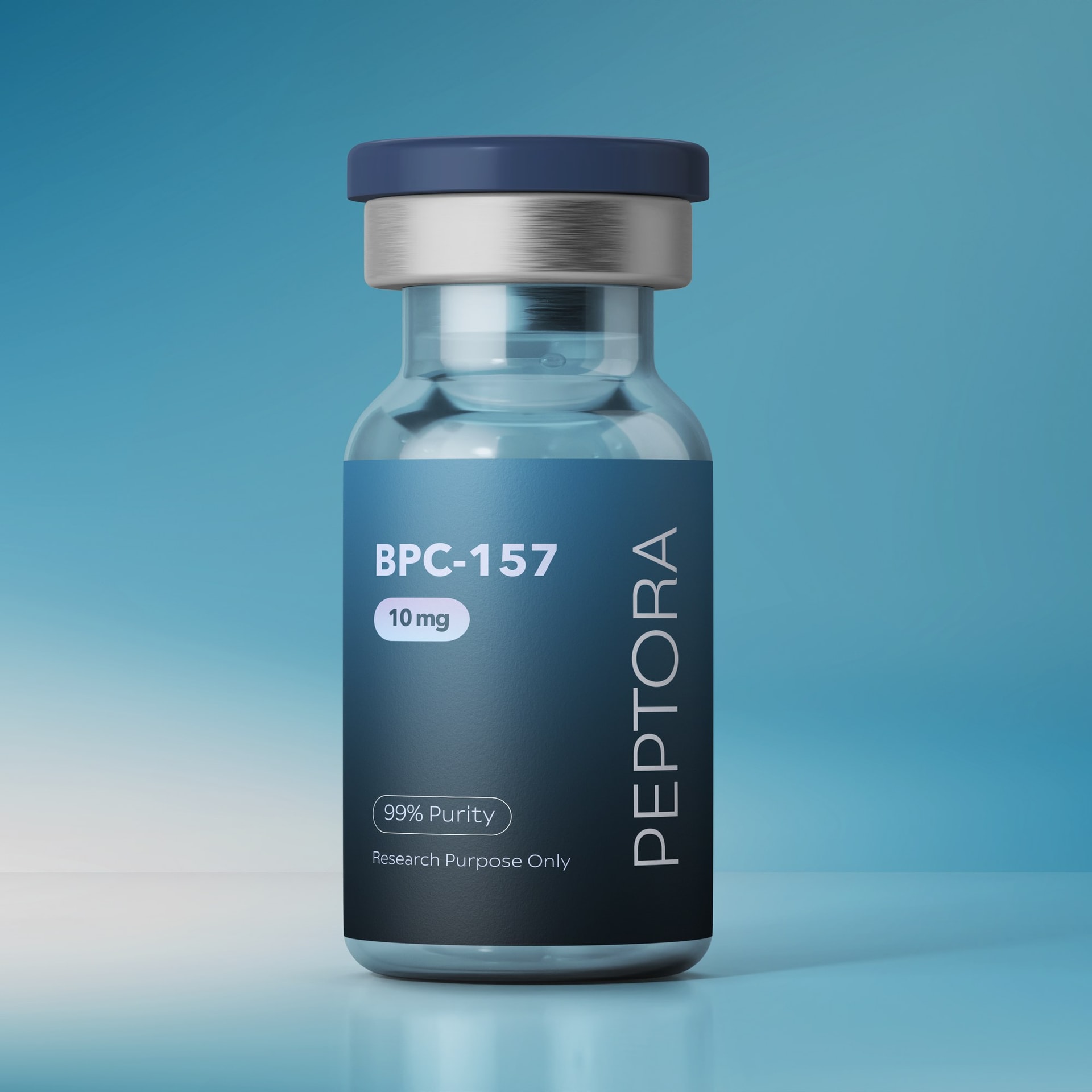
BPC-157 — short for Body Protection Compound-157 — is a small, lab-made protein. It's a single chain of 15 amino acids (the tiny building blocks that link together to make proteins). Its recipe is copied from one piece of a bigger natural protein called BPC, which scientists first found in stomach fluid. Because it's made in a lab, every batch is the exact same, well-defined molecule — not something pulled out of an animal or a person.
So why do scientists find it interesting? BPC-157 keeps coming up in tissue-repair research — animal and cell studies of tendons, muscle, and the gut lining. It's also easy to work with: it stays stable in water, so it holds up well during lab tests. Just as important, everything in this guide is about laboratory research only — BPC-157 is not a medicine, and it is not for use in people or animals.
The quick version
A small lab-made protein
BPC-157 is a sturdy 15-building-block chain, copied from part of a protein found in stomach fluid.
Blood vessels & repair
Studied in early lab experiments about growing new blood vessels and in tissue-repair models.
Comes from the gut
Its recipe traces back to a protein in stomach fluid, so it often shows up in gut research.
99%+ pure
Double-checked by lab testing (HPLC and LC-MS), with a certificate for every batch — research use only.
Where BPC-157 comes from
BPC-157 is a piece of a natural protein. The bigger protein it comes from, called Body Protection Compound, was first pulled from human stomach fluid. Scientists noticed that one short, sturdy 15-building-block stretch of it stayed interesting even on its own. When that little piece is made fresh in a lab, researchers call it BPC-157.
- What it is — a small lab-made protein, 15 building blocks long.
- Where it's from — one piece of the BPC protein found in stomach fluid.
- Handy trait — studies describe it as sturdy, holding up well in water and even in acidic conditions.
- How it ships — a freeze-dried powder, for laboratory research use only.
How BPC-157 is studied, in plain terms
Scientists are curious about BPC-157 because of the body systems it seems to touch. The points below are what researchers look at in published studies — they describe what is being studied, not proven results:
- Growing new blood vessels — scientists study whether it's linked to the body building fresh blood vessels (a process called angiogenesis).
- The nitric oxide system — nitric oxide is a natural signal that helps blood vessels relax; researchers look at how BPC-157 interacts with it.
- Growth signals — it's studied alongside the body's natural growth-factor signals in tissue-repair models.
- Cells moving and spreading — in lab dishes of tendon cells, researchers watch whether it's tied to cells spreading out and moving, a key step in healing.
The common thread across all of this is new blood vessels and moving cells — two things that matter a lot when tissue heals. That's why BPC-157 shows up so often in early repair-and-recovery research, instead of in just one narrow topic.
What scientists actually study it for
In early lab research, BPC-157 usually comes up in a few connected areas:
- Tendons, ligaments, muscle, and bone — the tissue-repair research BPC-157 is best known for.
- Gut research — a natural fit, since it traces back to a protein in stomach fluid.
- The gut–brain connection — the back-and-forth signals between the digestive system and the brain.
- New blood vessels — how the body grows fresh vessels while tissue heals.
How BPC-157 compares to similar compounds
Scientists often line BPC-157 up next to other compounds studied in tissue-repair research. The easiest way to tell them apart is by where each one comes from and what it's mostly studied for:
| Compound | Where it comes from | Mostly studied for |
|---|---|---|
| BPC-157 | A lab-made copy of a piece of a stomach-fluid protein | Tissue repair, new blood vessels, and the gut |
| TB-500 (Thymosin β4) | A lab-made copy of the active part of a natural protein called thymosin β4 | Cells moving, cell scaffolding, and tissue repair |
| GHK-Cu | A tiny 3-building-block protein that carries copper | Skin, collagen, and renewal research |
| KLOW | A blend of several research compounds | Tissue-repair research, studied together |
Peptora carries research-grade BPC-157 along with related compounds studied in tissue-repair research, including the KLOW blend, and covers GHK-Cu in its own guide. Every product ships with its own batch-specific certificate of analysis.
BPC-157 and the KLOW blend
KLOW is Peptora's blend that puts BPC-157 together with a few other compounds studied in tissue-repair research, in one research vial. Scientists who want to study several of these compounds side by side sometimes reach for a blend like KLOW instead of buying each one on its own. Like the standalone compound, KLOW is supplied strictly for laboratory research only, with a batch-specific certificate of analysis so every part can be traced back to its paperwork.
Purity and testing (why the certificate matters)
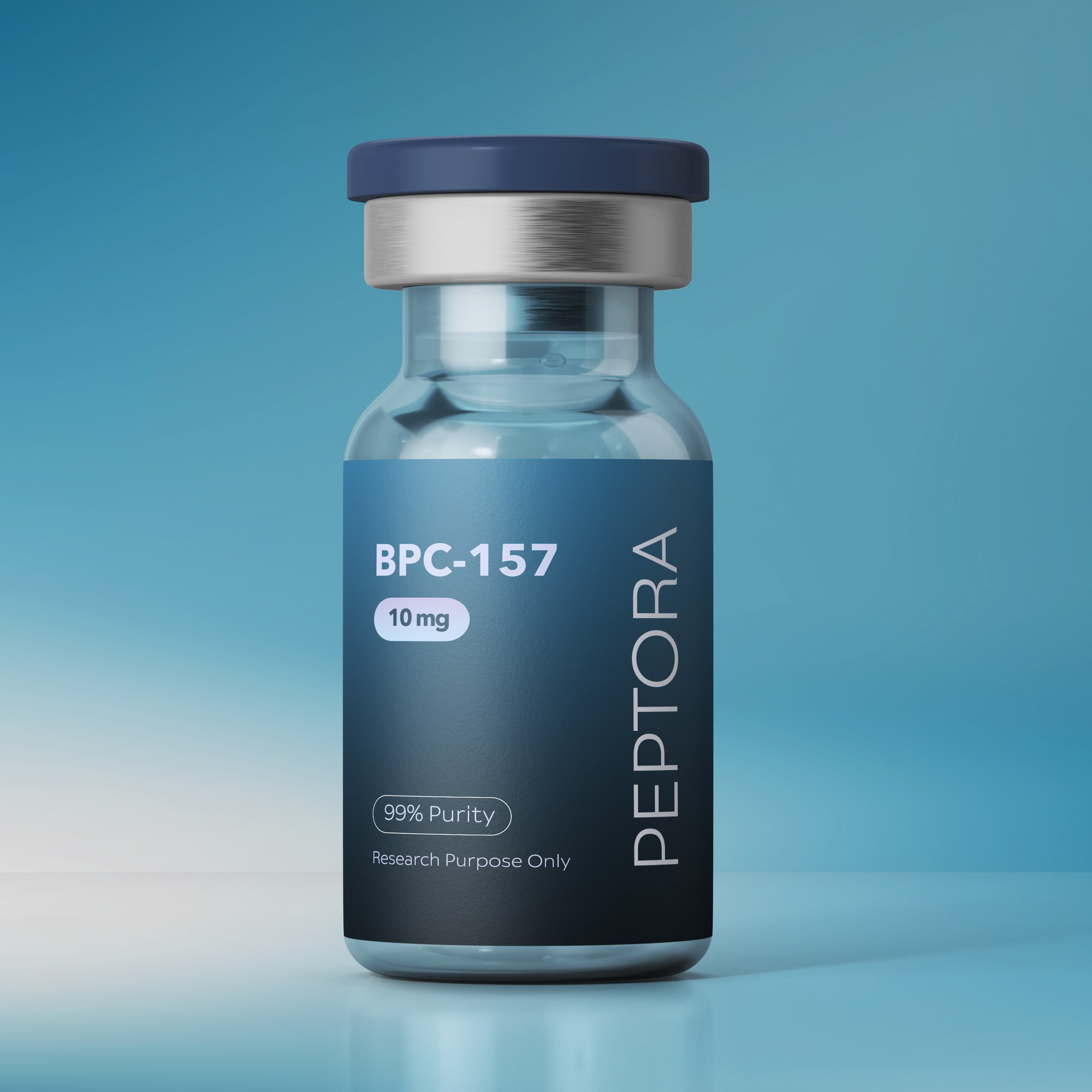
In research, your results are only as trustworthy as the material you start with. Every batch of BPC-157 from Peptora is checked to 99%+ purity by HPLC, confirmed by a second test (LC-MS) that proves it's the right molecule, and run through a full set of quality checks before it ships. Every order comes with a certificate of analysis (COA) for that exact batch, so the vial in your hand matches its paperwork.
That paperwork is standard here, not an add-on. To learn what the numbers on a certificate actually mean, see the guide on purity and certificates of analysis and the testing standards overview.
How it's handled in the lab
BPC-157 ships as a freeze-dried powder. Before it's used in research, it's mixed with bacteriostatic water — a special sterile water, sold separately. A little care keeps the compound intact so the results stay reliable:
- 1Let the sealed vial warm up to room temperature before opening it.
- 2Add the water slowly down the side of the vial, then swirl gently — don't shake.
- 3Wait until the powder is fully dissolved before drawing anything out.
- 4Keep the mixed solution in the fridge, away from light.
Step-by-step details are in the reconstitution guide and the storage guide. Doing these the same way every time is one of the easiest ways to keep research consistent.
Scientific references
The studies listed below are here for background, from PubMed. They cover early research on BPC-157 — which is still experimental and hasn't been tested in large, finished human trials — and they describe research on the compound itself, not the laboratory research product Peptora supplies.
- 1Sikiric P, et al. Stable Gastric Pentadecapeptide BPC 157 as a Therapy and Safety Key: A Special Beneficial Pleiotropic Effect Controlling and Modulating Angiogenesis and the NO-System. Pharmaceuticals (Basel). 2025;18(6):928. doi:10.3390/ph18060928 (PMID: 40573323).
- 2Seiwerth S, et al. BPC 157 and Standard Angiogenic Growth Factors. Gastrointestinal Tract Healing, Lessons from Tendon, Ligament, Muscle and Bone Healing. Curr Pharm Des. 2018;24(18):1972-1989. doi:10.2174/1381612824666180712110447 (PMID: 29998800).
- 3Hsieh MJ, et al. Therapeutic potential of pro-angiogenic BPC157 is associated with VEGFR2 activation and up-regulation. J Mol Med (Berl). 2017;95(3):323-333. doi:10.1007/s00109-016-1488-y (PMID: 27847966).
- 4Sikiric P, et al. Stable gastric pentadecapeptide BPC 157-NO-system relation. Curr Pharm Des. 2014;20(7):1126-1135. doi:10.2174/13816128113190990411 (PMID: 23755725).
- 5Chang CH, et al. Pentadecapeptide BPC 157 enhances the growth hormone receptor expression in tendon fibroblasts. Molecules. 2014;19(11):19066-19077. doi:10.3390/molecules191119066 (PMID: 25415472).
- 6Cerovecki T, et al. Pentadecapeptide BPC 157 (PL 14736) improves ligament healing in the rat. J Orthop Res. 2010;28(9):1155-1161. doi:10.1002/jor.21107 (PMID: 20225319).
Explore research-grade BPC-157
99%+ pure, a certificate of analysis with every batch, fast U.S. shipping — for laboratory research use only.
View BPC-157Key takeaways
- BPC-157 (Body Protection Compound-157) is a small, lab-made protein — a chain of 15 amino acids — copied from part of a protein first found in human stomach fluid.
- In early lab research it's studied in experiments about tissue repair (tendon, ligament, muscle, bone), new blood vessels, and the gut. It's still experimental, with no large finished human trials.
- Scientists study how it's linked to growing new blood vessels, the nitric oxide system, and the body's natural repair signals — these are things being studied, not proven results.
- It's for laboratory research only, and ships as a freeze-dried powder that's mixed with bacteriostatic water before use.
- Peptora's BPC-157 is checked to 99%+ purity, with a certificate of analysis in every order.
Frequently asked questions
This article is intended solely as an educational summary of publicly available scientific literature. Products offered by Peptora are supplied exclusively for laboratory research purposes and are not approved for human or veterinary use. The information presented should not be interpreted as medical advice, treatment recommendations, or clinical guidance.